
You are using an out of date browser. It may not display this or other websites correctly.
You should upgrade or use an alternative browser.
You should upgrade or use an alternative browser.


- Awards
- 11
Although I'm quite ashamed to admit it, I cannot precisely remember how I first heard of Dorothy Dandridge. My memory seems to feed me that I first heard of her through the film Introducing Dorothy Dandridge, the late nineties HBO biopic which I bought in the Walmart bargain bin for one reason: I knew an actress, by name of Kerri Randles, I believe, briefly appeared as Marilyn Monroe.
Speeding along here, I watched it and I liked it. The film itself is quite a little masterpiece, and Halle Berry does superbly in her turn as Miss Dandridge. Still, it was some time before I got into Dorothy Dandridge herself and decided to do further research into her life and career. Naturally, her being the first leading woman nominated for an American Oscar struck my interest, but for a long time, my interest never went past the initial stages.
I was very young when I got the hankering to start digging into Dandridge's life and career. I got all these biographies and essays printed off the internet, all feeding my then-current interest in her, which was considerably heavy. I learned she had a long show business career, but suffered typecasting and unfulfilled promises quite simply because the color of her skin. Her talent was immense; she had an excellent singing voice, and for years she toured the States and other parts of the world as a powerful songstress with pianist Phil Moore as her acting svengali.
Dandridge longed for movie success. True success alluded her until she caught the eye of director Otto Preminger, who, after initial reluctance, gave her the titular role in Carmen Jones, one of Hollywood's first films to feature an all-black cast. It was a runaway hit, and it brought her an Oscar nod (she lost to Grace Kelly) and a three-movie deal with Twentieth Century-Fox. She turned down supporting roles in The Lieutenant Wore Skirts and The King and I, allowing room for Rita Moreno to step in to fulfill those gaps, and her career soon stalled.
It wasn't until Island in the Sun that she made a comeback, one of my favorite movies ever. It was a popular success, but riddled with controversy because of its interracial on-screen romances. She followed that with a top role in the Italian production of Tamango, and a costarring role as a showy ship bride in The Decks Ran Red. Dandridge seemed to have high hopes for Samuel Goldwyn's film version of Porgy and Bess, but the film suffered from rewrites, production delays, controversy over black stereotyping, and was ultimately as financial failure.
By the early sixties, Dorothy's career had long hit the skids. She spent the rest of her life touring nightclubs and accepting the occasional stage role. She died poor and mostly forgotten in 1965.

Speeding along here, I watched it and I liked it. The film itself is quite a little masterpiece, and Halle Berry does superbly in her turn as Miss Dandridge. Still, it was some time before I got into Dorothy Dandridge herself and decided to do further research into her life and career. Naturally, her being the first leading woman nominated for an American Oscar struck my interest, but for a long time, my interest never went past the initial stages.
I was very young when I got the hankering to start digging into Dandridge's life and career. I got all these biographies and essays printed off the internet, all feeding my then-current interest in her, which was considerably heavy. I learned she had a long show business career, but suffered typecasting and unfulfilled promises quite simply because the color of her skin. Her talent was immense; she had an excellent singing voice, and for years she toured the States and other parts of the world as a powerful songstress with pianist Phil Moore as her acting svengali.
Dandridge longed for movie success. True success alluded her until she caught the eye of director Otto Preminger, who, after initial reluctance, gave her the titular role in Carmen Jones, one of Hollywood's first films to feature an all-black cast. It was a runaway hit, and it brought her an Oscar nod (she lost to Grace Kelly) and a three-movie deal with Twentieth Century-Fox. She turned down supporting roles in The Lieutenant Wore Skirts and The King and I, allowing room for Rita Moreno to step in to fulfill those gaps, and her career soon stalled.
It wasn't until Island in the Sun that she made a comeback, one of my favorite movies ever. It was a popular success, but riddled with controversy because of its interracial on-screen romances. She followed that with a top role in the Italian production of Tamango, and a costarring role as a showy ship bride in The Decks Ran Red. Dandridge seemed to have high hopes for Samuel Goldwyn's film version of Porgy and Bess, but the film suffered from rewrites, production delays, controversy over black stereotyping, and was ultimately as financial failure.
By the early sixties, Dorothy's career had long hit the skids. She spent the rest of her life touring nightclubs and accepting the occasional stage role. She died poor and mostly forgotten in 1965.
- Awards
- 11
One of Dorothy Dandridge's first top roles in a motion picture came in the 1951 film Tarzan's Peril. It was a low-budget RKO picture, made in the B-movie tradition of the host of Tarzan films that preceded it. The film starred Lex Barker in the title role, and placed Virginia Houston as his leading lady. Some of the film was shot on location in Kenya, making it the first Tarzan feature film to be shot abroad, but the majority of its outdoor shots were filmed in the United States.
Dorothy plays Queen Melmendi of Ashuba tribe, and to my understanding she was quite enthusiastic about the part being her first with any significant substance. I believe it was her first role to receive her any on-screen billing, and I know it was her first to generate her controversy. Religious organizations and Hollywood's rather conservative censors were concerned about Dandridge's wardrobe being too revealing, especially for more "racially cautious" audiences in certain sects of the States.
In the end, her performance itself was more or less overlooked, unless there was mentioning of her outfits being provocative. Tarzan's Peril received minor box office success in 1951, but was actually a step forward for Dorothy whom had spent the previous decade playing bit parts in a host of features, garnering little (if any) significant attention for her work.
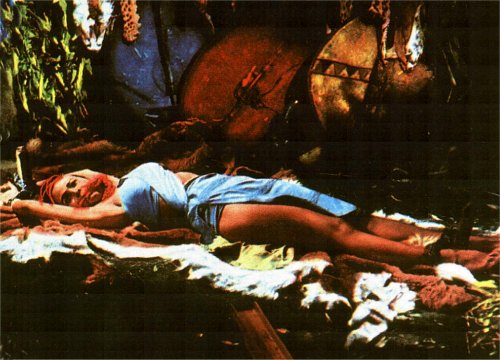
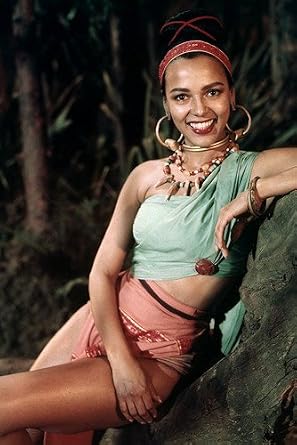
Dorothy plays Queen Melmendi of Ashuba tribe, and to my understanding she was quite enthusiastic about the part being her first with any significant substance. I believe it was her first role to receive her any on-screen billing, and I know it was her first to generate her controversy. Religious organizations and Hollywood's rather conservative censors were concerned about Dandridge's wardrobe being too revealing, especially for more "racially cautious" audiences in certain sects of the States.
In the end, her performance itself was more or less overlooked, unless there was mentioning of her outfits being provocative. Tarzan's Peril received minor box office success in 1951, but was actually a step forward for Dorothy whom had spent the previous decade playing bit parts in a host of features, garnering little (if any) significant attention for her work.
- Awards
- 11
While working on Bright Road for Metro-Goldwyn-Mayer, Dorothy enjoyed rekindling her friendship with actress Ava Gardner, who was a contract star for the studio. The two ladies had been friends for several years, since the late 1940s, and they frequently traveled the town together during their younger days. The two were often seen in the company of Marilyn Monroe during the same time period.

- Awards
- 11


- Awards
- 9
It is a glaring omission in my exposure to classic films, but I have not seen any of Dorothy Dandridge's movies. A beautiful lady who, like Lena Horne before her, didn't get the opportunities she deserved, but beyond that I'm afraid I have no opinions here.
- Awards
- 11
It is a glaring omission in my exposure to classic films, but I have not seen any of Dorothy Dandridge's movies. A beautiful lady who, like Lena Horne before her, didn't get the opportunities she deserved, but beyond that I'm afraid I have no opinions here.
You should really check out CARMEN JONES, her star-making vehicle from 1954. Not only is she beautiful, she gives an electric performance. My only drawback is Fox didn't want to use her actual singing voice. If you like operatic-type musicals, you will like CARMEN JONES. Otherwise, you might find a bit indifferent. I've watched it before and skipped through all the songs, save the number "Dat's Love".
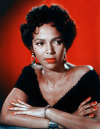
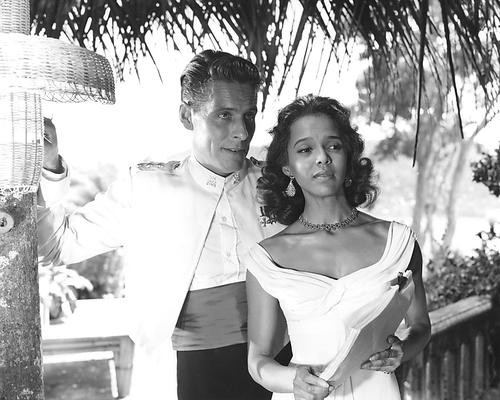
She's also good in ISLAND IN THE SUN, a 1957 soapy piece of a melodrama, featuring Dandridge in a cast including James Mason, Joan Fontaine, Harry Belafonte, Joan Collins, Stephen Boyd, Michael Rennie, and Diana Wynyard to name a few. Her role isn't too big this time around as she plays "an exciting and alluring West Indian" (as the movie trailer describes her) who falls in love with a white governor's aid played by John Justin. It's a beautiful, semi-cluttered slice of a movie that I happen to enjoy. You'll like it too, especially if you like those glossy Old Hollywood melodramas with many a star stuffed in for good measure.

She's also good in ISLAND IN THE SUN, a 1957 soapy piece of a melodrama, featuring Dandridge in a cast including James Mason, Joan Fontaine, Harry Belafonte, Joan Collins, Stephen Boyd, Michael Rennie, and Diana Wynyard to name a few. Her role isn't too big this time around as she plays "an exciting and alluring West Indian" (as the movie trailer describes her) who falls in love with a white governor's aid played by John Justin. It's a beautiful, semi-cluttered slice of a movie that I happen to enjoy. You'll like it too, especially if you like those glossy Old Hollywood melodramas with many a star stuffed in for good measure.

