“The name’s… Dolly”: Re-watching Widows

Mel O'Drama

Admin
LV
16
 
Awards
44
iu


The blurb:
After a fatal accident during a raid, recently widowed Dolly Rawlins contacts the fellow widows of her deceased husbands gang of armed robbers. Dolly, Linda Pirelli & Shirley Miller agree to carry out the next planned robbery..


The background:
In The Gentle Touch episode Something Blue, Detective Inspector Maggie Forbes tries to speak candidly to a prostitute, saying "We really should talk, woman to woman. My name is Maggie”. However Jill Gascoine and the other actress, Lynda Marchal, kept corpsing when it came to Marchal’s riposte, "All right, call me Juanita."

Marchal felt she could write more believable dialogue herself and, encouraged by Gascoine, went on to prove this spectacularly.

Using the pseudonym Lynda La Plante, she wrote a treatment for a TV series based on a botched bank robbery. Widows was commissioned by Verity Lambert of Euston Films for Thames Television. It became one of the highest rating series of the early 1980s.


It’s entirely possible I haven’t watched Widows since its original airing back in March/April 1983. It’s frightening to think we’re coming up on four decades since then (and even more so to consider I watched this crime series while I was still in single digits).

It made a big impression on me at the time, and I have fond memories of finding it a powerful and exciting watch. I’m so protective of the memory of this series that I’ve avoided the Steve McQueen film version like the plague (even though it looks pretty decent, albeit quite a different animal).

Revisiting something so beloved is a bit risky. While it was viewed as edgy, gritty and even progressive, we’ve come such a long way there’s an underlying fear that it might not have dated well. Also at the back of my mind is that French & Saunders sketch (featuring Ann Mitchell, no less) which got La Plante’s writing and the square-jawed delivery absolutely dead-on. Would Widows now make me laugh?

But, a bargain price on the Blu-ray set recently meant that it’s time to revisit.


Let's dive in. As Dolly's fond of saying, "Give me ten minutes".
 

Mel O'Drama

Admin
LV
16
 
Awards
44
Widows

Series One
Episodes One to Three


Dolly said:
We do it. We pull the next big one Harry lined up.

First things first: the HD restoration is absolutely stunning. The Thames logo has never looked so good, and the opening location shots of grey, early-Eighties London pop into crisp focus without losing the slight grain that one feels is exactly how it is meant to look.

There’s something extremely gritty about London of this time, no doubt influenced by crime shows of the late Seventies and early Eighties which is all warehouses and ugly big cars and drab colours with grey clouds looming. There’s no denying that the lack of gentrification (the hallmark of pretty much every UK cities of the time) gives instant atmosphere that practically stirs the bowels.

Euston Films has always used this concrete brutalist backdrop to good effect and it’s utilised in this one to good effect in order to lull the audience into a sense of familiarity before it becomes something else.

This is evident from the cold opening, which takes the patented “Kick, Bollock & Scramble” edict where we immediately see a heist go extremely wrong, resulting in a fiery crash in a tunnel and the grim deaths of the crims in question. Well, all but one, whose face we never see but who is shown to escape.

At this point, all the people are unknown to us and it’s difficult to know how they are connected or what this has to do with anything (though presumably most viewers will at least have a clue about the premise, either from a synopsis in the TV Times or from the title of the series itself which hints at the premise).

Perhaps it’s this lack of connection between characters and viewer that allows the deaths to be this horrific, with one or two of them running round on fire, another engulfed by flames while banging on the door of the van and, later, brief glimpses of the charred corpses, one pretty much becoming one with their perch in the back of the van (we’re even told later on that Joe Perelli’s gold teeth had melted). As opening three-and-a-half-minutes go it’s pretty uncompromising.


continued...​
 

Mel O'Drama

Admin
LV
16
 
Awards
44
Series One
Episodes One to Three

continued


We’re introduced to each of the three widows at their respective husband’s funerals, and we get a clear sense of each character from the introduction.

Outside her large house in a leafy affluent suburb, Dolly sits in the back of a black Mercedes limousine, alone apart from her beloved lapdog Heidi. Jaw set firmly, she quietly takes care of business (the limit driver, an associate, hands her a piece of paper with details of hubby Harry’s lockup. The only place an exchange can be done with the Old Bill watching their every move). Her steely blue eyes are moist, but it could be as much with anger as grief, as she flatly asks what everyone has turned up for and remarks that flowers won’t bring him back.

Shirley is the very antithesis of stoicism. Propped up by her mother and a young man, she howls uncontrollably, collapsing to her knees and screaming into the open ground for her Terry to come back.

Cut to Linda, getting stuck into the champagne before throwing it over an attendee at the wake - one of her husband’s bits on the side - leading to a blazing row before she, too, collapses in tears. Situation aside, there’s an underlying sense that every scene in Linda’s life is about the heightened drama and the big emotions.

Even before they come together, there’s something quite compelling about their lives. All seem to live on the edge.

Dolly takes being followed by the police in her stride, talking back to them as they pull apart her house to look for evidence of Harry’s infamous ledgers. Repeatedly, she shakes off a police tail with ease, suggesting she’s no stranger to deception. Dolly really clicked with me in the sequence where she went into the hairdressers, handed her dog to the owner and asked for a back way out before getting a taxi to the secure mailbox vault where Harry’s ledgers are kept, along with a gun. On her return to the hairdresser, her stylist approaches ready to get to work. Handing her a note, Dolly crisply orders:
Dolly said:
Just lacquer it darlin’. Make it look as though it’s been done.

Later, in a park, she hands Heidi to the officer walking behind her, ordering him to hold her while she goes into the Ladies… where she has a secret meet with her co-conspirators with the officer standing guard.

One has to admire her chutzpah. She’s also wise enough to know who she can trust to draw into her collusion and who she can’t. And she even uses those she can’t trust to her advantage. A moment of brilliance came when Dolly created a story that the fourth man who had escaped was her husband Harry, leaking it to Harry’s acquaintance, poor, doomed Boxer, knowing he in turn would leak it to a rival of Harry who is paying him for information, thus making them less likely to be targeted.

Dolly also realises the best way to hide is in plain sight. This extends to her approach to Linda and Shirley, which occurs at a spa (in a sign of the times, Linda has to ask what a jacuzzi is). Not only is she quite open about stuff, she begins to set out her stall with a stranger in the steam room. Again, she seems ride on her instincts, understanding that the woman is not a threat and that she’ll be quickly driven away by their less-than-wholesome conversation (which she is).

From the archetypal - almost stereotypical - crime drama that the opening suggested, the show quickly opens up into a story of sometimes uncomfortable connections between these three women who don’t get along, don’t often like and don’t always trust one another. The dynamics are fascinating even at this point. Created, written and produced by women, the voice of the women has a ring of truth.


continued...​
 

Mel O'Drama

Admin
LV
16
 
Awards
44
Series One
Episodes One to Three
continued


Something that struck me this time round was how long it takes to introduce the fourth co-conspirator Bella. She doesn’t appear at all in the first episode and arrives fairly late into the second, initially as an acquaintance of Linda. Linda works in the booth at an amusement arcade, Bella - a sex worker - frequently picks up her men there.

Bella’s unflappable and streetwise persona has injected a fresh new dynamic already. There’s a scene where Dolly is chewing Linda out for bringing Bella to their secret lockup, and as they argue back and forth, Bella simply stands and observes them cooly, deciding which way to play her own hand. Which she does perfectly.

Linda’s proving one of the more unreliable characters through her volatile temper, her overindulgence of alcohol (she drunkenly gave Bella details of the entire scheme without consulting the other two and after Dolly had ordered them to leave the recruitment of a fourth to her), and her sex drive. On finding her with a strange man in the house, Dolly is not only bothered about the possible threat to their scheme, but also relates the situation to her own devotion to her late husband:
Dolly said:
My God. You didn’t wait long, did ya? You disgust me… You little slut.

Linda’s been on the receiving end of a few slaps already (including a pimp slap from Bella). After one of the belts from Dolly, Linda whines:
Linda said:
Why is it I’m always in the wrong?
Dolly said:
Because you’re twenty six, and I’m forty six. And I’m payin’ the bills.

And this is the bottom line in the relationship. Dolly might be hard, but there’s also an almost maternal thing between she and the younger women. Notwithstanding her having been married to Harry, Dolly’s life experience, instincts, relative seniority and ability to think on her feet and adapt quickly still make her the natural leader. But there’s already a hint of rebellion from one or two of the younger women.


As Dolly, Ann Mitchell steals the show, but the casting is truly impressive. All four women have their strengths (it strikes me that the “power of four” is key when casting the different elements of female ensembles. When it works, it’s magic: think The Golden Girls or Desperate Housewives).

Maureen O’Farrell is very believable as mouthy Linda. As Shirley, Fiona Hendley seems the weaker of the four actresses, but she’s still no slouch and the chemistry is definitely there.

I’m already mourning the impending recasting of Eva Motley in Widows II, as she’s brilliant here and a very difficult act to follow.

Even the supporting roles are cast wonderfully. Everywhere you look there are familiar faces. I recognised, Kate Williams as Shirley’s over-protective mother but couldn’t place her to anything specific (I did think she might have been Charles Hawtrey’s wife in Carry On Doctor, but apparently not). She’s been in loads of stuff, especially Seventies sitcoms, and I was delighted to find she’s in Love Thy Neighbour which I have lined up to watch in the not-too-distant. Boxer, too, is played a very recognisable character actor: Dudley Sutton (again, he’s been in loads of stuff). There’s the future Burnside from The Bill, in a typically thuggish role. Oh, and D.D. Dixon from Brookside appears in a fun role as Gloria, the receptionist with attitude. It seems to be her first TV role, though you’d never think so from her confidence and deportment.

Episode Three took on a new storytelling format with black and white flashbacks of the men’s “rehearsals” for the heist running parallel with the women doing the same thing. It feels extremely progressive for the time. Best of all, it led to another flashback to the original men’s heist in which we get the reveal of the “fourth man”: the one who survived. I’d completely forgotten this twist, and it’s make me really applaud Linda La Plante’s writing because even though it was under my nose the entire time, I genuinely had the rug pulled out from me when the reveal came and the identity was revealed.

This first series is already surprising me and I can’t wait to watch the second half of this first series.
 

Mel O'Drama

Admin
LV
16
 
Awards
44
Series One
Episodes Four to Six


One aspect of production I neglected to mention with the previous episodes is Stanley Myers’s beautiful score. The presence of a composer whom I most strongly associate with Cavatina from The Deer Hunter says quality to me. It certainly fits the series very well. There was an episode early on where I felt there was a bit too much flute for my taste, but it’s balanced out perfectly by the darker elements.

The score was at its most thrilling in Episode Five’s heist, an event on which so much hinged, and into which we’ve seen so much planning go, I couldn’t help feeling vicarious butterflies as it got closer.

Every aspect of the preparations created a kind of anticipation, as we saw the women learning their skills from motor mechanics to welding and using a chainsaw. Then there was all the work on their costumes, with more and more padding added to make them look like men. And the scene in which Dolly tries unsuccessfully to lower her vocal register to bark orders while sounding male.

The tension and suspense deepened with other aspects, such as Linda’s theft of the van to be used, something she had seconds to do while the driver was out of sight, and which (naturally) took a few attempts to start.

With the heist followed by hiding out before the tense, carefully planned flight to exotic getaways of the rich and famous (Widows got quite some thrills out of the case of money they needed to carry through customs at both London and Rio), there are numerous similarities to Buster, which I watched just last weekend. As much as I enjoyed Buster, I did think it gave a glossy and romanticised view of the crime compared with the facts about the violence and trauma towards the train staff.

Widows, on the other hand, is pure fiction, which made for a different viewing experience. As a viewer, it was easy to get on board with the writing and experience an almost guilty sense of collusion from rooting for the plan to succeed. Lynda La Plante knows just how far she can take things, and so while a shotgun is practically aimed at someone’s face during the robbery, there is no actual physical violence involved in the heist. Indeed, the women come of the worst in this regard with poor accident-prone Shirley taking a tumble when running away and injuring her leg.

It’s difficult to categorise how the women are best described. Not heroes, certainly. Yet not pure villains. And arguably not even anti-heroes. Perhaps they’re best described simply as four women with a plan.

It helps that the women aren’t the biggest threats here. Good old back-from-the-dead Harry Rawlins - the man being mourned so sincerely by Dolly early in the series - has turned out to be a huge villain. We discover he’s fathered a child with a younger woman (it’s evidently gone on for many years) and is planning to rob the robbers by watching the women carry out his plan from afar before swooping in and taking it by force if necessary. As things get more desperate, it’s clear he’d have no qualms about killing his wife for it, indeed that seems as though it could be part of the plan (“Just make sure she talks first”, Harry’s young bit coldly tells him).

Once poor Heidi was killed in the struggle for them to get the money, all bets were off. Heidi’s death was one of the things I remembered about this series (that kind of trauma stays with one), and it proved to be one of the most touching things in the series. The scene where Dolly found out, going from reassuring Shirley, who was in shock, with a warm maternal smile, to Dolly’s own denial that her “baby” could be dead was wonderful, and almost painful to watch.


continued…​
 

Mel O'Drama

Admin
LV
16
 
Awards
44
Series One
Episodes Four to Six

continued


The sometimes strained relationships between the women was fascinating beginning to end. Right before the heist seemed to be when they were closest, with a lovely little chat between Bella and Dolly, where the latter admitted that she’s glad Bella joined them, and they wished one another luck. A lesser series would probably see them hug it out, but it’s interesting to note that even with this warmth there was no real physical contact, which kept the businesslike aspect to their dynamic.

Likewise, Linda and Bella’s last meeting before the heist, where Linda asked Bella to relay a message to Dolly regarding the quirks of the van she’d stolen and Bella barked back to ask why Linda didn't tell Dolly herself. It ended with Linda softening and saying to wish Dolly good luck.

Shirley and Dolly spent much time together in the last couple of episodes, showing Dolly’s maternal side to great effect. After being perhaps the least-interesting of the four women in the first half of the series, Shirley really came into her own in the last couple of episodes. Apart from all the trauma of being attacked and witnessing Heidi’s death, there was a great scene where she demanded that Dolly tell her where the rest of the money was, practically screaming at her, prompting Dolly to observe that the worm was turning. There’s even a Patricia/Margaret Dunne/Sammy Jo/Claudia type double slap between them. Then there was her treatment of the poor unwitting man she persuaded to carry her bag to be weighed at the airport. Once in Rio and he was no longer of any use, his offer to help carry her bag was met with “Piss off”.

Shirley’s Mum, Audrey, has been a consistently enjoyable character to watch throughout the series. There’s a random scene in the latter part of the series where she’s dolled up to console a wealthy neighbour who’s recently lost his wife, which showed off her mercenary side well. And yet she never stops being likeable thanks to Kate Williams’s portrayal. It was fun to see Audrey getting in on the action in the last episodes with her being summoned to Dolly’s to dress up in a wig and drive Dolly’s car away, acting as a decoy to Harry’s men so Dolly and Shirley can make their escape with the money. The lighter touch to this character came across even here, partly because she’s never passed her test and can barely drive. But also in the scene leading up to it where Dolly tells Audrey she can keep the mink coat she’s dressed her up in. Audrey feigns reluctance but is clearly overjoyed and thanks her. Then there’s a beat, before Audrey looks up at Dolly and asks “Can I scrounge a fag? It’s a really funny scene, with its implicit suggestion that the generous gift is not quite enough to satisfy her.

On top of this, the multiple layers build with the police investigation into the robbery, with D.I. Resnick as the obsessive cop who won’t stop looking even after he’s taken off the investigation (and quits the force). Thelma Whiteley is fascinating as his toxic, shrewish, passive-aggressive wife, constantly reminding him of his failures and shortcomings, while at the same time being gently spoken and terribly middle class. It almost feels like a disconnect between writing and performance, but this is because we rarely see this combination onscreen. Real life is another matter, so I applaud the choices here which give it more than a ring of truth. The other woman in Resnick’s life is is his loyal assistant, played (I think) by Carol Gillies who looks rather like Joan Sanderson and has many of the same appealing no-nonsense qualities. I’m already creating a headcanon in which Resnick leaves his wife for his sensible assistant and they set up a successful private investigation firm. But the more pressing matter is hoping that he’ll get over the injuries he sustained in his brutal beating at series’ end.

The four women gathering together in their Rio hotel room feels heartwarming. After all they’ve been through, they’ve done it. Linda La Plante ends things on a slightly downbeat note with Dolly’s admission that she still loves Harry even after all he’s done. I’m fine with the admission, but for it to be the series’ sign-off slightly undermines the progressiveness. After all, it doesn’t exactly pass the Bechdel test.

Still, with Harry still at large and the women getting everything they thought they wanted, I’m very curious to see where the sequel goes. And bless my overloaded memory for not remembering.
 

Angela Channing

World Cup of Soaps Moderator
LV
19
 
Awards
52
I've never seen this series but I've always meant to especially as I've watched the film version of the story and would like to see how they compare. I'll read your summaries/reviews with interest.
 

Willie Oleson

Telly Talk Schemer
LV
9
 
Awards
27
Revisiting something so beloved is a bit risky. While it was viewed as edgy, gritty and even progressive, we’ve come such a long way there’s an underlying fear that it might not have dated well
I rewatched it when it came out on DVD in..pff, what was it? 20 years ago?
While I didn't dislike it I couldn't help but thinking "that's it??"
It made a big impression on me at the time, and I have fond memories of finding it a powerful and exciting watch
Same here, but as with most mini-series of that time that were something inherently eventful about it.
It isn't always easy to decide what has and what hasn't aged very well without considering our TV viewing habits (and limitations) of that time.

I wouldn't mind giving this another try, also because I've watched the sequel only once.
The only thing I remember is that Shirley got shot - I think she had her back against the wall, and for some bizarre reason that's exactly how I keep misremembering April Steven's death (instead of the wedding shooting).
 

Mel O'Drama

Admin
LV
16
 
Awards
44
I've never seen this series but I've always meant to especially as I've watched the film version of the story and would like to see how they compare. I'll read your summaries/reviews with interest.

Thanks Angela. I suspect I'm now curious about the film version, so I may do it in reverse from you and catch up with the film at some point after I finish the series.


as with most mini-series of that time that were something inherently eventful about it.

Yes, it felt like something very special at the time and had, as you said, that built in sense of event.


I wouldn't mind giving this another try, also because I've watched the sequel only once.

I'd be interesting to see how you feel.

The first series wowed me. I've started series two this evening and I'm... less wowed. But I'll get to that soon enough.


The only thing I remember is

Of course, I couldn't help clicking on the inline spoiler, but quickly opaqued it again when I realised it was about something I haven't yet seen. It's certainly tantalised me a little, anyway.


Thanks for the reminder, I still got a few unwatched discs left.

Oh great. I look forward to more seedy somethings.
 

Mel O'Drama

Admin
LV
16
 
Awards
44
I wish you'd learn to love the flute. It's such a lovely sound.

For what it's worth, the theme from Farmhouse Kitchen hits my nostalgia so hard I had to have the theme in my music collection.


^ Ooh - there's a mention of a specific Sons And Daughters episode at the very beginning of the video. Another reason to like it.


I see that you-know-where has BELLA MAFIA, maybe I'll watch that tomorrow.

This kind of rang a bell, but I couldn't place it. Of course, I had to look it up to see if it was a spin-off about Bella from Widows. I'm a tad disappointed it's not, but it does look very interesting all the same.
 

Mel O'Drama

Admin
LV
16
 
Awards
44
Widows

Series Two
Episodes One and Two


I seem to remember this series being listed in our local newspaper - and certainly on the book cover - as Widows 2 or Widows II. This seems most appropriate for a second mini-series which aired a couple of years after the original which served as a complete story in its own right.
iu

Most sources, though, seem to refer to this run of episodes as Widows Series Two, and the title card does indeed say simply “Widows”. So let’s go with that for simplicity’s sake.

There’s no mistaking that this is “new season” territory. The hair is even bigger (welcome to 1985!) and, it appears, so is the budget.

While Series One’s Rio-based scenes were mostly restricted to indoor locales that could be filmed anywhere (a generic hotel room or a tropically dressed hotel foyer). As Series Two begins we get location scenes aplenty. There’s an airport exterior where the sun appears so baking hot this is unlikely to be filmed at Gatwick with a sun filter applied (the logistics of filming these scenes on one of the few sunny days of the year in a pre-climate change UK would seem to risky and nerve-racking that it’s almost unthinkable). There’s also the mediterranean villa where the women are living. I can’t imagine they’d have found one of these hidden away in Buckinghamshire somewhere. An old TV Times article - stumbled upon when I was trying to find out if it was listed as Widows II - tells me these were filmed in Portugal which, of course is a lot more convenient (and cost effective) for a British film crew than crossing the Atlantic.

The “Rio” scenes also have plenty of cars to be spotted, the largest part going to a yellow VW Passat which is driven by a particularly shady taxi driver. A two-door variant seems most impractical for a cab when there are also four and five-door versions. Poor Linda and Shirley are seen to clamber into the back where they’re then stuck until the driver moves the seat forwards for them. This is also an old model even for 1985, with it being a pre-facelift model, dating it before summer 1977, but that was probably pretty standard for South American cabs. Said Passat even gets its own gloriously arty long shot parked on a beautiful isolated sandy beach during the scene where Harry grabs the attractive young cab driver’s genitals.

Now, the elephant in the room. Bella’s recasting. Debby Bishop’s Bella is… well, fine. Had she been Bella all along, nothing would have felt amiss. She has a decent rapport with the other characters and fits in well. But the energy is so very different. There’s an occasional fire, but there’s something so inherently sweet and nice about her that the character seems to have been almost made over. The writing still has hints of the old Bella, but the performance is much softer and lacks the edge and unpredictability that made Eva Mottley’s Bella so watchable. Debby's Bella feels more cheeky than threatening. More Barbara Windsor than Grace Jones.

This is not to say I dislike Debby’s portrayal. So far, she’s as good as I could have hoped given that she came in under difficult circumstances and presumably at very short notice. It’s just that Eva Mottley’s brusque, forceful, cool-as-a-cucumber Bella was one of the best things about the first series, and her absence is a loss.

It also goes without saying that the tragedy behind Eva’s exit from the series casts a shadow on proceedings. I don’t know how much was known at the time, but it’s said that she left the filming of the second series alleging she was racially and sexually harassed by the crew. After her addiction to cocaine and alcohol escalated, fuelled by depression, she committed suicide six weeks before the second series began airing. I’ve read that the 2018 film is dedicated to her memory. There’s been no such tribute in the second series so far, which is perhaps rather telling.


continued…​
 

Mel O'Drama

Admin
LV
16
 
Awards
44
Series Two
Episodes One and Two

continued


In storytelling terms, the very idea of recasting a leading character somehow cheapens what was a very classy and gritty series. But, Debby’s arrival is far from the most off-putting aspect of this second series.

The entire first series crackled with energy. Overall it felt gritty and grimy and real. I was very taken aback to find that these opening episodes of the 1985 series feel very flat and artificial. It’s really difficult to pinpoint why, exactly, but it’s possibly a combination of things.

By necessity there’s more glamour. The women have become wealthy and are getting used to spending money and living the high life. Bella sweeps into the series in a chauffeur-driven car, glammed up in a crisp white fitted suit, with matching grey hat and clutch bag, prompting Linda to quip:
Linda said:
If we’d ‘a known Shirley Bassey was comin’ in a Roller we needn’t’ve ordered a cab.

There are scenes of Bella and Linda visiting casinos in ballgowns (pleasingly, Linda looks very much like a fish out of water).

Of course, fashions and styles of the time were very heavily-influenced by those most associated with Dynasty and Dallas. The UK certainly didn’t escape that, though we mostly put our own British spin on things. It’s not just the big hair and the gowns and the opulence that creates the change in tone, though. There’s something more fundamental and it extends to the way it’s shot: the direction and possibly even the cinematography and lighting.

It looks and feels more glossy and traditionally soapy. While the original series has its roots in the more earthy Seventies, this is unmistakably mid-Eighties. Something about a scene with a swimming pool reminded me of the 1986 Return To Eden series, and not in a good way.

Rather then European, the production values feel a little more pseudo-American at times, with weirdly placed, sometimes unnecessary inserts of close-ups. Two scenes spring to mind:

In Episode One, Bella arrives at the villa and runs into Harry. There’s a close up of her shocked face. Then a close up of him glaring at her. Then a close up of her shocked face. Then a close up of him glaring at her. Then the scene continues as it did before with Harry running past. It just feels jarringly artificial.

In the next episode, Bella walks out on her rich lover and the staging is so laughably, absurdly theatrical and unnatural. She tells Linda to go outside and it seems she has something to say, but what follows is almost forty seconds of a dialogue free dramatic dance with sweeping music where she flounces dramatically away then does a head spin to look at him. He flounces to an internal double door then slowly turns to glare at her. Then there are numerous close ups of each silently giving arch looks towards the other. Then he closes the doors and that’s the last we see of him. It feels very Dynasty, and it helps not that her lover looks and speaks exactly like the sort of stock European character appearing on soaps of the era (Naldo Marchetta, Phillipe Souchon, etc.).

Incidentally, while both scenes mentioned feature Bella, I don’t lay the fault of the new tone at the feet of the recast. The issues for me lie mostly in the production. There’s something so disappointingly still and lifeless about it. The performances are fine and it looks good, but there’s an undefinable something that isn’t working for me.

On the plus side, it gave us a topic that would doubtless have been entirely verboten on or anywhere near the set of Eighties prime time soaps: Dolly wanted to spend some of her fortune on cosmetic surgery in order to look good for her inevitable encounter with Harry.
 

Willie Oleson

Telly Talk Schemer
LV
9
 
Awards
27
Widows 2 or Widows II.
Widows Series Two
I don't mean to get on my soapbox but these things can irritate me a little sometimes.
A sequel can be a continuation but since they're usually not planned from the outset it doesn't feel right to group them together and call them series (or worse: seasons, or even worse: franchise - how I hate that word).
On the other hand, a sequel called Widows 2 doesn't necessarily imply a story about the same characters. It could be about women in a similar situation, which is exactly what BELLA MAFIA is.

Personally I prefer the "Return To" / "The Story Continues" kind of subtitle. Because that's what it is but it also gently informs that it's happened kinda unexpectedly.

But then you also have that mess of the different Doctor Whos happening in a continuing series of seasons with stand-alone adventures. Probably better to leave this particular rabbit hole out of the conversation.
(the logistics of filming these scenes on one of the few sunny days of the year in a pre-climate change UK would seem to risky and nerve-racking that it’s almost unthinkable).
Ha ha.
A two-door variant seems most impractical for a cab (........) This is also an old model even for 1985, with it being a pre-facelift model, dating it before summer 1977, but that was probably pretty standard for South American cabs.
Then it was an intentional or unintentional nice detail, considering that they weren't really in South America at all.
My childhood memories inform/misinform me that the two-door cars were pretty standard in that childhood time. I never thought anything of it but since I was much smaller it was easier to worm myself into these things.
The women have become wealthy and are getting used to spending money and living the high life
Which is usually not the point of criminal money. It's just money, not escapism.
There’s something more fundamental and it extends to the way it’s shot: the direction and possibly even the cinematography and lighting.
Interestingly, I think there's a renaissance going on.
At some point in history, TV became the new cinema (and now there's Al "Al Pacino!" Pacino starring in an Amazon series without anyone batting an eye let alone discuss it) and everything was beautiful.
What I often see in more recent productions is that they don't simply have great production values but they flaunt it. And then there's that stilted comic book direction where nobody really acts but just be in the perfect physical position saying the perfect thing with a perfect voice.
Just like pop music is almost taken over by image and performance, a circus act rather than giving us some great music.
It's all part of the soulless Instagrammification of art in media.
 

Mel O'Drama

Admin
LV
16
 
Awards
44
A sequel can be a continuation but since they're usually not planned from the outset it doesn't feel right to group them together and call them series (or worse: seasons, or even worse: franchise - how I hate that word).
On the other hand, a sequel called Widows 2 doesn't necessarily imply a story about the same characters. It could be about women in a similar situation

Yes, it's a tricky one all right. I suppose in this case I don't mind too much, but it bothers me more that it's not consistent. In my mind, the 1985 series has always been called Widows II, so I must have seen this enough when I was younger for it to get ingrained (and I'm sure it was styled in roman numerals, even though the book cover displays the number "2"). It was surprising to discover only recently that the title card still says Widows.

Even when I was looking into this, I came across a couple of sources that gave She's Out (the Nineties sequel) the subtitle Widows 2.


Personally I prefer the "Return To" / "The Story Continues" kind of subtitle. Because that's what it is but it also gently informs that it's happened kinda unexpectedly.

Oh yes, Widows: The Story Continues has a really good ring to it.


Then it was an intentional or unintentional nice detail, considering that they weren't really in South America at all.

Yes, I've chosen to believe it's attention to detail on the part of the production.


My childhood memories inform/misinform me that the two-door cars were pretty standard in that childhood time. I never thought anything of it but since I was much smaller it was easier to worm myself into these things.

As a child, my parents always seemed to opt for the two-door models and it felt like everyone else had four-doors. I was very envious of friends and family of my own age who had their "own" door and had the freedom to hop in and out of the car at will. I felt it was a violation of my civil liberties (or at least I would have done had I known what that even meant when I was six).


Which is usually not the point of criminal money. It's just money, not escapism.

Yes. So much of these crime series are about the means to an end. The money is the goal and once that's achieved (or not) there's no more story. It makes me realise what a challenge the 1985 series had in starting the story from the point where the heist has been successful and they've got what they were after.


Interestingly, I think there's a renaissance going on.
At some point in history, TV became the new cinema (and now there's Al "Al Pacino!" Pacino starring in an Amazon series without anyone batting an eye let alone discuss it) and everything was beautiful.
What I often see in more recent productions is that they don't simply have great production values but they flaunt it. And then there's that stilted comic book direction where nobody really acts but just be in the perfect physical position saying the perfect thing with a perfect voice.
Just like pop music is almost taken over by image and performance, a circus act rather than giving us some great music.
It's all part of the soulless Instagrammification of art in media.

Absolutely right, Willie.
 

Mel O'Drama

Admin
LV
16
 
Awards
44
Personally I prefer the "Return To" / "The Story Continues" kind of subtitle. Because that's what it is but it also gently informs that it's happened kinda unexpectedly.

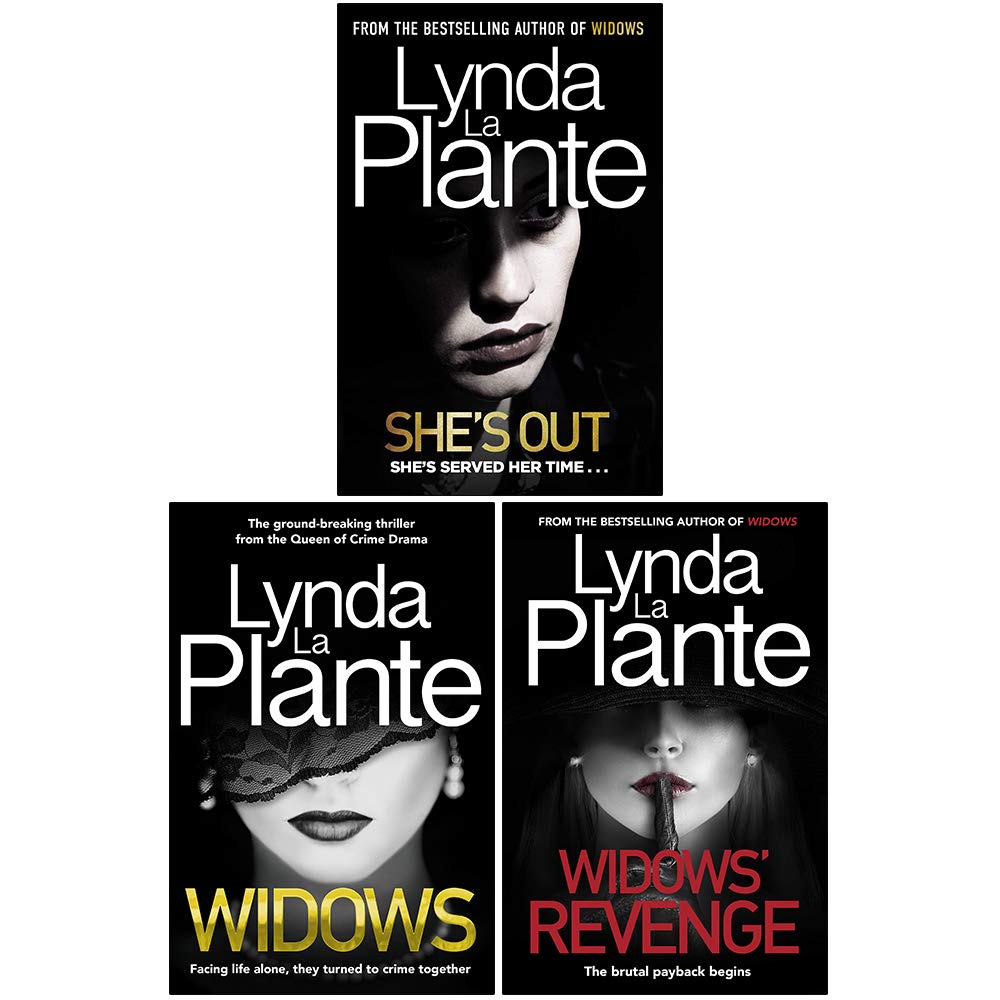
According to a certain shopping site - and Lynda La Plante's own site - the novel upon which the 1985 series is based is currently known as Widows' Revenge, so your wish may have been granted, Willie.

61yJwT2GbKL.jpg
 

Mel O'Drama

Admin
LV
16
 
Awards
44
Series Two
Episodes Three to Five


After a choppy start, the sequel series clicked with me with Episode Three.

I think it helped that I got my doubts about the series down in black and white which helped me get some perspective around it all and probably lower expectations. There’s also the fact that the series is now back in England which helps it feel tonally closer to the first.

There’s an awful lot going on, much of which I neglected to mention when covering the first couple of episodes *probably true of the first series as well). It’s a true skein, with multiple perspectives that are offshoots from or somehow connected to the widows’ own stories, and the ways in which they’re tied - particularly in this run of episodes - feels soap operatic in involving coincidence or convenience.

Take Shirley’s family: her mother Audrey is now in a relationship with a dodgy geezer of whom Shirley disapproves, who just happens to be a member of Harry’s gang and gearing up for his next big job. He’s even roped Shirley’s unwitting dopey younger brother into helping him fix a car that Harry had run someone over with, killing them (more on that in a bit). Meanwhile, Shirley herself is romantically involved with another key member of Harry’s gang. Not that she suspects, of course. Dolly and Bella have seen both men in context of their association with Harry (they’ve rented a secret hideout directly next to Harry’s secret hideout so they can spy on his meetings), but they just missed seeing him when he came to collect Shirley for a date.

Then there’s Vic Morgan whom Dolly initially hired to track down Harry. His loyalties seem fluid and he’s gone to George Resnick (Detective as was. Still hospitalised after his beating, and now divorcing his nasty wife, but more interested in Harry Rawlings than ever) offering to keep him informed if they can work something out with the reward. I shouldn’t be surprised if Vic knows some of Harry’s gang as well. He’s wooing Dolly to keep her close and get more intel, but are his feelings developing into something genuine? Since Vic has his own boat (on which Dolly got humorously wet and his leather jacket got humorously ruined) and is a bit of a slime, it seems most appropriate that he’s played by none other than Howards’ Way’s future Ken Masters, Stephen Yardley.

Among other familiar faces was Scottish yuppie Andy from EastEnders as a photographer to whom Shirley takes a fancy. Given she's not that dissimilar to Debs, perhaps he has a type.

We’re also following the police investigation, now led by Fuller - Resnick’s colleague from original-recipe Widows. It’s hard to know who to root for, but since pretty much everyone’s out to get Harry, who is now firmly established as The Big Bad, perhaps they’re all singing from the same hymn sheet, albeit with different harmonies.


continued…​
 

Mel O'Drama

Admin
LV
16
 
Awards
44
Series Two
Episodes Three to Five

continued


Since we’re 83% of the way through Series Two, I feel can say hand on heart that this Bella is distracting me. I like her, but it’s just too different an energy from Bella the 1st, and I haven’t been able to stop trying to imagine how Eva Mottley would say each line.


Even though Bella’s assertive side is coming out again as Series Two progresses, there’s something just a little too soft, rounded and nice about Debby Bishop (which, ironically, is a reason why I’m enjoying her Bella while simultaneously pining for Eva Mottley).

Fiona Hendley’s performance as Shirley seems to be improving. There are moments where she surprises me and I feel I’ve greatly underestimated her.

Series One’s big mid-point moment was the reveal that Harry was alive at the end of the third episode. There’s no doubt this was a shocker. As I mentioned, it really wowed me this time round since I hadn’t remembered that. Series Two has an arguably even bigger shocker at the end of its third episode. Once again, Harry is involved, but this time it’s not a back from the dead, but death itself. The death of one of the widows, no less.

After Harry’s return, with its black and white flashbacks, perfect timing and subtly clever writing, Linda’s death felt a more conventional kind of twist. All the same, I had no idea it was coming and I didn’t see it ahead of time. What’s more, it really captured that real-life feeling of everything happening so quickly it takes some time to register that it’s really happened. Even as they cut to the shot of the very dead Linda on the ground, I couldn’t quite believe I was seeing it. To get this reaction from me has been a very rare thing in my viewing experience, so I have to applaud all involved for not only having the courage to do this, but to pull it off in such an effective way.

Linda has been a wonderfully frustrating part of the series. She’s all chaos and drama, and her unpredictability and volatile temper and inability to bite her tongue have probably caused as many problems as she’s helped solve. It’s been a terrific performance from Maureen O’Farrell, and certainly a far more accomplished one than either of the other two younger actresses. O’Farrell can go toe-to-toe with Ann Mitchell and match her, which is no small thing.

Linda’s unapologetically loud persona and her heart of gold have given balance to the series. While Dolly is the de facto leader and maternal figure, Linda has been one of the ties that bind, her long-term friendships with Shirley and Bella and her love/hate, mother/daughter relationship with Dolly have been fascinating to watch.

For all these reasons, she’s a big loss to the series. Certainly, it’s crossed my mind that Bella and probably Shirley would have been “safer” characters to kill off without the series' dynamic changing irrevocably. But perhaps that’s the point of going with Linda. She feels important and so, then, does her loss.

Now it’s really, really personal and I’m keen to find out how Dolly and Harry’s inevitable big confrontation goes in the final episode. From the very title of She’s Out, I’m pretty sure where it leads. But how it gets there is another matter. I’m expecting to be surprised.
 

Willie Oleson

Telly Talk Schemer
LV
9
 
Awards
27
Since Vic has his own boat (on which Dolly got humorously wet and his leather jacket got humorously ruined) and is a bit of a slime, it seems most appropriate that he’s played by none other than Howards’ Way’s future Ken Masters, Stephen Yardley.
Who also played the man on the boat in THE BROTHERS.
Could it be a "boat comes with an actor" deal?
 
Top