• A little forum update...We're planning an upgrade.

    Find out more about what's planned and how you can help support the forum

    Click here for the details

Coronation Street 60 years and counting - Character By Character

cobbles

Banned
In a celebration of 60 years of Coronation Street, and hopefully many more we look at the history of Coronation Street by focusing on a character a day in the order they arrived on the street. I'll post a brief summary of the character and then the floors open for everybody else to pile in - what's your favourite story-line involving them? Would you have preferred to see them in the show a bit longer? What would you have done differently with their character. Notable is open for discussion, but I'm generally going with regular character or important character in the life of a main character with guest characters or those with a handful of episodes ignored.

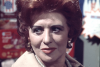
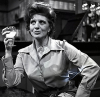
Elsie Tanner. (1960-1973, 1976-1984)
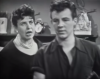
1599059740462.png 1599059634859.png 1599059783502.png

Elsie Tanner (portrayed by Pat Phoenix) was introduced in Episode 1 on the 9th December 1960 as part of the Tanner family, including her, her children Dennis and Linda and her estranged husband Arnold Tanner. To this day she remains one of the most famous characters to have walked the famous cobbles, to several generations the character of Elsie was Coronation Street.

Her love of men, many of them, and her looser moral standards set up for a decades long battle with street battleaxe Ena Sharples, who Tony Warren described as 'essentially a Victorian' most famously the pitched battle slanging match in the street in January 1965 when Ena attempts to throw Elsie out of her house as she needs a place to live.

But alongside her fights with Ena Sharples, her many boyfriends and her work ethic, having worked at a number of shops and factories throughout her years, Elsie was known for her relationships with her children, and later in life her lodgers (including another street stalwart Gail Platt). Her wayward criminal of a son Dennis is the object of her anger in the 1960s, for his many get rich quick schemes that often leave Elsie's house a mess - and his stints inside.

Her relationship with Bill Gregory - who turns out to be married, a long term friendship with Len Fairclough despite his romantic attraction to her, being suspected in the murder of her partner Steve Tanner in the late 60s and her relationship with Alan Howard among her major story-lines.

She left the street in 1984 with the door left open for a return responding to a taxi driver asking if she'd be away long with 'now there's a question.' Pat Phoenix would pass away in 1986 of lung cancer, meaning she would be unable to return. She had appeared in well over 1500 episodes by the time she left in Episode 2375 (4th January 1961).
 
Last edited:
cobbles

Banned
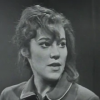
Dennis Tanner (1960-62, 1963 to 1968, 2011 to 2014)

1599139010838.png 1599138968510.png 1599138933756.png

Dennis Tanner was another one of the original characters introduced on the 9th December 1960. The character was portrayed by Philip Lowrie throughout his time on the show.

A son of single mother and street icon Elsie Tanner, Dennis was a teenage tearaway and lovable rogue and was sent to prison in 1960, being released just before the shows start. Dennis then straightens himself up and heads for a career in show business throughout the 1960s. This is a career that drives his mother mad as he lives with her. Most notably with singer Walter Potts and his boss Laurie Frazier. Providing the comedy ingredient to a show that could often be drama driven.

In 1968 he falls in love with hippy Jenny Sutton who he marries and moves to London with. In reality Philip Lowrie had become tired of the show and dissatisfied with the material he was being given and wanted out. A sentiment Tony Warren seemed to have some sympathy with, commenting that he’d initially wanted to play the part himself and;

“It was a much better part than Ken, as originally written. There were infinite possibilities in Dennis that were never explored. The criminal side. In those streets there is always a bad 'un, a wrong 'un. And he was the wrong 'un.”

Whilst away from the street Dennis did a stint inside for defrauding pensioners. He also rekindled his relationship with his mother and jilted Norma Fountain at the altar in 2009.

In 2011 the character was bought back, after a mere 44 year absence. He was a man that Sian and Sophie served while volunteering in a local soup kitchen, but is brought back to the cafe after he arrives late. After being at the cafe he meets Rita Sullivan in the street but runs away.

She makes it a mission to track him down. He’s quickly reintroduced to the show as a regular character and we learn that he’s a distant relative of Eileen Grimshaw. He and Rita soon become companions and marry. He then has an affair with Gloria. Rita takes him back to live with him out of sympathy before he punches Norris and she throws him out - prompting the character to leave Weatherfield.

In February 2020, as part of the storyline for the 10,000th episode of the show, we learnt that Dennis Tanner had passed away and sent his ashes to be scattered by his ex-wife Rita. This was an unusual move for the show in killing off a character where the actor was still alive after they’d been written out of the show.
 
Last edited:

cobbles

Banned
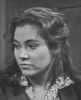
Linda Cheveski (nee Tanner)
1599211804416.png 1599211716460.png 1599211676845.png

Linda Cheveski was another of the characters introduced in the first episode on the 9th December 1960. Completing the Tanner family, she was sister to Dennis and daughter to Elsie who we’ve covered. The role was essentially a recurring character, with Linda bombing back and forth to visit Elsie whenever she started to have marital issues with her husband Ivan Cheveski.

She and her husband Ivan would move into Coronation Street briefly in 1961. She had two children - Paul Cheveski and Martin Cheveski - the latter who we’ll know doubt return to at some point…

She emigrated to Canada in 1961 in show. In reality the equity actors strike had prevented her from renewing her contract and unlike some others she didn’t return to a regular role. She’d make a brief return to the street for her mother's wedding to Steve and later and for Dennis’s wedding in 1968.

She’d make one last brief return to the cobbles in 1984 tasked with selling the house, however tried to stay in it until her mother told her to sell it. By this point she had become estranged from her husband Ivan.
 

Ome

Admin Emeritus
This is a fantastic thread, thank you Cobbles. Is it all you're own work/words and such or are you taking it from another site?

Not that it matters, I won't be looking for it online if it exists. I will happily wait and enjoy your posts as you continue with this.
 
I too am loving this thread. It's great to get to know the characters this way.

Elsie is part of my earliest Street-watching memories. I can remember being a little shocked when she slapped Suzie Birchall out of the street (it was possibly my first experience of a soapy bitch slap). And then I read with great excitement one of the Sunday papers which had an interview with Cheryl Murray in which she said that slap had really hurt (again, this was one of my earliest experiences of behind-the-scenes titbits).


Her exit is also ingrained in my memory - walking along the lamp-lit street in her mac, with the echoing voices of different conversations from the previous quarter of a century. It's perhaps THE Corrie exit in my mind.


On DVD, I loved watching her journey. The spats with Ena, Bet and Hilda, of course. And that great two-hander between Elsie and Len when she returned to the Street (if I remember, it was half an entire episode).


Dennis and Linda are characters I got to know through the Network DVDs. I can remember that Dennis was a favourite on my first watch of the DVDs, and it happened that his 2011 return to the Street was announced as I was watching some of his Sixties episodes for the first time, which blew my mind a little. It's interesting to see Tony Warren's comment about Dennis, and makes me wonder what could have been.

Anyway, great work, Cobbles. I'm looking forward to more. :gotcha:
 

cobbles

Banned
This is a fantastic thread, thank you Cobbles. Is it all you're own work/words and such or are you taking it from another site?

Not that it matters, I won't be looking for it online if it exists. I will happily wait and enjoy your posts as you continue with this.

Cheers, I'm enjoying putting them together It's my own words, but obviously information used is with the help of reference to Corripedia/Wikipedia and other sites for factual info/quotes (I'll try and attribute quotes to the person.)

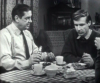
(I sadly or thankfully wasn't alive in the 60s to do these from memories. :D ) The images taking from a google scan for the most relevant images.
I too am loving this thread. It's great to get to know the characters this way.

Elsie is part of my earliest Street-watching memories. I can remember being a little shocked when she slapped Suzie Birchall out of the street (it was possibly my first experience of a soapy bitch slap). And then I read with great excitement one of the Sunday papers which had an interview with Cheryl Murray in which she said that slap had really hurt (again, this was one of my earliest experiences of behind-the-scenes titbits).


Her exit is also ingrained in my memory - walking along the lamp-lit street in her mac, with the echoing voices of different conversations from the previous quarter of a century. It's perhaps THE Corrie exit in my mind.


On DVD, I loved watching her journey. The spats with Ena, Bet and Hilda, of course. And that great two-hander between Elsie and Len when she returned to the Street (if I remember, it was half an entire episode).


Dennis and Linda are characters I got to know through the Network DVDs. I can remember that Dennis was a favourite on my first watch of the DVDs, and it happened that his 2011 return to the Street was announced as I was watching some of his Sixties episodes for the first time, which blew my mind a little. It's interesting to see Tony Warren's comment about Dennis, and makes me wonder what could have been.

Anyway, great work, Cobbles. I'm looking forward to more. :gotcha:

The exit is perhaps one of the greats up there with Jacks for very different reasons - the Bill Podmore era is one of the few old eras of the show I've managed to watch with it being reran I've seen quite a bit of Elsie Tanner on youtube before it got took down. I really loved Elsie's interaction with Gail and Suzie, the way she became a surrogate/second mum for both characters as they found their feet was great -

I'm trying to keep the characters to fairly neutral territory but you have to be honest the return seemed completely unnecessary and pretty much ruined the character
with the petty Gloria story line. Killing him off for the 10k episode made sense in some ways as a result of that, but handled differently the door could have surely been open for a return.
 
Last edited:
The images taking from a google scan for the most relevant images.
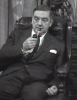
It's really nice to have a visual of the characters' evolutions this way to accompany the text.


I really loved Elsie's interaction with Gail and Suzie, the way she became a surrogate/second mum for both characters as they found their feet was great
Yes - that household seemed really interesting. I've only seen selected episodes from that era, especially the Seventies episodes with them, but it seems they ran the gamut of friendships and fallouts between them all. Obviously, Elsie saw a lot of herself in Suzie (and possibly some of herself in Gail as well), so it was interesting to have a mirror held up that way. It did seem for a while that Suzie was being groomed to step into Elsie's shoes if and when she left. I'm surprised she wasn't around for longer as she seemed very popular.


Killing him off for the 10k episode made sense in some ways as a result of that, but handled differently the door could have surely been open for a return.
This is something that had passed me by. I hadn't realised Dennis was killed off until it was mentioned in the post about him. It seems a shame for him to be killed offscreen. Especially since Philip Lowrie is still around.
 

Ome

Admin Emeritus
It's my own words, but obviously information used is with the help of reference to Corripedia/Wikipedia and other sites for factual info/quotes (I'll try and attribute quotes to the person.)
There are no rules saying you have to do that. I often post various articles and stuff without saying who or where it was from. I was just curious if there was a site dedicated to this.

I think it's absolutely brilliant that someone as young as you is taking such a great interest in the show's history.
 

Ome

Admin Emeritus
I hadn't realised Dennis was killed-off until it was mentioned in the post about him. It seems a shame for him to be killed offscreen. Especially since Philip Lowrie is still around.
I truly regret this happening, even though the story took a few different twists and turns. I definitely loved the period in which they brought Dennis back and honestly thought the character had enough to continue as long as Philip Lowrie was available to keep with the show
 

cobbles

Banned
Frank Barlow (1960-64, 1967. 1971)
1599294797898.png 1599294613164.png 1599294743994.png
Frank Barlow (portrayed by Frank Pemberton) was another original character introduced in that first episode on the 9th December 1960. The head of the Barlow family, intended as the more straight down the road family on the street - an alternative version of a working class family to the Tanner family that we see first. He is the father to Ken Barlow and to David Barlow. A wife to Ida Barlow.

Frank is characterised very much as a typical working class man of the times and is clearly unnerved by his son’s ambitious and intellectual nature. He worked as a postman, a fact regularly referenced in the show. One of the earliest ongoing story-lines between Ken and Frank being an argument regarding Ken wanting to take a girl he’s courting to the kitchens of the Imperial Hotel - where Ida worked.

Sadly tragedy would strike for Frank and the rest of the Barlow family in 1961 when his wife Ida was fatally struck down by a bus; only the second death in Coronation Street. Frank took several years after the death of Ida to find his way again, eventually opening a DIY shop on the street. He enjoyed brief relationships with both corner shop owner Florrie Lindlay and with Christine Hardman - a woman half his age!

The character was written out in 1964 by a man described by a talking head in a Corrie behind the scenes documentary in the 1990s as a ‘script psychopath’. Whilst most famous for the decision to kill off Martha Longhurst, Frank was another victim of his heavy pruning.

In 1965 Frank Pemberton suffered a stroke, which would leave him unable to return to acting the role - even when producers wanted him too. He was brought back on two occasions to see if this would be possible - one to try and persuade Ken to pay a fine rather than go to prison, and a second time for his daughter in law Valerie Barlow's funeral in February 1971.

Frank Pemberton would pass away just over a month later in March 1971. Ken referred to Frank having passed away by 1975 in a conversation with Peter Barlow - indicating an off screen death had taken place in the intervening years.
 

cobbles

Banned
Ida Barlow (1960-1961)

1599381204132.png 1599381185597.png 1599381426084.png

Ida Barlow (nee Leathers) is another of the original characters introduced in the 9th December 1960. Perhaps one of the forgotten members of the most famous family on British television. The character would remain in place until September of 1961. She was portrayed by Noel Dyson on the show.

She was husband to Frank and mother to Ken and David. When the show began Ida was employed as a cleaner at the Imperial Hotel kitchens which caused friction between Ken and Frank and in turn between Ida and Frank, with Frank seeing him as throwing his mum’s money back at her employer. Ida enjoyed a friendship with her neighbour Albert Tatlock.

In September 1961 Ida went to visit Beattie Pearson, unfortunately she didn’t make it to that visit, having been struck down by a bus on her way to meet her.

The death was not announced and trialled in the press as Noel Dyson was scheduled to appear with the rest of the Barlows to light up the Blackpool illuminations, and the show’s bosses were concerned news of her death getting out would make that a less happy occasion.

The episode in which her funeral was held attracted high viewing figures in comparison with other episodes up to that point, in excess of 15 million and there has been anecdotal reports that viewers sent wreaths to Granada Studios...
 

cobbles

Banned
And now for my own comment on the above that's a bit too harsh to include in the bio?

Does anyone find it bloody weird that Ken doesn't mention is parents ever? Like they just never existed? I know he and Frank had a strained relationship but you'd still think he would get mentioned once in a blue moon (I know he was VE Day but I mean in general 'my dad' rather than 'Frank - war hero' terms.'

Like not even to new characters who might ask about them or to his kids? Just plain weird.
 
He enjoyed brief relationships with both corner shop owner Florrie Lindlay and with Christine Hardman - a woman half his age!

I remember these from certain episodes on the Network DVDs. I thought the Christine relationship interesting because it seemed to force both characters to take stock of themselves in some way. Scrutiny from interfering neighbours will do that, I suppose. :D


The character was written out in 1964 by a man described by a talking head in a Corrie behind the scenes documentary in the 1990s as a ‘script psychopath’. Whilst most famous for the decision to kill off Martha Longhurst, Frank was another victim of his heavy pruning.

In 1965 Frank Pemberton suffered a stroke, which would leave him unable to return to acting the role - even when producers wanted him too. He was brought back on two occasions to see if this would be possible - one to try and persuade Ken to pay a fine rather than go to prison, and a second time for his daughter in law Valerie Barlow's funeral in February 1971.

I don't think I've seen any of his return episodes, but they sound interesting.


In September 1961 Ida went to visit Beattie Pearson, unfortunately she didn’t make it to that visit, having been struck down by a bus on her way to meet her.

This is another of those episodes from the DVDs that resonates. I liked seeing it from the family's side, with them not knowing where Ida was, and out looking for her. Nowadays it seems more period because of that angle, because it's very likely that Ida would have had a mobile phone and also that the police would have had the resources to contact the Barlows almost immediately.


Noel Dyson went on to Father, Dear Father, of course. It's a series I watched for the first time a few years ago.

She was great in it and got to deadpan away as the kind of ingenuous straight man of the series. And she got to film a series in Australia, which is certainly further than she'd have got to travel if she'd stayed on Corrie.
 

cobbles

Banned
I remember these from certain episodes on the Network DVDs. I thought the Christine relationship interesting because it seemed to force both characters to take stock of themselves in some way. Scrutiny from interfering neighbours will do that, I suppose. :D

Yup I imagine a 50 year old dating a 24 year old who has two kids in their twenties would be the talk of the Rovers even in this day and age. :D

I don't think I've seen any of his return episodes, but they sound interesting.

I don't think they've ever been available - in that black hole era of the show.


This is another of those episodes from the DVDs that resonates. I liked seeing it from the family's side, with them not knowing where Ida was, and out looking for her. Nowadays it seems more period because of that angle, because it's very likely that Ida would have had a mobile phone and also that the police would have had the resources to contact the Barlows almost immediately.


Noel Dyson went on to Father, Dear Father, of course. It's a series I watched for the first time a few years ago.

She was great in it and got to deadpan away as the kind of ingenuous straight man of the series. And she got to film a series in Australia, which is certainly further than she'd have got to travel if she'd stayed on Corrie.

I must admit to not having seen this one. Might go and have a look for it and catch it in the next few days to week.
 

cobbles

Banned
Ken Barlow (1960 - 2013, 2014 - Present)

1599468984013.png 1599469036885.png 1599468911494.png

Ken Barlow was one of the original characters on Coronation Street introduced on the 9th December 1960 - alongside the rest of the Barlow family. The character has been portrayed by William Roache for 59 years now, with it seemingly like he’s as much part of the street as the Rovers Return, The Kabin or the cobbles. He truly is a fixture of the show.

As a forewarning, I normally try to keep these to under an A4 page for easy reading. It seems unlikely that will be possible here, such is the character history in this case.

Ken was introduced as a bright young thing who was at university studying English and History, at the time a remarkable achievement for a kid from Coronation Street. Ken was not at all proud of where he came from, much to his working class father Frank’s dissapointment. This was evident quickly in the show when Frank hit out at Ken for wanting to take a friend to dine where Ida worked.

The tension would boil over to a higher level when Ken decided to go on a ban the bomb march, with Frank having served in World War 2 this did not go down well. In a similar way that Elsie and Ena represented completely different generations, Frank and Ken were engineered to demonstrate male different generations and family issues that it could cause.

The character of Ken has been described as both a ladies man and a bore - a character who can be relied upon for a good old courtship storyline or to give a lecture on philosophy to an unenthusiastic youngster with no hint of oddity about the two. At the core Ken is the ordinary man, a youngster with ideals and dreams quickly crushed by reality who managed to carve out a place in his life - in Ken’s case on the same street for 60 years but nonetheless a place.

His first marriage was to Valerie Barlow (nee Tatlock) with whom he had Peter and Susan - his first children. The relationship was a rocky marriage at times - with Valerie at one point leaving to live in Glasgow following Ken’s affair with Jackie Marsh. Valerie died in 1971 following a blaze caused by a faulty hairdresser leaving Ken a single father with two young children. Bill Roache described the following scenes of him walking through the charred building as ‘most enjoyable and satisfying moments in Coronation Street’

Ken then entered into what could generously be described as a rebound marriage with Janet Reid. With Janet’s hatred of Ken’s children, either stemming from jealousy or uncomfortability with it and her decision to pack them off to boarding school it was clearly this was not a marriage with long legs, and drove the generally placid Ken to violence towards Janet. They split in 1974. A few years later in 1977 Janet would return - when Ken rejected her request she committed suicide.

Following that storyline the character took a somewhat background role until Dierdre arrived. A romantic relationship quickly ensued with a marriage between Ken and Diedre in 1981. This would lead to perhaps one the most famous love triangles in British soap operas when Dierdre went off for an affair with Mike Baldwin, a storyline that captured the nation's imagination so much the result of the final showdown was shown in Old Trafford the home of Manchester United in the UK on the scoreboard reportedly. He became an adoptive father to Tracy but the marriage like all of Ken’s marriages - and most marriages in the show - had its ups and downs.

The affair would also turn an already frosty relationship between ‘intellectual lefty’ Ken and ‘business minded’ Mike into a far more personal rivalry and bitter relationship that would last until Mike Baldwin died of Alzhiemers in Ken’s arms in 2006 and span Mike’s marriage to Ken’s daughter Susan. A feud that would provide some classic bar brawls and fisticuffs down the years.

There were affairs for both Ken and Dierdre in the 1990s that sent the two their separate ways, but reconciliation eventually followed with the remarriage the viewers were crying out for taking place. Deirdre would pass away offscreen in 2016, following the unexpected death of actress Anne Kirkbride who played her.

Throughout much of the marriage Dierdre’s acerbic and blunt as a knife mother would be a thorn in Ken’s side - especially when she began living with them - providing some of the most memorable comic moments in the show such as Christmas at the Barlows and Blanches goes to the AA meeting.

Ken’s complicated relationship with manipulative and scheming adopted daughter Tracy, alcoholic and eventually recovered alcoholic Peter Barlow and his grandchildren would form the greater part of his storylines throughout the last twenty or so years.

In recent years members of his extended family have returned to the street, bringing Adam and Daniel back to the street and creating a much stronger connection to the other characters in the show in the post-Deirdre world for Ken on the street.

There’s so much more that I could have included in this but didn’t want it dragging on for pages (him characterising his neighbours as Lazy and seeing the unkind side of Len Fairclough’s hand make contact with his face, the fall storyline, more about Denise Osbourne and Daniel Osbourne’s first stint...)

A dozen paragraphs is simply not to justice to perhaps the most iconic British TV character besides Doctor Who, a constant living link to the show's past. Of course with Bill Roache being 88 there’s clearly not an indefinite future ahead, but he’s expressed a desire to the first 100 year old actor on the show - and bloody good luck to him. You could write a feature length documentary about the life of Ken Barlow, but what will be the final scene?
 
Bill Roache described the following scenes of him walking through the charred building as ‘most enjoyable and satisfying moments in Coronation Street’
With Janet’s hatred of Ken’s children, either stemming from jealousy or uncomfortability with it and her decision to pack them off to boarding school it was clearly this was not a marriage with long legs, and drove the generally placid Ken to violence towards Janet. They split in 1974. A few years later in 1977 Janet would return - when Ken rejected her request she committed suicide.

There's something beautifully grim and uncompromising about Seventies Corrie. It's definitely the era of the series which holds most interest for me.
 

cobbles

Banned
There's something beautifully grim and uncompromising about Seventies Corrie. It's definitely the era of the series which holds most interest for me.

It's odd because in some ways it's an almost too comfortable and slightly idyllic version of 70s Britain with the community focus, but then you get random story-line's that are pretty deep cutting like Janet's suicide, the siege at Baldwins, the strikes or the bigamy story-line with Emily. It's seems to be when the show first experiments with real sensationalism that would come to define it after EE arrived looking at story-lines and episode guides from the era. As the show always seems to do it's playing safe but staying dramatic.

It feels like a show still very much experimenting with what it is and where it wants to go as it starts to shed some of it's icons. I suppose like much of media in those days it's not sure what it can do - any being a flagship nominally family appropriate (or at least appropriate for teenagers - you'd have a good case to argue many 70s story-lines were not family friendly and I don't think the show has ever claimed to be family friendly despite children genuinely watch it - that's a discussion that could take up reams in another thread...)

You do wonder if Podmore hadn't come in in 76 and giving it a great big shake up whether it might have survived - although it's unfair to pass comment on that when we haven't seen the early 70s episode from the era that gets a lot of criticism (if there's anyone on this forum who used to watch it back then or has been lucky enough to see any since do chime in...) After all the decision to start the Granada run from April 1976 onward back in the 90s was a conscious one in that that was the era that had come to symbolise 'old fashioned or classic corrie' even by then.
 

cobbles

Banned
David Barlow (1960-1961, 1963, 1964-1968)

1599557623147.png 1599557553626.png 1599557677170.png

David was the younger brother of intellectual Ken and was portrayed by Alan Rothwell. Another original character he was introduced in the first episode on 9th December 1960. In contrast to his brother Ken he’d remained closer to the family’s working class routes by taking an engineering apprenticeship and worked at a local factory which meant that he was seen in a better light by his father Frank Barlow and generally involved in less tension.

However, David was also a talented footballer, and left the street to go and play football in London. He returned to the show as regular in 1964 - when he and Irma became romantically involved and quickly got married in 1965.

They bought the corner shop and ran it for a few years - David suffering an injury that forced his early retirement. In 1968 - with Alan Rothwell wanting to be written out of the show - David’s football career was reignited and he took a job with an Australian football team, taking Irma with him. Their son Darren would be born off screen later that year.

In 1969 Irma revisited the street - and the producers decided they wanted her to become a permanent character - initially intended for David to come back, Alan Rothwell rejected the offer. In order to facilitate Irma’s return the producers would kill David and Darren off in a tragic car crash. Rothwell was hoping he could come back at some point, and unhappy with the decision to kill him off along with his baby son Darren in 1970.

As with the rest of the original Barlow family - Ken rarely references his brother in the show despite them seeming to be somewhat closing in the opening episodes.
 
Last edited:
In 1969 Irma revisited the street - and the producers decided they wanted her to become a permanent character - initially intended for David to come back, Alan Rothwell rejected the offer. In order to facilitate Irma’s return the producers would kill David and Darren off in a tragic car crash. Rothwell was hoping he could come back at some point, and unhappy with the decision to kill him off along with his baby son Darren in 1970.

Killing Alan off has always seemed very wrong-footed to me. Especially with it being done without the actor's consent and offscreen. I know the writers need to push the boundaries and take some risks, but this always seemed particularly gung ho.

Perhaps it seems more so with the benefit of hindsight. He was killed to bring back Sandra Gough, which was very short-lived due to her lack of professionalism. Corrie has now run for such a long time and has brought back a number of characters from earlier decades, so there's no reason David couldn't have returned a few years down the line. He and Darren could still be in it now.

I always associate Alan Rothwell with the character of Nick Black on Brookside, as he arrived around the time I became a regular viewer. That was another role where he was killed offscreen. Though far more appropriately so.
 

cobbles

Banned
Killing Alan off has always seemed very wrong-footed to me. Especially with it being done without the actor's consent and offscreen. I know the writers need to push the boundaries and take some risks, but this always seemed particularly gung ho.

Perhaps it seems more so with the benefit of hindsight. He was killed to bring back Sandra Gough, which was very short-lived due to her lack of professionalism. Corrie has now run for such a long time and has brought back a number of characters from earlier decades, so there's no reason David couldn't have returned a few years down the line. He and Darren could still be in it now.

I always associate Alan Rothwell with the character of Nick Black on Brookside, as he arrived around the time I became a regular viewer. That was another role where he was killed offscreen. Though far more appropriately so.

I was thinking about this while writing his piece up and thought if Corrie were going to do a back from the dead story-line, David Barlow would be a good shout. Unfortunately the boat has probably been long missed on that one with Bill Roache being 88 and Alan Rothwell 83, given how big such a storyline would be.

It's not like women in corrie pretending their husband is dead was unheard of in Irma's day (we'll get to that in Florrie Lindlay's bio) and the two were killed off screen - of course you'd then need a leap of logic to explain why David never contacted Ken but something like him being banged up for a few murders to explain the gap - and Darren being taken away for fostering would be plausible if far-fetched. You could imagine Irma not wanting the shame of that situation and going for the easy option of pretending he was dead. (There's one to file in for my sensationalist Fantasy Corrie for the 60th :D )
 
Last edited:
Top