The Lucy Thread: AKA Lucille Ball on Film

Crimson

Telly Talk Enthusiast
LV
2
 
Awards
9
In the annals of Hollywood, it's often suggested that Lucille Ball was a flop in movies and only found success in TV; Lucy herself often said as much. Yet I find her career and filmography among the more interesting of Old Hollywood actors. I sometimes kick around a few theories about why her film career is often disregarded, even among film buffs.

The most obvious is that her TV work overshadowed her movies. Six years of I LOVE LUCY have dwarfed everything else she did in 60 years of movies, radio, stage and even the rest of her TV work.

I think too that her career lacked at least one truly great film. Compare her career to, say, Paulette Goddard -- an actress of similar age and, more or less, stature in the 40s hierarchy of stars. Goddard was less versatile and her filmography as a whole far less interesting; but, if nothing else, she has two Chaplin films and THE WOMEN to her credit. Lucy made films that were good and even very good, but no one single film is recognized as being 'great'.

Lastly, Lucy was a curiously diverse performer for the era. Most actors of Old Hollywood were typecast -- either by image or genre. (Davis played a wide range of characters, but was pigeonholed almost exclusively in melodramas.) Lucy's career was all over the place. Equally adept at drama as comedy; careering between leading and supporting roles with no apparent preference. A drama followed by a musical followed by a thriller followed by a western followed by a slapstick comedy. She never fell into a niche. (Well, until after TV at least, by which time her career was nothing but niche.)

And that's kinda why I love her movies.

p8dluba_ec013_h.jpg

5caaeb0a9776ceb47df7696dc9ff20f6.gif
 
Last edited:

Crimson

Telly Talk Enthusiast
LV
2
 
Awards
9
Of all the not-quite-but-oh-so-close-to-great films that Lucy made, none is closer to great than DANCE, GIRL, DANCE (1940). The film also stars Maureen O'Hara, Louis Hayward, Ralph Bellamy, and Maria Ouspenskaya*; and was directed by Dorothy Arzner, Golden Age Hollywood's rare female director.

Like Lucy's other stab at an A-material starring role while at RKO, THE BIG STREET with Henry Fonda, the film is perhaps a bit too muddled to be truly great. Also RKO was the most chaotic of all film studios and seemed to lose interest in both films, and Lucy's potential, before they were even released. Yet DANCE, GIRL, DANCE is glorious; funny, dramatic and unusually bold in its progressive stance. In an era dominated by strong female stars, few other films were ever as "feminist". (Which may account for why RKO lost interest in it.)

The film contains one of Maureen O'Hara's best performances, but Lucy is remarkable in the movie. Few actresses of the early 40s could match her beauty and talent, which makes it all the odder than three different studios -- RKO, MGM and Columbia -- never quite figured out what to do with her. Her voice was usually dubbed, but I'm pretty sure that's her singing voice in the film. The "she couldn't sing or dance" myth has persisted, mostly the result of people who think she wasn't acting as Lucy Ricardo. (And, of course, MAME -- past her prime, dancing on a badly healed broken leg, and "singing" with a voice wrecked by decades of ill-use and heavy smoking.) One of the musical directors on I LOVE LUCY noted that Lucille had a more developed musical skill than Desi, who got by on flash and charm.


*I would have sworn Joseph Calleia is in the movie, but nope that's Harold Huber.
 

ClassyCo

Telly Talk Warrior
LV
5
 
Awards
11
Lucille Ball is an interesting one to decipher. Her career in film is completely dwarfed by the continuing popularity of I Love Lucy, which still resonates in popular culture for its innovate behind-the-scenes techniques, and to a lesser extent, The Lucy Show and Here's Lucy. Her career on the small screen has morphed her into the First Lady of Television, which she quite deserves, but it undermines her work on the silver screen.

Ball was one that was tossed around to several different studios before she finally found her niche, as in the television comedy. She spent her early movie career at RKO, who hopelessly misjudged her potential by casting her in a host of films, from the A-list melodrama Stage Door to the B-picture drama Five Came Back. In fact, she became particularly well-known for her roles in B-movies, that she was coined the "Queen of the B's", a title previously held by Fay Wray. Eventually, she found her way over to MGM, where her dyed red hair was used to great advantage in glossy musicals like Du Barry Was a Lady and Best Foot Forward. Her lack of singing talent, however, cut her career in musicals short, and she would later appear in films like The Big Street, a noirish melodrama co-starring Henry Fonda, and the romantic comedy Easy to Wed, appearing with Esther Williams and Van Johnson. Even though she continued to appear regularly in popular box office successes, her career at MGM was basically sidelined, and I seem to think she went more or less unnoticed by many moviegoers.

After she made it big on TV, I've always felt Lucy's film work seemed to trap her in. What I mean is she seemed like she had grown use to performing in front the live audiences, and when her movies took that away, she seemed kind of like a fish out of water. I always get the feeling she's waiting for the audience to laugh when she spits out a joke, but is particularly wounded because her fans aren't physically there cheering her on. Of course, I understand that not everyone would share in this assessment, and I also understand that I may be being over-analyzing the situation, but I must write it as I see it. Her first film post-television success was The Long, Long Trailer, which was a major hit, which was followed by Forever Darling, which was less successful. She would do a few comedies in the 1960s, such as Critic's Choice and A Guide for the Married Man, but both struggled financially to recoup their investment. Lucy's film career had dwarfed in comparison to her small screen popularity. Her final theatrical film, a big-budget remake of Mame, released in 1974, actually offers one of my favorite performance of hers. Sure, she was raked over the coals for her work, but I find the movie thoroughly enjoyable, and not just in its camp ratio.

It's really unfair that we don't give Lucy more credit for having some really good motion pictures on her resume.

Lucille-Ball-Mame-1974.jpg
 

Crimson

Telly Talk Enthusiast
LV
2
 
Awards
9
I've always felt Lucy's film work seemed to trap her in. What I mean is she seemed like she had grown use to performing in front the live audiences, and when her movies took that away, she seemed kind of like a fish out of water.

There's truth to that; Lucy learned in her radio days, after watching Red Skelton, that she performed best with the immediate reaction of an audience. I think, too, that after playing essentially the same character for nearly 25 years, her talents dulled; acting is like any skill and since Lucy stopped using those skills, she lost them. Particularly by the late 60s, as she began to rely on cue cards; something she would have chided actors for in her earlier TV days.
 

Crimson

Telly Talk Enthusiast
LV
2
 
Awards
9
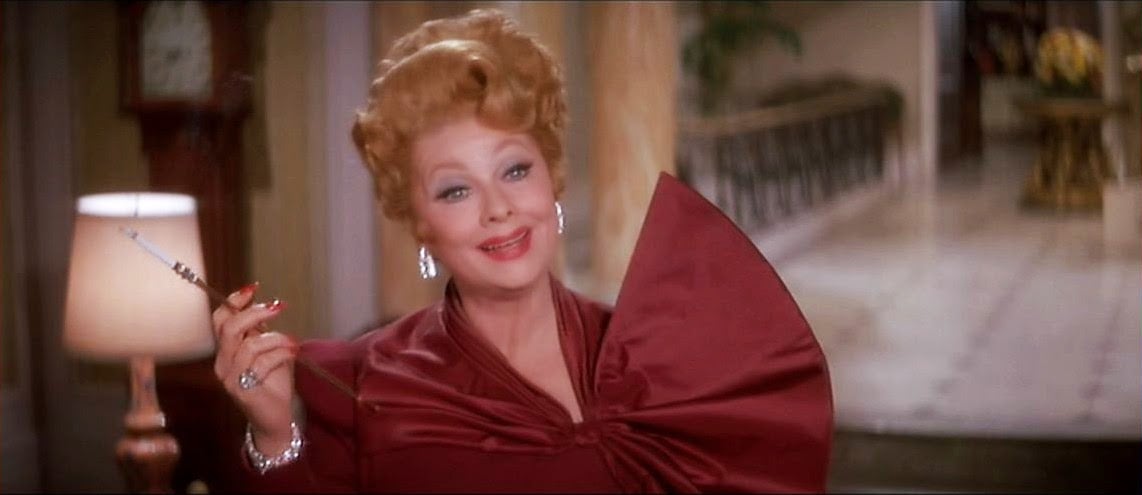
Her final theatrical film, a big-budget remake of Mame, released in 1974, actually offers one of my favorite performance of hers. Sure, she was raked over the coals for her work, but I find the movie thoroughly enjoyable, and not just in its camp ratio.


Well that will make my review, which I was already pecking away at, somewhat awkward now. ;)

I don't think the film is very good. Yet the hysterically vitriolic reaction of critics, and its deadly reputation, are largely unwarranted by the actual film. It's not one of the worst movies ever made; one of the worst musicals ever made; or, even, the worst musical of its era. MAME suffers from the same problem as most musicals of the 60s and 70s. It's over-produced, rather ponderous and has a miscast lead. Even the good musicals of the era -- say, MY FAIR LADY -- are kind of stately compared to the verve of musicals made in the 40s and early 50s.

To some extent, the problem with MAME is one of diminishing returns; the book is better than the movie which is better than the musical. The book is bawdy and sly. The Rosalind Russell film is stagy and frantic (although, still, funny in an overly long, cinematic sitcom kind of way). The Lucy film is stodgy and lifeless. Perhaps the film would have turned out better if it had been directed by Cukor, as originally planned, with Madeline Kahn* in support.

What's odd about MAME is how it takes some of original film's best comic moments and literally throws them away. The lunatic energy of Mame wrecking the dinner with the Upsons in the first film is turned into a few snide comments in the second. Even somewhat past her prime, that's exactly the kind of comedy Lucy excelled at and the film skipped it.

Even setting aside her age, her bum leg, and her ruined voice, I don't think Lucy is good in much of the film. Mostly she recreated Roz's mismatched performance: half haughty grande dame and half eccentric madcap. As if Margaret Dumont and Lucy Ricardo could ever be the same person. That haughtiness would cling to Lucy throughout the 70s, ruining her work and giving her public persona a sour quality. Only in the instances where Mame is close to "Lucy" does the film come to life.

*Madeline, fired by Lucy for not imitating Jane Connell's Broadway performance as Gooch, later marveled at how young Lucy looked in the film because, Madeline said, in person Lucy looked like a "103 year old chorus girl".

maxresdefault.jpg
 

ClassyCo

Telly Talk Warrior
LV
5
 
Awards
11
Well that will make my review, which I was already pecking away at, somewhat awkward now. ;)

I don't think the film is very good. Yet the hysterically vitriolic reaction of critics, and its deadly reputation, are largely unwarranted by the actual film. It's not one of the worst movies ever made; one of the worst musicals ever made; or, even, the worst musical of its era. MAME suffers from the same problem as most musicals of the 60s and 70s. It's over-produced, rather ponderous and has a miscast lead. Even the good musicals of the era -- say, MY FAIR LADY -- are kind of stately compared to the verve of musicals made in the 40s and early 50s.

To some extent, the problem with MAME is one of diminishing returns; the book is better than the movie which is better than the musical. The book is bawdy and sly. The Rosalind Russell film is stagy and frantic (although, still, funny in an overly long, cinematic sitcom kind of way). The Lucy film is stodgy and lifeless. Perhaps the film would have turned out better if it had been directed by Cukor, as originally planned, with Madeline Kahn* in support.

What's odd about MAME is how it takes some of original film's best comic moments and literally throws them away. The lunatic energy of Mame wrecking the dinner with the Upsons in the first film is turned into a few snide comments in the second. Even somewhat past her prime, that's exactly the kind of comedy Lucy excelled at and the film skipped it.

Even setting aside her age, her bum leg, and her ruined voice, I don't think Lucy is good in much of the film. Mostly she recreated Roz's mismatched performance: half haughty grande dame and half eccentric madcap. As if Margaret Dumont and Lucy Ricardo could ever be the same person. That haughtiness would cling to Lucy throughout the 70s, ruining her work and giving her public persona a sour quality. Only in the instances where Mame is close to "Lucy" does the film come to life.

*Madeline, fired by Lucy for not imitating Jane Connell's Broadway performance as Gooch, later marveled at how young Lucy looked in the film because, Madeline said, in person Lucy looked like a "103 year old chorus girl".

View attachment 21655
I can completely understand why Lucy's Mame wouldn't appeal to many. It is lengthy and occasionally bland, but I eat it up. Maybe it's Bea Arthur balancing Lucy that draws me in more than Lucy herself.
 

ginnyfan

Telly Talk Active Member
LV
0
 
Awards
6
I haven't seen Lucy's Mame but I've heard about its notoriety. I'm not a big fan of the original Mame either, Rosalind Russell is even more over the top than usual and the whole thing is an overlong apartment dress up show that I don't find particularly funny or interesting. But I seem to be in minority since the movie was a huge hit when released and is still a TCM viewers favourite (at least on Twitter).

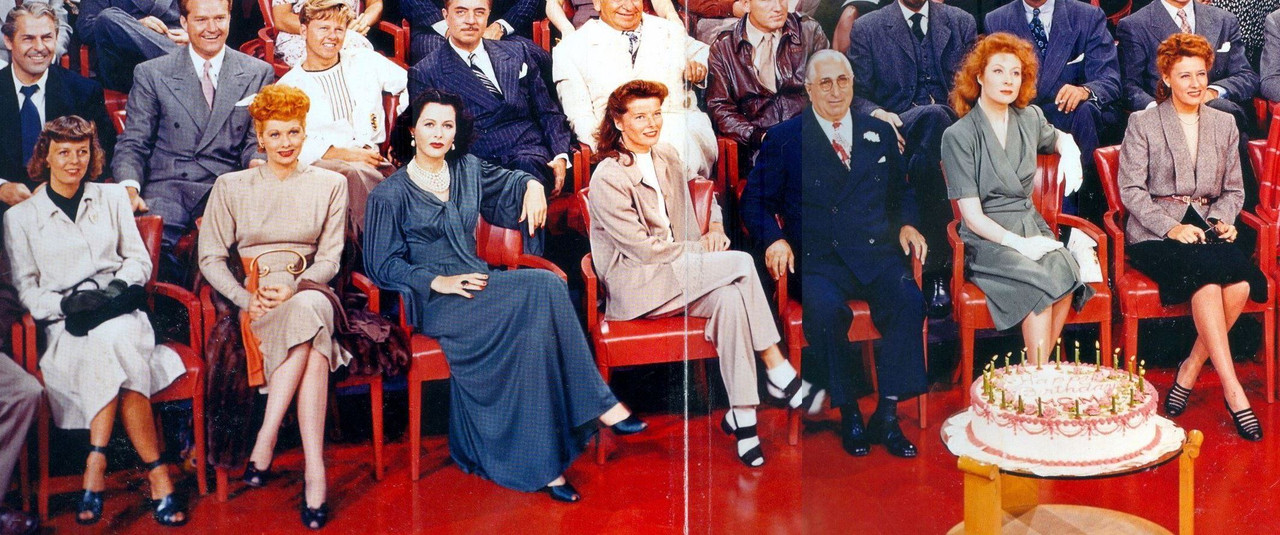
Back to Lucy. She certainly had an interesting career. She was at RKO during the studio's best years in the 30s and early 40s and she made some good movies there, both supporting and staring roles. What's a real surprise to me is how her MGM phase turned out to be a big disappointment. I was under the impression that Lucy signing with Metro was a big deal, not just for her but studio as well which seems to have, initially, seen a big potential in her. She was after all, placed in that prestigious first row along with all their leading ladies and LB himself in the 1943 anniversary photo. But she never really got a great role or a showcase there, it was mostly these wartime variety musicals where she made cameos along with other stars, or a few basic staring roles in musicals/comedies and a few supporting roles, including a Hepburn/Tracy vehicle Without Love. It seems like they truly did not know what to do with her. By 1947 she was freelancing at other studios, with more interesting roles, like film noir Lured. It's a shame MGM did not use her in a better way, there were many roles she could have gotten. I can see her as Judy's big sister in Meet Me in Saint Louis for example, instead of the boring Lucille Bremer who was apparently dating on of the execs there who pushed her career.


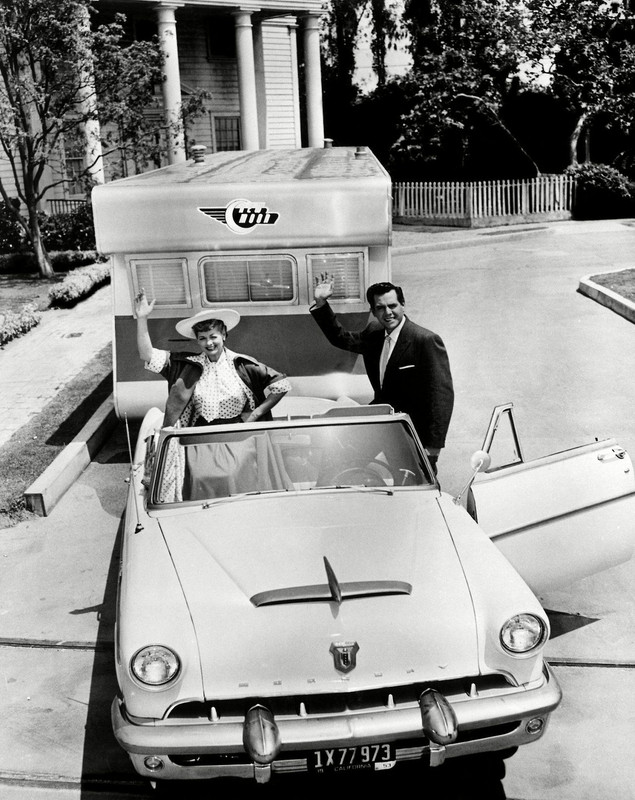
Anyway, Lucy made a spectacular return to MGM in 1954 with one of my favourite 50s comedies, The Long, Long Trailer which was a huge hit. I love this movie, it's a lot of fun and a visual joy to watch with all the 50s Americana on display. Her follow up, 1956 Forever, Darling was a disappointment though.


From her later work, I've recently seen The Facts of Life, 1960, with Bob Hope, which is quite good. Of course she had a huge hit in 1968, with Henry Fonda in Yours, Mine and Ours which I always enjoy watching.

 
Last edited:

Crimson

Telly Talk Enthusiast
LV
2
 
Awards
9
Rosalind Russell is even more over the top than usual

No actress of the era is more hit-or-miss for me than Rosalind Russell. She could be very funny (THE WOMEN; HIS GIRL FRIDAY) and a good dramatic actress (THE VELVET TOUCH), but, more often than not, I find her unbearable and almost obnoxious. It's occurred to me more than once that Lucy, circa 1958, could have been ideal for Mame.

What's a real surprise to me is how her MGM phase turned out to be a big disappointment. I was under the impression that Lucy signing with Metro was a big deal, not just for her but studio as well which seems to have, initially, seen a big potential in her.

Looking at that photo just reinforces something I have occasionally pondered: what did MGM think they were going to do with Lucy? Although Garbo, Shearer and Crawford were gone by the time Lucy joined the studio, there was still a plethora of female stars: Kate Hepburn, Hedy Lamarr, Lana Turner, Greer Garson, Judy Garland, Ann Sothern (and apparently Irene Dunne, although I've never thought of her as an MGM star). The studio had drama, glamour, sex appeal, music and even B-movies covered with their existing roster; other than full blown comedy, not yet her forte, it's hard to imagine what niche Lucy would fill.
 

Crimson

Telly Talk Enthusiast
LV
2
 
Awards
9
Since it's her birth date, it seems a good time to share my personal Lucy anecdote. When I was a kid, I got a letter from Lucy. I had sent her a birthday card in what would have been the last year or two of her life. A few months later, I received a thank you note; opening the mail and finding a letter from Lucille Ball remains one of the great shocks of my life. The note contained a few typos, which amused me. Sadly, the note was lost among one of my moves, but it remains a favorite memory.
 

Snarky Oracle!

Telly Talk Supreme
LV
8
 
Awards
21
She really was stunning in her youth.

Anyway, Lucy made a spectacular return to MGM in 1954 with one of my favourite 50s comedies, The Long, Long Trailer which was a huge hit. I love this movie, it's a lot of fun and a visual joy to watch with all the 50s Americana on display.

It really is quintessentially '50s -- perhaps in a cliched way, but that cliche was the '50s.

When I was a kid I found the mountain pass scenes terrifying.

The+Long,+Long+Trailer+1953+6.jpg
 

ginnyfan

Telly Talk Active Member
LV
0
 
Awards
6
There are many highlights in that movie, but my favorite is Desi trying to park the car and the trailer at Lucy's cousins house. It never gets old! :clap:
Filmed on MGM's magical Meet Me in St. Louis street on Lot 3.


Crimson

Telly Talk Enthusiast
LV
2
 
Awards
9
Maybe nothing new here for die hard Lucy fans, but may be of interest.

Being very well-versed in Lucy's life -- I've read pretty much every biography, as well as hers and Desi's autobiographies -- I would have bet there's nothing in the video I didn't know. So the tidbit about her ancestry tracing back to the Salem witch trials was a surprise; I don't recall encountering that particular fact previously. Genealogically, the only thing I had known about Lucy is that she was distant maternal cousins with Ginger Rogers.
 

Crimson

Telly Talk Enthusiast
LV
2
 
Awards
9
Well, then, a good time for my thoughts on THE LONG LONG TRAILER.

This is probably the movie most would list as Lucy's best; not something I would be inclined to disagree with. It's also one of the two or three films Lucy made that comes closest to being 'great' but, which like the others, falls just a smidge short.

Perhaps the most remarkable thing about the movie is how joyful it is; director Vincent Minelli recalled it being a happy film set filled with happy people. That shows on screen. The Arnazes were in an unusually happy phase of their marriage: riding a career high neither expected; having two small kids at home after being childless the previous decade (Lucy had suffered several miscarriages); and their marriage not yet cracking under the stresses to come.

No other movie Lucy made came closer to matching the magic of I LOVE LUCY; with just a twist in the writing, this could easily have been the Ricardos off on a trailer roadtrip. There are a few comedy set pieces in this movie that equal the best of anything she did on television; particularly the sequence of trying to prepare dinner in the back of the moving trailer. Lucy had few equals when it came to slapstick. (And as funny as the physical comedy is, nothing makes me chuckle more than Lucy's "turn right here left".)

The only thing really 'wrong' with the movie is a certain feeling of being ... limited. It's basically a two-person movie. With the characters on the road, there's little opportunity for supporting players. Keenan Wynn, Marjorie Main and Madge Blake all have funny parts, but they're little more than cameos. Watching this, one realizes just how vital the Mertzes were to ILL.

hqdefault.jpg
 
Last edited:

Crimson

Telly Talk Enthusiast
LV
2
 
Awards
9
Since I did this in the Jane Russell thread, here are the movies Lucy "almost" starred in.

Lucy, like almost every other actress in the Hollywood, read for the role of Scarlett O'Hara. Looking back through the filter of her TV career, the idea seems preposterous; Lucy herself lampooned it a few times in the 70s. As a young actress in the late 30s, she was less implausible than many of the names that were kicked around.

A more intriguing possibility was Orson Welles' first movie. She and Welles were at RKO at the same time and Welles expressed interest in using her in his debut film, which was not yet CITIZEN KANE; the studio wanted a bigger star, Carole Lombard. But it didn't matter. The movie was never made, Lombard died, and Lucy left the studio. But, with a twist of fate, she might just have been Susan Foster Kane. (In the 50s, Welles called her the greatest living actress, although that was possibly because he was freeloading in her guesthouse.)

She was reportedly considered for THE MAN WHO CAME TO DINNER, but the part went to Ann Sheridan. A missed chance for Lucy and Bette Davis, who went to the same dramatic school, to work together. (Davis apparently had no recollection of Lucy being at the same school.)

Lucy's biggest cinematic miss was BALL OF FIRE. The role had been offered to Stanwyck, who declined; it then went to Lucy. When Stanwyck found out another actress had been cast, she changed her mind. Lucy, the lesser star, was dumped. I love Stanwyck in BALL OF FIRE, but I'm inclined to think Lucy was better suited for the part; it's exactly the kind of comic/sexy role she excelled at then. Plus, even the title of the film was perfectly suited for her!

Lucy made a couple funny and moderately successful comedies for Columbia in the late 40s, which gave her optimism for being cast in BORN YESTERDAY; but Judy Holiday won the part and the studio then seemed to regard Lucy as an also-ran comedienne.

She was cast in DeMille's THE GREATEST SHOW ON EARTH, but had to drop out due to pregnancy; Gloria Grahame got the part.

It's said Frank Sinatra wanted her for THE MANCHURIAN CANDIDATE, which I suspect she would have rejected it anyway. She might have been able to play a good screen villain, although the results would certainly have been more conventional than Angela Lansbury's performance.

She was pursued to replace Carol Channing in Broadway's HELLO DOLLY, but would only agree if she was guaranteed the role in the film.

Late in life, she was rumored to be considered for DRIVING MISS DAISY but, having sworn off acting after the failure of her final sitcom, was said to have preemptively declined. Likewise she rejected TV remakes of THE SOLID GOLD CADILLAC, saying she couldn't top Judy Holiday, and, weirdly, SWEET BIRD OF YOUTH which, if nothing else, she was at least 25 years too old for.
 

ClassyCo

Telly Talk Warrior
LV
5
 
Awards
11
Since I did this in the Jane Russell thread, here are the movies Lucy "almost" starred in.

Lucy, like almost every other actress in the Hollywood, read for the role of Scarlett O'Hara. Looking back through the filter of her TV career, the idea seems preposterous; Lucy herself lampooned it a few times in the 70s. As a young actress in the late 30s, she was less implausible than many of the names that were kicked around.

A more intriguing possibility was Orson Welles' first movie. She and Welles were at RKO at the same time and Welles expressed interest in using her in his debut film, which was not yet CITIZEN KANE; the studio wanted a bigger star, Carole Lombard. But it didn't matter. The movie was never made, Lombard died, and Lucy left the studio. But, with a twist of fate, she might just have been Susan Foster Kane. (In the 50s, Welles called her the greatest living actress, although that was possibly because he was freeloading in her guesthouse.)

She was reportedly considered for THE MAN WHO CAME TO DINNER, but the part went to Ann Sheridan. A missed chance for Lucy and Bette Davis, who went to the same dramatic school, to work together. (Davis apparently had no recollection of Lucy being at the same school.)

Lucy's biggest cinematic miss was BALL OF FIRE. The role had been offered to Stanwyck, who declined; it then went to Lucy. When Stanwyck found out another actress had been cast, she changed her mind. Lucy, the lesser star, was dumped. I love Stanwyck in BALL OF FIRE, but I'm inclined to think Lucy was better suited for the part; it's exactly the kind of comic/sexy role she excelled at then. Plus, even the title of the film was perfectly suited for her!

Lucy made a couple funny and moderately successful comedies for Columbia in the late 40s, which gave her optimism for being cast in BORN YESTERDAY; but Judy Holiday won the part and the studio then seemed to regard Lucy as an also-ran comedienne.

She was cast in DeMille's THE GREATEST SHOW ON EARTH, but had to drop out due to pregnancy; Gloria Grahame got the part.

It's said Frank Sinatra wanted her for THE MANCHURIAN CANDIDATE, which I suspect she would have rejected it anyway. She might have been able to play a good screen villain, although the results would certainly have been more conventional than Angela Lansbury's performance.

She was pursued to replace Carol Channing in Broadway's HELLO DOLLY, but would only agree if she was guaranteed the role in the film.

Late in life, she was rumored to be considered for DRIVING MISS DAISY but, having sworn off acting after the failure of her final sitcom, was said to have preemptively declined. Likewise she rejected TV remakes of THE SOLID GOLD CADILLAC, saying she couldn't top Judy Holiday, and, weirdly, SWEET BIRD OF YOUTH which, if nothing else, she was at least 25 years too old for.
Wow, these titles hark a stronger filmography than Lucy is generally remembered for having. I'm apt to believe these pictures would have been better for her clout as a movie actress.

I think she would have done great in The Man Who Came to Dinner, even if I think my main reason for her appearance would to see her with Bette Davis. I don't know if she would have done well with Hello Dolly, and I can't imagine anyone else besides Jessica Tandy in Driving Miss Daisy.
 

Grant Jennings

Telly Talk TV Fanatic
LV
0
 
Awards
5
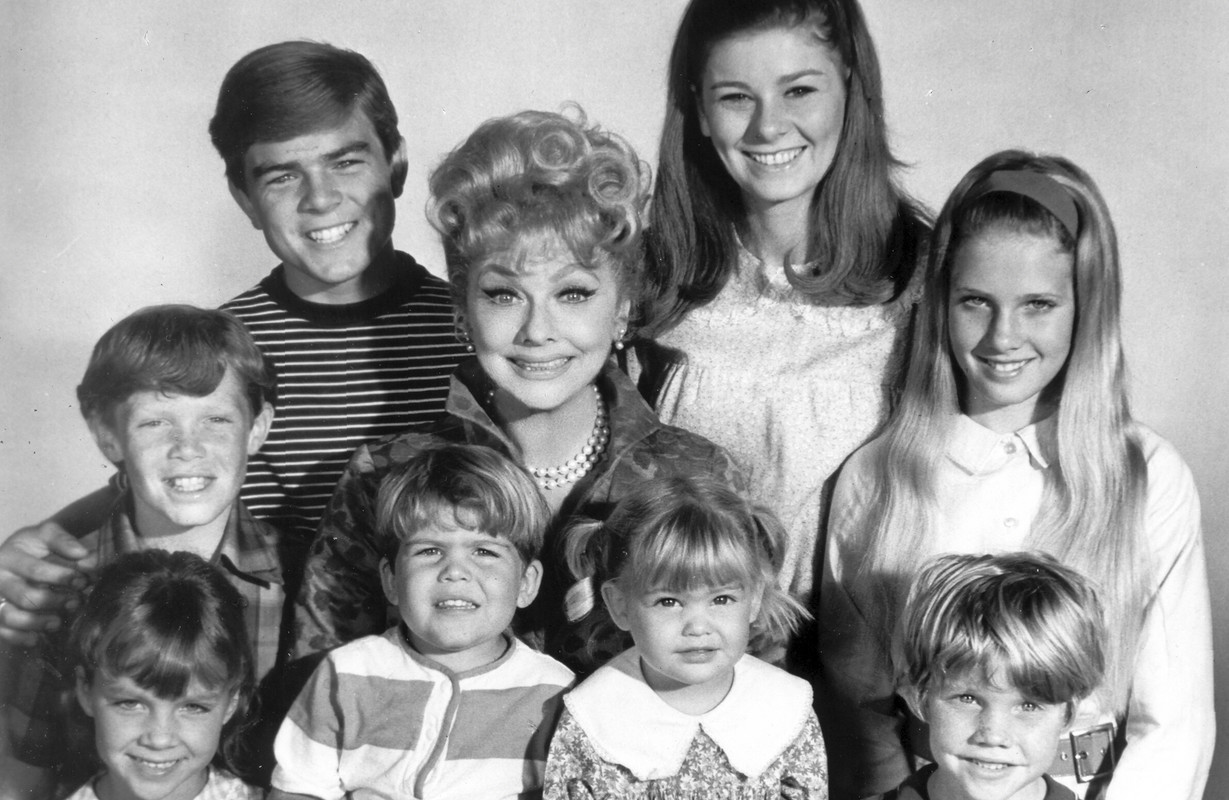
In the mid 60s Lucille Ball read the book "Who Gets The Drumstick?" by Helen Beardsley. The book told the true life story of Helen North a widow with 8 children who met and fell in love with Frank Beardsley a widower with 10 children. Helen and Frank married and had another two children together. Helen's book painted a rosy picture of the family which Lucy thought would make a good movie. Desilu Productions purchased the rights to "Who Gets The Drumstick?" which was adapted into Yours, Mine and Ours (Full House was among the other titles considered).

Desi Arnaz was briefly considered for the role of Frank as were Jimmy Stewart and John Wayne. I Love Lucy writers Bob Carroll Jr. and Madelyn Davis were among the screenwriters who were brought on board to ensure the script was well-suited to Ball; they wrote the scene where the children spike Helen's drink (something not found in the book). Ball rejected one draft that she felt was too similar to I Love Lucy.

Prior to filming, Ball arranged to spend several days with the Beardsley family as a guest in their home in Carmel, California. Ball left for a hotel at the end of the first day, after telling Helen "keep that man (Frank) away from me!" Frank, a former boxer, was said to have a short temper. Tom North, one of Helen's sons from her first marriage, alleges his stepfather physically and sexually abused the North and Beardsley children though several of Frank's biological children have disputed this. The other North children and Frank's nieces have supported Tom's claims. Helen eventually left Frank but, due to her Catholic beliefs, never divorced him.
 
Last edited:
Top