THE LONELINESS OF THE LONG DISTANCE RUNNER (1962)
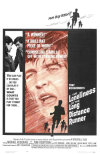
I'm sure it makes sense to call this a kitchen-sink drama, but the way I've absorbed LONELINESS I feel it doesn't define the main character as much as the characters in, say, A KIND OF LOVING (the best one I've seen so far).
Sociopolitical changes and the (somewhat well trodden) topic of the British class system mostly serves as the film's background that allows the story of Colin Smith to be told.
Rebellion, boredom and dissatisfaction are timeless, that happened before and after the 1960s.
LONELINESS feels very personal to me since I've always struggled with authority, duties and other things that need to be done. I can be extremely disciplined but only if it's initiated by myself, and I'm very much aware of the fact that this attitude has contributed to many of my shortcomings.
But the point is that it's actually more than a phase or attitude which may or may not be influenced by upbringing and surroundings; perhaps it's more a cats vs. dogs situation, and in that case I'd say Colin Smith is very much a "cat" person.
The story's finale perfectly captures the sort of inbuilt antagonism that can manifest itself even at the expense of the prospect of improvement, in this case the possibility of a successful sports career (or at the very least, being released from the borstal as soon as possible).
It's almost as if that success can't exist when it's based on the pushy and patronising agenda of other people.
And if that success would forever be tarnished by that very compromise, then why bother?
The message to his co-star played by Michael Redgrave (I also need to watch much more of him) is clear. "I can do it, but I won't do it for you".
Like I said, the kitchen-sink angle is neatly intertwined with Colin's story and I guess it also helped to get the point across.
To top it off there's Edward Fox in a small supporting role.
It was also one of the rare occassions when I felt compelled to watch the DVD extras straight afterwards - there's not an awful lot on it so perhaps that made it a little easier.
It features an essay by director of photography Walter Lassally, which made me appreciate the film (and the art of film as a whole) even more than I already did.
Some of the running sequences are simply breathtaking to watch, and while the technical in's and out's can spoil the illusion of the final product, Lassally explains it in a way that is still in character with the story itself.
Maybe I've interpreted the story the wrong way but that doesn't change the fact that I loved the experience I had.
It's another one for the Precious Collection.