How the "Rural Purge" changed TV

Crimson

Telly Talk Enthusiast
LV
1
 
Awards
8
So, apparently, they knew rural shows needed to exist in form.

Right. The cancellations seemed to have little to do with chasing different demographics. By the late 60s, American TV was creatively exhausted with the same old shows kicking around since the beginning of the decade and, in many cases, since the dawn of TV! By the early 70s, it wasn't just the cornpone sitcoms that got the axe but also long running variety shows (Gleason, Skelton, Sullivan) and the last of the supernatural comedies (BEWITCHED.) Within just a couple years, even TV's venerable institutions, GUNSMOKE and LUCY, met the same fate.
 

ClassyCo

Telly Talk Warrior
LV
5
 
Awards
11
Within just a couple years, even TV's venerable institutions, GUNSMOKE and LUCY, met the same fate.
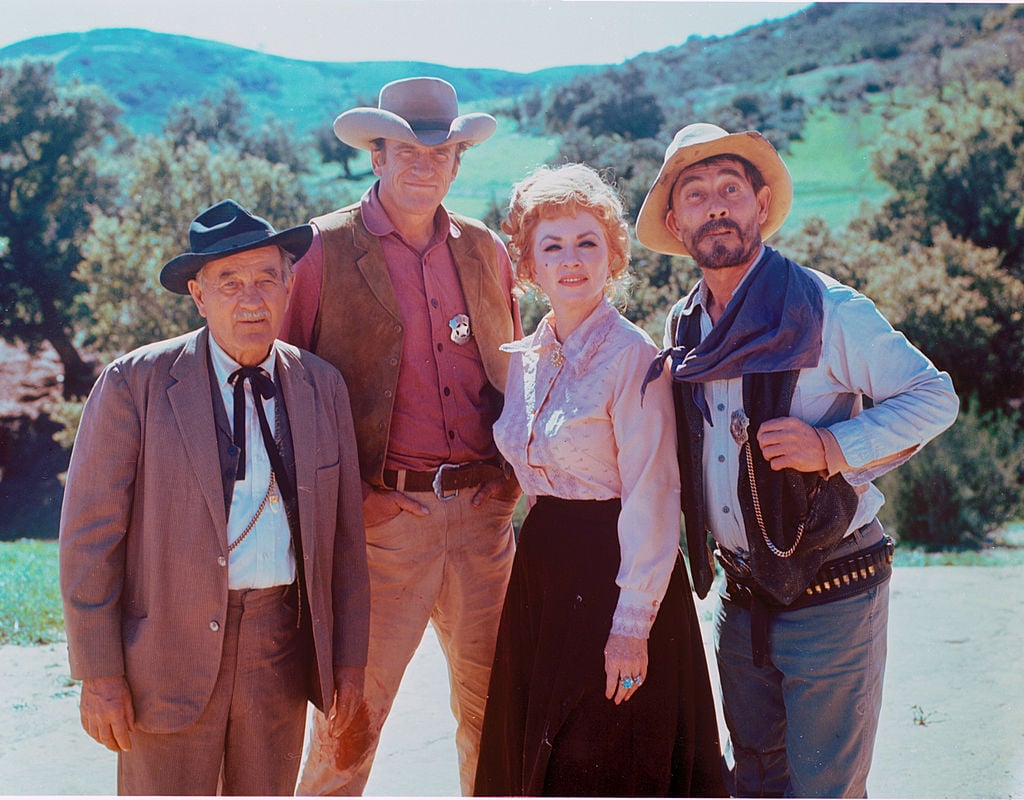
GUNSMOKE ended after a phenomenal twenty-year run, and was cancelled for the third and final time in 1975.

From what I've read, Lucille Ball wanted to end HERE'S LUCY in 1972 because she saw the new coming aboard the TV landscape. But it was then-President of CBS, Fred Silverman, who persuaded her to stay another two years. Her show was still in the Top 10 in 1972 and it's likely that Silverman felt there was still more to squeeze out of America's favorite redhead. It might also be possible that CBS had nothing ready to replace HERE'S LUCY with at the time.
 

Snarky Oracle!

Telly Talk Supreme
LV
7
 
Awards
19
GUNSMOKE ended after a phenomenal twenty-year run, and was cancelled for the third and final time in 1975.

Even in its 20th (and final) year, the first half of that season was some of the best back-to-back western episodes in all of TV history, the show still in the weekly Top 10 (once hitting #5 for "The Wiving" episode, despite the absence of Kitty for whom the script was obviously written). At least, while future DALLAS mentor Leonard Katzman was still producing GUNSMOKE's twentieth season, that first half.

But Katzman left mid-way through the twentieth season to go produce PETROCELLI (GUNSMOKE started shooting each season months before other series, thus he could leave mid-season from GUNSMOKE and still have PETROCELLI ready-to-air by September). Also, there were rumblings of friction between Katzman and executive producer, John Mantley (after returning to DALLAS when Pam woke up in 1986, Katzman said, "I've been fired before -- it's worth it.") Also, Mantley not only nudged Katzman out, he essentially fired Amanda Blake after 19 years on the show, because the actress didn't want Kitty brutally raped-and-beaten in the two-parter "Guns of Cibola Blanca" so soon just two years after the "Hostage!" episode where the same thing had happened to her. Mantley later sneered in an interview that Blake "complained about everything" (which Blake, ever-the-gracious-gal, conceded). Oh, but those Scorpio Risings -- can't they ever get along??

Anyway, once Katzman was gone (after "The Colonel" episode midway through Season 20), a new line producer was brought in, John J. Stephens, who, while competent, changed the tone significantly for the last half of the season: GUNSMOKE became too ponderous too consistently, and ratings started to tumble. By the end of the 1974/75 season, GUNSMOKE averaged at #29 in the ratings (a number good enough to keep most series on the air, but the death knell for a show always expected to be in the Top 10). And given that GUNSMOKE was in the weekly Top 10 for the first half of its twentieth season, it had to fall pretty far pretty fast to average out at only #29 for the year -- everybody just switched over to THE ROOKIES.

The network executives at CBS took this opportunity to cancel GUNSMOKE for the third and final time ("some horse-feathers about demographics," James Arness grumbled in the press) and this time William Paley didn't override the decision. The audience was getting grey around the temples, and advertizers believed only nineteen-year-old girls ever buy anything (which is not entirely un-true).

So gargantuan GUNSMOKE, after two decades, was gone due to only a brief slip in the Nielsens.

Gunsmoke-1.jpg


From what I've read, Lucille Ball wanted to end HERE'S LUCY in 1972 because she saw the new coming aboard the TV landscape. But it was then-President of CBS, Fred Silverman, who persuaded her to stay another two years. Her show was still in the Top 10 in 1972 and it's likely that Silverman felt there was still more to squeeze out of America's favorite redhead. It might also be possible that CBS had nothing ready to replace HERE'S LUCY with at the time.

Yes, Lucy apparently was burned out after 23 years as the queen of television. You can't blame her. HERE'S LUCY was an obvious retread (although I watched it) and one can understand why she didn't want to do it anymore. I mean, she was in her sixties, she'd sold Desilu to Paramount six years earlier... she probably needed a break... Even histrionic divas need a rest, too, after a while.

But @Crimson is quite right: the formulaic TV of the '60s, though it fit in with the Huge Wood Console & Gold Drapes Gothic sensibility of the American living room of the decade, had become tired... I'm old enough to remember that -- and to almost even "get" that sense of small-screen fatigue... But whatever the brass' agenda was (e.g., desire for urban demographics, deadening creative repetition) the rise of the ALL IN THE FAMILYs and MARY TYLER MOOREs was a godsend.

There had been a claw-your-neck angsty-ness about television in the late-'60s that stemmed from the muzzled rigidity that controlled it -- where the topicality and the tone weren't allowed to reflect what was really going on in the culture of that period. Almost at all. Except for some of the clothes and a little of the music.

bd9d421ac453ea19f291bef53c8006b5.jpg
 

Crimson

Telly Talk Enthusiast
LV
1
 
Awards
8
Lucille Ball wanted to end HERE'S LUCY in 1972 because she saw the new coming aboard the TV landscape.

Lucy's threat to quit in '72 was likely a negotiating ploy, something she did frequently throughout the 60s to get more money for her show or to force CBS to pick up another Desilu series. She would have wanted at least six seasons of HERE'S LUCY to put into syndication. For years it was generally accepted that she chose to end the series in '74, although more recent Lucy biographers have mostly agreed the show was axed by CBS. The show had dropped out of the Top Twenty, a first for any of her shows, and it was regarded by CBS brass, enjoying the prestige of MTM and Norman Lear, as a dusty relic. Fred Silverman apparently fretted about how one goes about firing the Queen of Television, and thus she was allowed to save face by announcing that she chose to end the show.

Ironically, in the late 70s, she guested on Dick van Dyke's variety show and in one sketch played a TV star who refuses to be fired by a network exec (van Dyke).
 

Seaviewer

Telly Talk Warrior
LV
9
 
Awards
20
I recall they even did the canned laughter for such shows as The Flintstones, Scooby-Doo, and The Jetsons. Obviously they were not filmed in front of a studio audience. Shows like Bewitched had portions that had to be "sweetened" since the reactions to special effects could not be genuine (Darrin never got turned into a frog on set, for instance). And any audience response to remote/outdoor scenes had to be similarly doctored (like all the outdoor scenes on Gilligan's Island).
Shows like Bewitched and Gilligan's Island were single-camera productions with no audience. The laugh tracks were entirely manufactured, so no "sweetening" as such. They have never bothered me; they're just a part of the show - even the cartoons.
 

ClassyCo

Telly Talk Warrior
LV
5
 
Awards
11
The mandate for a laugh track was even forced onto THE TWILIGHT ZONE episode with Carol Burnett, "Cavender is Coming," as it was intended as a possible spin-off. As a result, the installment developed the reputation as one of the "worst" in TZ's history.
I have never seen this episode, but I am intrigued by it.
 

Snarky Oracle!

Telly Talk Supreme
LV
7
 
Awards
19
I have never seen this episode, but I am intrigued by it.

With the laugh-track removed, it's a perfectly serviceable TZ episode, "Cavender is Coming."

The very final TZ episode, "The Bewitchin' Pool" in 1964, is often credited with being the "worst" installment of the series, but it would have been fully acceptable had that they not had adults dubbing the dialogue for children --- a once-common but excruciating practice up until A CHARLIE BROWN CHRISTMAS a year later when they made the daring choice to actually use children's voices (leading some CBS executives to complain that they sounded like children).

Audio can make or sink a project.

14dGGthtsrdrh6w9104eDJiun95.jpg
 

Snarky Oracle!

Telly Talk Supreme
LV
7
 
Awards
19
Oh, I've always kind of liked that episode. Does that mean I have bad taste?

No, it's just that the adults looping kids voices upsets some folks. I love the mid-60s ambiance of A MAN AND A WOMAN, but whene'er the kids appear, dubbed with grown-up voices (which was once commonplace) it's too jarring.
 

Jock Ewing Fan

Telly Talk Star
Top Poster Of Month
LV
0
 
Awards
8
Shows like Bewitched and Gilligan's Island were single-camera productions with no audience. The laugh tracks were entirely manufactured, so no "sweetening" as such. They have never bothered me; they're just a part of the show - even the cartoons.
Those shows were fun to watch. Not exactly rural, though
 

ClassyCo

Telly Talk Warrior
LV
5
 
Awards
11
Just one day last week my brother-in-law remarked to me how he come across the "rural purge" in something he was reading. He was stunned at the thought of TV networks cancelling a mass quantity of shows simply because their setting deemed them undesirable.
 

Snarky Oracle!

Telly Talk Supreme
LV
7
 
Awards
19
Just one day last week my brother-in-law remarked to me how he come across the "rural purge" in something he was reading. He was stunned at the thought of TV networks cancelling a mass quantity of shows simply because their setting deemed them undesirable.

Although, I can understand the action the executives took -- at least, in this case. The rural sitcoms of the '60s were still pulling in numbers by 1971, but the genre was really tired, and most of the westerns were gone.
 

ClassyCo

Telly Talk Warrior
LV
5
 
Awards
11
Although, I can understand the action the executives took -- at least, in this case.
In watching interviews with Fred Silverman and others like him, I can definitely see why they took the opportunity to change the course of CBS (and the other networks, too, even if they didn't quite have the drastic changeover generally associated with CBS and the "purge" in the early-70s), and castaway the old, tired, formulaic shows and bring on newer, more "sophisticated" shows in their place. In that, they weren't wrong.

The rural sitcoms of the '60s were still pulling in numbers by 1971, but the genre was really tired, and most of the westerns were gone.
As much as I enjoy those shows (especially in the right mood), I must tell you --- Yes, they were all quite repetitive, and because of their high ratings limped into utter exhaustion after four or five years.


Jock Ewing Fan

Telly Talk Star
Top Poster Of Month
LV
0
 
Awards
8
Ultimately, I think it was more about the perception that a more urban audience would be more lucrative.
I think there was still an audience for the rural-type shows, but the networks didn't have as much interest
in that demographic anymore.
 

ClassyCo

Telly Talk Warrior
LV
5
 
Awards
11
Ultimately, I think it was more about the perception that a more urban audience would be more lucrative.
I think there was still an audience for the rural-type shows, but the networks didn't have as much interest
in that demographic anymore.
I think it comes down to a few different things.

These shows -- BEVERLY HILLBILLIES, GREEN ACRES, MAYBERRY R.F.D., LASSIE, etc. -- had limped into utter exhaustion. The premise for these shows didn't offer a lot of room to shake-up the status quo, so after a good four seasons (especially with 30+ episodes a season), they had simply ran out of ideas. They still drew in big numbers (MARYBERRY R.F.D. was #15 in 1971 when it was canned), but creatively, they were worn out.

CBS was desperately wanting to change the "look" of their schedule. They fancied themselves the "Tiffany Network", but throughout the '60s, they had been nicknamed the "Hillbilly Network" or the "Country Broadcasting System". Practically all of the head-honchos at CBS hated the rural programs they aired, but kept them on their schedules because of the high ratings they drew.

So, they took the advantage of getting rid of all the rural shows, the game shows, the Westerns, and the sentimental sitcoms when they had the opportunity to do so. Only a few of the shows survived. Even HERE'S LUCY, the ratings-grabbing third sitcom starring Lucille Ball, met the same fate in 1974. Lucy, once the "Queen of Television", was viewed as passe and expendable.

It's interesting to me just how successful these rural sitcoms have been since they've gone into reruns. THE BEVERLY HILLBILLIES, especially the B&W episodes, has been widely syndicated, particularly all of the Season 1 episodes and nineteen of the Season 2 episodes that have long been public domain. THE ANDY GRIFFITH SHOW and GREEN ACRES seem to have been rerun constantly, and some of the other cancellations, like GOMER PYLE, HOGAN'S HEROES, etc., have had healthy second-life in reruns.

I'd make the argument that these "old hack" shows the executives so desperately wanted to get rid of have had a longer life than the newer, more sophisticated shows that decided to replace them with. MARY TYLER MOORE has rerun well, but shows like ALL IN THE FAMILY and MAUDE suffer from the topicality that they infused into their storylines, and they loose their appeal. What was topical in 1972 isn't what's topical in 2026.

I don't know, just something I was pondering.
 

Snarky Oracle!

Telly Talk Supreme
LV
7
 
Awards
19
I'd make the argument that these "old hack" shows the executives so desperately wanted to get rid of have had a longer life than the newer, more sophisticated shows that decided to replace them with. MARY TYLER MOORE has rerun well, but shows like ALL IN THE FAMILY and MAUDE suffer from the topicality that they infused into their storylines, and they loose their appeal. What was topical in 1972 isn't what's topical in 2026.

I don't know, just something I was pondering

You're quite right. The same thing that made the TV sitcom a literal agent of social change in the early-'70s caused that era of sitcom much harder to syndicate in subsequent decades, those episodes forever tied to a period where "shocking" political subject matter would later become perceived as lame, too loud, or overdone, and people were just no longer in the mood for it. (Or, in the more recent "woke" era so desperate for offensive controversy, when addressing racism and sexism became viewed as racism and sexism).

MARY TYLER MOORE producers deliberately avoided doing any of that, the show's "feminism" gentle and organic (which, of course, the feminists disliked), so MTM would, with time, age better. And that worked. (Someone here posted a story where the producers, after seeing the Season 2 episode with Mary Frann -- who could do comedy when she was playing a bitch -- as an antisemite who disapproved of jewish Rhoda, decreed that they would never do a similar episode because they felt politics of the Frann episode were just too in-your-face).

But screeching politics was Norman Lear's forte.
 
Last edited:

ClassyCo

Telly Talk Warrior
LV
5
 
Awards
11
You're quite right. The same thing that made the TV sitcom a literal agent of social change in the early-'70s caused that era of sitcom much harder to syndicate in subsequent decades, those episodes forever tied to a period where "shocking" political subject matter would later become perceived as lame, too loud, or overdone, and people were just no longer in the mood for it. (Or, in the more recent "woke" era so desperate for offensive controversy, when addressing racism and sexism became views as racism and sexism).

MARY TYLER MOORE producers deliberately avoided doing any of that, the show's "feminism" gentle and organic (which, of course, the feminists disliked), so MTM would, with time, age better. And that worked. (Someone here posted a story where the producers, after seeing the Season 2 episode with Mary Frann -- who could do comedy when she was playing a bitch -- as an antisemite who disapproved of jewish Rhoda, decreed that they would never do a similar episode because they felt politics of the Frann episode were just too in-your-face).

But screeching politics was Norman Lear's forte.
Lear's sitcoms are just too preachy. They are very "in-your-face", and that's usually a big turn-off for me when it comes to sitcoms. Sure, I can enjoy ALL IN THE FAMILY or MAUDE (the episode "Vivian's First Funeral" is quite hilarious, showcasing Bea Arthur and Rue McClanahan's comedic timing brilliantly), but they aren't really "comfort" shows.

For example, back in July 2024 while I was recovering from my bad car wreck, my wife and I watched THE BEVERLY HILLBILLIES and GREEN ACRES every night at 9:00 and 9:30 on MeTV. We even picked HOUSE HUNTERS over ALL IN THE FAMILY, which was also showing on one of the channels.

As a side note, THE WALTONS and LITTLE HOUSE ON THE PRAIRIE have both rerun for decades. Ironic, too, considering they're both "rural" in nature, at least partially.
 
Last edited:

Crimson

Telly Talk Enthusiast
LV
1
 
Awards
8
I have to disagree with some of the recent statements. I don't think Lear's work is either dated or preachy. The topics Lear dealt with -- the economy, class, race, war, gender, sexuality -- are all still hot topics 50 years later. We have barely moved an inch from the buttons that trigger us. Linda Bloodworth-Thomason's work was one-sided and preachy; Lear's, not really. No doubt he was a leftie at heart, but he hit both sides equally. Mike was indeed a meathead and Maude was as much a figure of ridicule as Archie.

AITF has aged poorly only in its visuals and decibels.
 

Snarky Oracle!

Telly Talk Supreme
LV
7
 
Awards
19
I have to disagree with some of the recent statements. I don't think Lear's work is either dated or preachy. The topics Lear dealt with -- the economy, class, race, war, gender, sexuality -- are all still hot topics 50 years later. We have barely moved an inch from the buttons that trigger us. Linda Bloodworth-Thomason's work was one-sided and preachy; Lear's, not really. No doubt he was a leftie at heart, but he hit both sides equally. Mike was indeed a meathead and Maude was as much a figure of ridicule as Archie.

AITF has aged poorly only in its visuals and decibels.

Well, of course you're right. But the newness of these topics for TV is long gone. So the impact isn't there anymore.
 

ClassyCo

Telly Talk Warrior
LV
5
 
Awards
11
I have to disagree with some of the recent statements. I don't think Lear's work is either dated or preachy. The topics Lear dealt with -- the economy, class, race, war, gender, sexuality -- are all still hot topics 50 years later. We have barely moved an inch from the buttons that trigger us.
I must just be my perspective then because everyone's is different, sometimes drastically so. For me, ALL IN THE FAMILY seems more "of its time" than something like THE ANDY GRIFFITH SHOW, which, for me, reads more timeless. Plus, the latter is "cozier" than the former -- well, for me at least.

Linda Bloodworth-Thomason's work was one-sided and preachy; Lear's, not really.
Here, I'll agree with you. Linda Bloodworth-Thomason was very heavy-handed in her leftist views she pushed so hard on DESIGNING WOMEN. That alone makes some of the episodes hard to sit through, but when the show is funny, it's funny. ALL IN THE FAMILY, I'll say, is more entertaining in dealing with issues and sometimes the presentation can be a little more tame, but it can still wear me out.

AITF has aged poorly only in its visuals and decibels.
This might be one of the biggest drawbacks about these shows -- their "look".
 
Top