What was the last film you watched?

Mel O'Drama

Admin
LV
16
 
Awards
44
Cadillac Man (1990)

iu


If memory serves, this was a recommendation from Prime after I added Falling Down to my watch list. I haven't seen the latter, but from its reputation I would say it's a logical pairing, with both having that "day from hell" thing going on.

Curiously, according to Amazon's description this is set "in 1970s New York". I'm not sure where they pulled this from, since there is no period setting (at least, not by the standards of the day. In 2026 it's something of a time capsule).

It would be a stretch to describe myself as a big fan of Robin Williams, but this feels like the perfect vehicle (pun not entirely attended) for him. He's surrounded by actors who can match his energy while (somewhat paradoxically) reining him in. There are occasionally some big performances, but there's a naturalism which grounds it. It helps that New York is a character, as it's a place where some of the larger than life characters feel perfectly at home and, if anything, expected.

Tim Robbins - as I've no doubt mentioned before - I always conflated during this era with Bruce Greenwood, Sam Neill and probably another actor or two. His character, Larry, spends the most time with Wiliams's Joey. At times I found myself a little irritated with how easily Joey took control of the situation and influenced Larry and, despite it being established that Joey is a convincing salesman first and foremost, feel it could have been sold better in this particular situation. Still, the screen chemistry is good, and the negotiation scenes where Joey, gun pressed between his shoulder blades, manically relays the hostage taker's message to "go away" are hilarious. I especially enjoyed the little detail of him giving the "time out" signal to them as the pair shuffles backwards into the showroom.

The rest of the cast is pretty solid with everyone being the right level of sleazy, pushy, weary or demanding. Lauren Tom was a standout as the dim sum waitress (it's a little mind-blowing that she can be so funny here, while her thankless Friends role a few years later was written so blandly. At least she was better serviced in Futurama). Inexplicably, I instantly recognised Fran Dresher's name from The Nanny (it must have gone in by osmosis from spending so much time around these parts), and I was curious to get my first look at her, hoping it might pull me towards a series I haven't watched. I did check out a few clips afterwards, but only to see if she used the same voice there which would dash any hope of me watching. Funny how Lauren and Fran use a similar register, but the timbre of one works for me while the other grates like a gratey thing.

I didn't recognise Elaine Stritch as the widow in the opening scene. In fairness, she did wear a dark veil for most of her scene.

I appreciated the film's early scenes, which spent a great deal of time establishing its characters, dynamics and settings, just following Joey round as he went about his weekend. It would have been great (if impossible) to watch this without knowing a thing about the film's premise, because there was really no sense of where it was going for the first third of the film. This groundwork really paid off when it hit the fan. I also applauded the genuine sense of jeopardy. It felt as though anything could happen, and the ending could go several ways.

Outrageous as the whole thing seems, this is a film that can really only work when played by people who are not only funny but also good dramatic actors. And work it does.
 

Mel O'Drama

Admin
LV
16
 
Awards
44
Then She Found Me (2007)

iu

It's taken me quite some time to get round to watching this one. The British poster image of Helen Hunt and Colin Firth facing one another in profile and touching foreheads is somehow embedded in my memory (presumably from seeing it on the side of buses back in the day), and it just says "generic romcom". I prefer the poster above, which I don't recognise. At least it alludes to the meaning behind the title, whereas the other poster suggests a couple who were lucky to find one another (still true of the plot, but also the more generic part).

After the film, I read that Matthew Broderick, Bette Midler and Colin Firth had all worked for minimum pay to help Helen Hunt complete this passion project, which raised the film in my esteem. Even before that I'd thought it was charming and quite touching.

All performances are great, but it possibly goes without saying that Helen Hunt is the best thing in this. She's got such class and has that rare gift of getting the viewer to feel what her character is feeling (which I suppose is ultimately the aim of any acting performance, even though it happens so rarely). It's probably a little sledgehammer to measure how good she is by how well she cries, but my god - the way those real tears flow when she lets loose. I think she only has one big crying scene here, but she always looks as though she's about to cry anyway, with those furrowed eyelids concealing so much pain (even though she's in the enviable position of choosing between Matthew Broderick and Colin Firth). Helen performs double duty here, since the film is her directorial debut, and it looks perfectly fine to my eyes.

Colin Firth plays the stressed-out abandoned single parent role that usually wins awards for actresses. His intensity at times is almost frightening. And Matthew Broderick does the adorable-but-frustrating man-child thing so well.

How intriguing to realise on watching the end titles that Salman Rushdie had played the doctor. They also mentioned that Tim Robbins had played himself (presumably one of the guests on Midler's character's talk show) which means I've unintentionally watched him in two films on two consecutive evenings.

The plot is very soapy indeed, with each twist soapier than the last. It's carried by the conviction of the performances and dialogue, though, and these are so well executed that there were two or three which took me by surprise even though I should have seen them coming from a mile away. One of them (the last scene to take place in a hospital setting) even had me reflecting on how impressive it was that I'd been enjoying the dynamics so much that I hadn't even considered the outcome, obvious as it was to anyone familiar with the conventions of soapy drama.
 

Willie Oleson

Telly Talk Schemer
LV
9
 
Awards
27
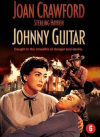
Johnny Guitar (1954)

1787240097223.png

If this is Joan's "greatest triumph" then I really have to ask what made her such a celebrated powerhouse in the first place (compared to Katharine Hepburn and Liz Taylor, just to name two talented actresses).
Indeed, apart from BABY JANE I have yet to see a Joan Crawford film that's actually good, and perhaps this is the time to revise my opinion of MOMMIE DEAREST.
Sure, it may be a bad movie by "Faye Dunaway" standards, but from a meta point of view it's a film about Joan Crawford in the style of Joan Crawford.
Anyway, here we have Johnny Guitar which is really Joanie Guitar, but that's fine - a film doesn't have to be about its title.
In fact, Johnny 'Guitar' Logan is so brutally sidelined that it almost looks as if he isn't there. Comments directly aimed at Johnny are often telegraphed through Crawford's "Vienna": Ask him to.... / Tell him to....

The film operates purely on a melodramatic level which is not exceptional in the Western genre, but it's also presented in a comic book-style string of frames and scenes.
There's no natural flow in dialogue, every line is delivered as an independent statement and the only thing that's missing are the exclamation marks.
If this was a stylistic choice then it deserves to be judged on those artistic merits, and not on what-it's-not or what could-have-been.
I think the problem is in the script because the forceful one-liners are too matter-of-factly, it needed to be more witty and snappy to make it work.
Thirty minutes into the film and we've only got the character introductions, a bunch of angry people having arguments in a nonsensical way. Some characters are accused and instantly convicted based on "because we say so".
The first half of the film is these actors standing around waiting for a cue to shout their monotonous lines, and it made me struggle to stay focused.

The Dancin' Kid's reasoning - if you're going to be convicted of a crime regardless of your guilt then you may as well do something bad - seems almost disproportionately refreshing and insightful compared to what had come before.
This is when the story starts moving, with various results but at least there's something to focus on. The best bits come from some of the supporting characters like Turkey and Tom.
When Tom's dying he says "Everybody's looking at me. It's the first time I ever felt important".
I guess that perfectly describes what it's like to co-star in a Joan Crawford movie (and John Carradine has to share that particular frame with JC, but thankfully no one mentioned it).

I find it peculiar that Joan Crawford has made a career out of playing strong-willed tough broads, but when she has to play it bitchy it looks stiff and unconvincing.
She's much better in the moments when she's a tearful wide-eyed defeated melodramatic character, and for me the reason why she could never have played the role of Baby Jane Hudson (in case it had been considered).
It's possible that she was a bigger bitch than Bette Davis in real life, I don't know I wasn't there.

Mercedes McCambridge as antagonist Emma Small is pure histrionics but the rage is entertaining enough to keep it all together.
1787240379465.png
I would have liked to see some suffering to make her look less one-dimensional. The scene in which she kills Dancin' Kid (of all characters) should have been a pivotal moment but they do absolutely nothing with it. In fact, the whole shootout is anticlimatic.
Johnny Guitar himself kinda remains a mystery, you have to make an effort to see him even in close-ups, so perhaps the film title is very on topic after all.
Apart from a scene at the beginning of the story he doesn't actually play his guitar, maybe that has something to do with it.

Posting this song (again) - the best Santa Esmeralda song not made by Santa Esmeralda.
 

Snarky Oracle!

Telly Talk Supreme
LV
8
 
Awards
21
Johnny Guitar (1954)

View attachment 59459

If this is Joan's "greatest triumph" then I really have to ask what made her such a celebrated powerhouse in the first place (compared to Katharine Hepburn and Liz Taylor, just to name two talented actresses).
Indeed, apart from BABY JANE I have yet to see a Joan Crawford film that's actually good, and perhaps this is the time to revise my opinion of MOMMIE DEAREST.
Sure, it may be a bad movie by "Faye Dunaway" standards, but from a meta point of view it's a film about Joan Crawford in the style of Joan Crawford.
Anyway, here we have Johnny Guitar which is really Joanie Guitar, but that's fine - a film doesn't have to be about its title.
In fact, Johnny 'Guitar' Logan is so brutally sidelined that it almost looks as if he isn't there. Comments directly aimed at Johnny are often telegraphed through Crawford's "Vienna": Ask him to.... / Tell him to....

The film operates purely on a melodramatic level which is not exceptional in the Western genre, but it's also presented in a comic book-style string of frames and scenes.
There's no natural flow in dialogue, every line is delivered as an independent statement and the only thing that's missing are the exclamation marks.
If this was a stylistic choice then it deserves to be judged on those artistic merits, and not on what-it's-not or what could-have-been.
I think the problem is in the script because the forceful one-liners are too matter-of-factly, it needed to be more witty and snappy to make it work.
Thirty minutes into the film and we've only got the character introductions, a bunch of angry people having arguments in a nonsensical way. Some characters are accused and instantly convicted based on "because we say so".
The first half of the film is these actors standing around waiting for a cue to shout their monotonous lines, and it made me struggle to stay focused.

The Dancin' Kid's reasoning - if you're going to be convicted of a crime regardless of your guilt then you may as well do something bad - seems almost disproportionately refreshing and insightful compared to what had come before.
This is when the story starts moving, with various results but at least there's something to focus on. The best bits come from some of the supporting characters like Turkey and Tom.
When Tom's dying he says "Everybody's looking at me. It's the first time I ever felt important".
I guess that perfectly describes what it's like to co-star in a Joan Crawford movie (and John Carradine has to share that particular frame with JC, but thankfully no one mentioned it).

I find it peculiar that Joan Crawford has made a career out of playing strong-willed tough broads, but when she has to play it bitchy it looks stiff and unconvincing.
She's much better in the moments when she's a tearful wide-eyed defeated melodramatic character, and for me the reason why she could never have played the role of Baby Jane Hudson (in case it had been considered).
It's possible that she was a bigger bitch than Bette Davis in real life, I don't know I wasn't there.

Mercedes McCambridge as antagonist Emma Small is pure histrionics but the rage is entertaining enough to keep it all together.
View attachment 59460
I would have liked to see some suffering to make her look less one-dimensional. The scene in which she kills Dancin' Kid (of all characters) should have been a pivotal moment but they do absolutely nothing with it. In fact, the whole shootout is anticlimatic.
Johnny Guitar himself kinda remains a mystery, you have to make an effort to see him even in close-ups, so perhaps the film title is very on topic after all.
Apart from a scene at the beginning of the story he doesn't actually play his guitar, maybe that has something to do with it.

Posting this song (again) - the best Santa Esmeralda song not made by Santa Esmeralda.

Joan didn't care much for JOHNNY GUITAR if only because it was lousy box office (she apparently assessed her own films by how well they did). I like some of her films, but her sado-masochistic screen dynamic is interesting -- she's not an electric bitch (like Bette Davis played), Crawford was a darker bitch with churnings of mental illness. But real-life bitches seem to play tormented characters better than they do cinema bitches.

As a kid, I used to find Crawford boring, but today she seems a little more layered to me. But she's also a poser (which can work). I think I like her best in the noir POSSESSED (1947) because she's a long-suffering, unhinged mess and everyone has a psychiatric diagnosis. And even alarm buzzers talk to her and call name.

BTW: The plot from JOHNNY GUITAR was lifted by ONCE UPON A TIME IN THE WEST.
 
Last edited:

Willie Oleson

Telly Talk Schemer
LV
9
 
Awards
27
Mildred Pierce (1945)
1787374502451.png

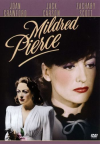
I'm not sure if these images are taken from the film itself, but it's what the DVD looks like. Since I didn't know if Mildred Pierce was going to be a film-for-keeps I opted for the cheaper European version instead of the luxurious Criterion release (which always comes with luxurious shipping fees). But, never mind.
The first thing to notice about this film is the incredible light & shadow galore, and how they put the "art" in artificial.
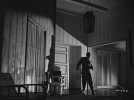
The beach house in which the story begins is delightfully surreal. Every room leads to more rooms and doors and it just becomes bigger and bigger. It's almost as if the Wally Fay character played by Jack Carson becomes The Incredible Shrinking Man.
1787375244537.png
Needless to say, I was reeling.

The second thing to notice is that Mildred Pierce is the complete opposite of Johnny Guitar. I had to literally pause a few times to catch my breath because everything in this film moves fast and it moves non-stop. I wonder how much the PAL system has contributed to this effect.
The dialogue is whip-crack-away snappy and most of it is written in old-fashioned American slang. Even with subtitles on I sometimes struggled to follow the conversations between characters, but I love it anyway.
I had already seen a few clips on youtube (probably Veda's worst moments) but the film was much funnier than I expected it to be. And Mr. Pierce, I had no idea he was going to be in it.
Veda is a monster, yes, but she's not completely wrong when she tells Mildred "you made me like this".
If you're saying "I want the very best for my children!" and then demonstratively wipe the sweat off your forehand then it looks very passive-aggressive to me.
She doesn't give Veda the new dress, she just tosses it on Veda's bed. There, my duty done. Now love me, dammit.

Mildred Pierce features the shortest and cleanest marriage breakup in movie history, and also the shortest and cleanest losing-a-child sub plot. And I'm being generous calling it a sub plot.
The kid coughs (therefore I knew what was coming), quickly followed by a two minutes deathbed scene and then we move on to the next thing and she's never mentioned again.
To be fair, the history of pneumonia and life expectancy needs to be taken into account. That doesn't make the death of a child less horrible, but it does make it more regular. Anyway, the little actress was delightful in the few scenes she's got to do.
Almost immediately after the soon-to-be ex-Mr. Pierce leaves the property, his ex-partner Wally Fay waltzes into Mildred's living room/cake bakery and puts his hands all over her.
I mean, the consensual aspect is one thing, to blatantly disregard the possible traumatic outcome of a marriage breakup is quite another.
It's almost like a Carrol Burnett soap parody, and speaking of which, Joan Crawford sometimes sounds like Carrol Burnett.
Then there's also the murder plot and Mildred's casual way of framing Wally, and again, this doesn't have any consequences. It all feels like playing an LP at 45 RPM, but at least it's better than the sluggish stop-and-go vibe of Johnny Guitar.

However, the biggest surprise was hidden in the DVD special features. "Joan Crawford - The Ultimate Movie Star". It could be even older than the DVD itself and I'm sure it's available on youtube.
It's an account of extremes and contradictions. When I think of European actors it's usually about talented people getting plucked from a stage, they become successful and even have significant national fame. But of course that doesn't compare to the larger-than-life, corporate and almost religion-like fame of Golden Age Hollywood.
Joan is not only the ultimate movie star, she is Hollywood, and I hang my head in shame for my casual and uninformed "what made her such a celebrated powerhouse in the first place" comment.
Hollywood was the perfect cradle for rags-to-riches stories - the hard work, lobbying and relentless optimism. The failures and disappointments and the ability to bounce back. The glamour and the hedonistic underbelly. The whoring and the affairs, and the affairs within the affairs, but also the power to create your own aristocracy. It's a miracle that any of these Hungry Big Egos maintained his/her sanity for such a long time.
And yet, just as quicky as a Mildred Pierce plot twist, they are without money and need a job. And maybe that's the difference between American and European royalty: the Americans have to keep working. It's almost brutal and I was actually quite moved by Joan's story.

She was not an actress, she was a dancer who taught herself to be an actress, and after that she taught herself to be Joan Crawford.
I'm not sure if I knew she had adopted more than one child, and I get the impression that she was jealous of them. Joan had known extreme poverty and these kids were raised in mansions.
And maybe she had to be a control freak to achieve all the things she achieved, sleeping with men to further her career, and putting up with bitches like Norma Shearer and Bette Davis (the nasty gaslighter).
Extremely devoted to her fans which, at least, indicates a level of humbleness, her good relationships with the film crew, but also the openly disagreeable attitude towards several or many of her co-stars which comes across as being unprofessional. It's hard to make any sense of it, but maybe it's just a matter of compensating one thing for another, to balance out the good and bad.
Either way, she's had a wild ride and showed many different personalities, and as Betsy Palmer points out in this Special Feature "they don't make great parents".
We've had Mommie Dearest but honestly you could make a film about every stage in Crawford's career (I'd love to see Cliff Robertson's casting couch moment).
I'll try to find some of her earlier work, the stuff she did before she became the Joan Crawford phenomenon.
 
Top