- Awards
- 24
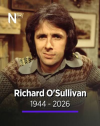
RIP Richard O´Sullivan ("Man About the House")
He was also known for starring in Doctor at Large, Dick Turpin, and the 1980s sitcom Me and My Girl, alongside Tim Brooke-Taylor, Joanne Ridley and Joan Sanderson.
O'Sullivan died surrounded by close family at Brinsworth House, the Royal Variety Charity's care home, in west London where he had lived for 23 years.
In a statement, Giles Cooper of the Royal Variety Charity said: "Richard O'Sullivan was a master of effortless charm and impeccable comic timing, bringing pure warmth, wit, and unforgettable joy to millions of living rooms as a true giant of British television."
Cooper added O'Sullivan would be "sorely missed by us all at the Royal Variety Charity".
The actor's son James O'Sullivan said in his own statement: "My dad was as funny and charming in real life as he appeared on our TV screens over the years.
"Although much of his career happened before I was born, I was fortunate enough to be able to enjoy and witness his incredible talents on the countless re-runs of his shows that made him the respected and loved actor that he was."
He thanked the staff at Brinsworth House for their "love, kindness and care".
Man About the House co-starred Paula Wilcox, Sally Thomsett, Yootha Joyce and Brian Murphy in six series on ITV.
It was about a man sharing a London flat with two single women - quite a daring storyline for that era.
In Me and My Girl, he played a widow living with his adolescent daughter.
Born in London in 1944, O'Sullivan started his career as a child actor in the 50s and 60s, playing uncredited roles in dramas in 1953.
He went on to appear in the Children's Film Foundation's first serial production Raiders of the River, and in 1956 he was in Sir Peter Hall's production of Love's Labour's Lost at the Royal Shakespeare Theatre Stratford.
He also appeared in 1961 film Spare the Rod, a social commentary drama about a teacher working in a tough, deprived area, starring Max Bygraves and Donald Pleasance. O'Sullivan played a difficult and defiant student in his final year.
After gaining steady work in dramatic roles, including 1963's Cleopatra, as Pharoah Ptolemy XIII, which starred Elizabeth Taylor and Richard Burton, he moved towards comedy, in shows such as The Ronnie Barker Playhouse, in 1968, and The Galton and Simpson Comedy the following year.
O'Sullivan was also in two films with Sir Cliff Richard in the 1960s – The Young Ones in 1961 and Wonderful Life in 1964.
By 1973, he took his starring role in Man About the House, which was a big success, not least because of its daring plot about a man living with two single women.
"The issue was not the living arrangement itself, but what it implied," British Comedy Classics said of the series.
"A man sharing a flat with two unmarried women would be read as sexual, and that risked the show being rejected or framed as inappropriate for prime-time viewing."
In order to bypass any potential disapproval from their landlords, George and Mildred Roper, who also got their own spin-off TV series, the two women claim their flatmate Robin is gay.
Robin keeps up the pretence for their landlords, which created the comedy and made it acceptable watching for a pre-watershed 70s audience.
Between 1979 and 1982 he took on the more dramatic titlular role of 18th Century highwayman Dick Turpin, in ITV's series.
But by the 80s he returned to sitcoms with Me and My Girl, which ran from 1984 to 1988, and Trouble in Mind in 1991, about a married psychiatrist who is having something of a mid-life crisis.
After this his career became much quieter, with an appearance in Noel's House Party and a starring role in a 1996 film called Holed, about a golfing match.
In his statement, James O'Sullivan concluded: "Always kind-spirited, good humoured, a doting grandfather and a wonderful dad – I will miss him dearly."
Source: https://www.bbc.com/news/articles/ce8eg2nnxz0o#google_vignette
Here are two videos that may help you know who this great comedian was. One is "This is your Life", and the other an excellent documentary of "Man About The House" with his colleagues reminiscing about him and the series in general.
I have always had a special feeling about him and all the MATH spinoffs. As most of you know, I am Spanish. Until 1975, and for 40 long decades, my country lived under the tyranny of a small, pathetic guy called Franco, who used to hang out with Hitler and Mussolini. Then the guy died, and democracy and the royals were reinstated in the country. Those 4 decades had turned the poor post-war Spain into a repressed society, culturally, politically, and sexually too. Censorship was just a part of the government and religious forces, so people had to travel, let´s say, to Perpignan, to see "Last Tango in Paris" (not a joke; it was a real pilgrimage: butter never made so much money!).
Spanish TV was also "liberated" by then, and more risqué, non-cop, American TV shows started being aired here. In 1978, "Man About the House" debuted. It was a sexual farce, with a guy who had to pretend he was gay to be able to share a flat with two sassy, witty girls who always saw him coming from a mile. The landlords were a match made in heaven, played to the hilt by Brian Murphy and Yootha Joyce. The show was an instant hit in Spain, maybe because it was a laughing machine, maybe because we Spaniards really needed to laugh at the expense of sexual repression.
This was the show, along with "Dallas" the next year, that glued me to the adult content instead of the teenage-centered programs that, in theory, I should watch. I loved every bit of that universe: there was no moment of boredom in the half hour of every episode. Mildred was my favorite character, of course, but the main protagonists were a force to be reckoned with. It was pure chemistry, and much more layered and "realistic" than one could say at first sight. Because, after all, Robin Tripp was a bit like all those "liberated" young men in Spain who were so horny all the time... Not gonna say if I identified with that...
I´ve only watched one episode of "Three´s Company", and I was shocked to see the original pilot reenacted scene by scene by Ritter and co. It was also a surprise that the relevance of the girls seemed to have been reversed: Somers over Dewitt, when it was the opposite in the British version. They even changed the names. Here, "Chrissy" was the blonde (Somers), and "Janet" (instead of Jo) was the brunette. I didn´t like the Ropers here. So I stopped watching. About the MATH spinoffs, I only know "George & Mildred", which was good as a showcase for the couple, but not for the writing and supporting cast (especially the latter).
The actors were so popular in Spain that they were hired to promote a whole new newspaper and other products. The ads were funny. Funnily enough, I recently rewatched Liz Taylor´s "Cleopatra", and saw Richard as Cleo´s brother (the way they used the same style of make-up for them was incredibly funny to me).
The dialogues are full of "double entendres" in Spanish.
Impossible to translate them...
Now I look at this "universe," and I get warm memories from it. To be honest, I didn´t know for sure if O´Sullivan was already dead because he didn´t appear in the documentary above, so it was twice as shocking. Long live the characters and actors who have entertained us for so long! You left us a great legacy!
He was also known for starring in Doctor at Large, Dick Turpin, and the 1980s sitcom Me and My Girl, alongside Tim Brooke-Taylor, Joanne Ridley and Joan Sanderson.
O'Sullivan died surrounded by close family at Brinsworth House, the Royal Variety Charity's care home, in west London where he had lived for 23 years.
In a statement, Giles Cooper of the Royal Variety Charity said: "Richard O'Sullivan was a master of effortless charm and impeccable comic timing, bringing pure warmth, wit, and unforgettable joy to millions of living rooms as a true giant of British television."
Cooper added O'Sullivan would be "sorely missed by us all at the Royal Variety Charity".
The actor's son James O'Sullivan said in his own statement: "My dad was as funny and charming in real life as he appeared on our TV screens over the years.
"Although much of his career happened before I was born, I was fortunate enough to be able to enjoy and witness his incredible talents on the countless re-runs of his shows that made him the respected and loved actor that he was."
He thanked the staff at Brinsworth House for their "love, kindness and care".
Man About the House co-starred Paula Wilcox, Sally Thomsett, Yootha Joyce and Brian Murphy in six series on ITV.
It was about a man sharing a London flat with two single women - quite a daring storyline for that era.
In Me and My Girl, he played a widow living with his adolescent daughter.
Born in London in 1944, O'Sullivan started his career as a child actor in the 50s and 60s, playing uncredited roles in dramas in 1953.
He went on to appear in the Children's Film Foundation's first serial production Raiders of the River, and in 1956 he was in Sir Peter Hall's production of Love's Labour's Lost at the Royal Shakespeare Theatre Stratford.
He also appeared in 1961 film Spare the Rod, a social commentary drama about a teacher working in a tough, deprived area, starring Max Bygraves and Donald Pleasance. O'Sullivan played a difficult and defiant student in his final year.
After gaining steady work in dramatic roles, including 1963's Cleopatra, as Pharoah Ptolemy XIII, which starred Elizabeth Taylor and Richard Burton, he moved towards comedy, in shows such as The Ronnie Barker Playhouse, in 1968, and The Galton and Simpson Comedy the following year.
O'Sullivan was also in two films with Sir Cliff Richard in the 1960s – The Young Ones in 1961 and Wonderful Life in 1964.
By 1973, he took his starring role in Man About the House, which was a big success, not least because of its daring plot about a man living with two single women.
"The issue was not the living arrangement itself, but what it implied," British Comedy Classics said of the series.
"A man sharing a flat with two unmarried women would be read as sexual, and that risked the show being rejected or framed as inappropriate for prime-time viewing."
In order to bypass any potential disapproval from their landlords, George and Mildred Roper, who also got their own spin-off TV series, the two women claim their flatmate Robin is gay.
Robin keeps up the pretence for their landlords, which created the comedy and made it acceptable watching for a pre-watershed 70s audience.
Between 1979 and 1982 he took on the more dramatic titlular role of 18th Century highwayman Dick Turpin, in ITV's series.
But by the 80s he returned to sitcoms with Me and My Girl, which ran from 1984 to 1988, and Trouble in Mind in 1991, about a married psychiatrist who is having something of a mid-life crisis.
After this his career became much quieter, with an appearance in Noel's House Party and a starring role in a 1996 film called Holed, about a golfing match.
In his statement, James O'Sullivan concluded: "Always kind-spirited, good humoured, a doting grandfather and a wonderful dad – I will miss him dearly."
Source: https://www.bbc.com/news/articles/ce8eg2nnxz0o#google_vignette
Here are two videos that may help you know who this great comedian was. One is "This is your Life", and the other an excellent documentary of "Man About The House" with his colleagues reminiscing about him and the series in general.
I have always had a special feeling about him and all the MATH spinoffs. As most of you know, I am Spanish. Until 1975, and for 40 long decades, my country lived under the tyranny of a small, pathetic guy called Franco, who used to hang out with Hitler and Mussolini. Then the guy died, and democracy and the royals were reinstated in the country. Those 4 decades had turned the poor post-war Spain into a repressed society, culturally, politically, and sexually too. Censorship was just a part of the government and religious forces, so people had to travel, let´s say, to Perpignan, to see "Last Tango in Paris" (not a joke; it was a real pilgrimage: butter never made so much money!).
Spanish TV was also "liberated" by then, and more risqué, non-cop, American TV shows started being aired here. In 1978, "Man About the House" debuted. It was a sexual farce, with a guy who had to pretend he was gay to be able to share a flat with two sassy, witty girls who always saw him coming from a mile. The landlords were a match made in heaven, played to the hilt by Brian Murphy and Yootha Joyce. The show was an instant hit in Spain, maybe because it was a laughing machine, maybe because we Spaniards really needed to laugh at the expense of sexual repression.
This was the show, along with "Dallas" the next year, that glued me to the adult content instead of the teenage-centered programs that, in theory, I should watch. I loved every bit of that universe: there was no moment of boredom in the half hour of every episode. Mildred was my favorite character, of course, but the main protagonists were a force to be reckoned with. It was pure chemistry, and much more layered and "realistic" than one could say at first sight. Because, after all, Robin Tripp was a bit like all those "liberated" young men in Spain who were so horny all the time... Not gonna say if I identified with that...
I´ve only watched one episode of "Three´s Company", and I was shocked to see the original pilot reenacted scene by scene by Ritter and co. It was also a surprise that the relevance of the girls seemed to have been reversed: Somers over Dewitt, when it was the opposite in the British version. They even changed the names. Here, "Chrissy" was the blonde (Somers), and "Janet" (instead of Jo) was the brunette. I didn´t like the Ropers here. So I stopped watching. About the MATH spinoffs, I only know "George & Mildred", which was good as a showcase for the couple, but not for the writing and supporting cast (especially the latter).
The actors were so popular in Spain that they were hired to promote a whole new newspaper and other products. The ads were funny. Funnily enough, I recently rewatched Liz Taylor´s "Cleopatra", and saw Richard as Cleo´s brother (the way they used the same style of make-up for them was incredibly funny to me).
The dialogues are full of "double entendres" in Spanish.
Impossible to translate them...
Now I look at this "universe," and I get warm memories from it. To be honest, I didn´t know for sure if O´Sullivan was already dead because he didn´t appear in the documentary above, so it was twice as shocking. Long live the characters and actors who have entertained us for so long! You left us a great legacy!
Last edited:
