What was the last film you watched?

Willie Oleson

Telly Talk Schemer
LV
9
 
Awards
27
DAYS OF WINE AND ROSES (1962)

1748878351435.png

Jack Lemmon is one of those actors who can make his performances look as if they're completely improvised, and yet I've never enjoyed him in the comedy films he's made.
He's so naturally funny that it almost clashes with the comedy dialogue and situations, there just isn't enough room for both of them.
Thankfully he's also done straight drama like this film, and that's where his comedic talent can explode without the pressure of producing as many laughs as possible.

I applaud any co-star who can keep up with Lemmon's unstoppable energy, but Lee Remick does so much more than that in her role of the alcoholic wife and mother.
Apart from The Omen I mostly know her from her work for TV, and she was consistently good in those movies and mini-series from the 1980s.
From that period I would recommend Mistral's Daughter, also starring Stacy Keach and Stefanie Powers.

The chemistry between the two lead actors is the main attraction in this film, which is for the best because many scenes give the impression of a stage play rather than a film.
The flow of narrative could have been better, I think there are too many scenes that look like stand-alone episodes, especially with the time jumps going on.
The intensity of the couple's problems, or perhaps everything about their marriage, doesn't find a sounding board in its fictional society; except for Lee Remick's character's father, supporting characters come and go without ever becoming part of the bigger picture.
The performances mostly overcome this oddly isolated tone, and apparently it was based on a live TV play from 1958 so I guess that explains it.

While I was watching this film I was reminded of Bigger Than Life (1956) starring James Mason and Barbara Rush. These actors are just as great as Lemmon & Remick but the film itself felt too much like a cautionary tale.
Days Of Wine And Roses doesn't avoid the downbeat narrative that the topic deserves.
It features a particularly shocking scene in which Lee Remick's drunken character climbs into her father's bed and then she doesn't want to leave until he kisses her good night.
The film's hightlight is Jack Lemmon's frantic search for a missing bottle of booze, and without that underlying tone of humour it would have been just melodramatic.
Great stuff.
 

James from London

International Treasure
LV
6
 
Awards
18
DAYS OF WINE AND ROSES (1962)

It's notable for featuring the first ever depiction of Alcoholics Anonymous in a movie. Because anonymous meant anonymous in those days -- the news of AA's existence was largely carried by word of mouth -- and treatment for alcoholism as we know it today didn't really exist, the film would literally have been a lifesaver.


Willie Oleson

Telly Talk Schemer
LV
9
 
Awards
27
It's interesting that Bigger Than Life comes with a warning and DOWAD offers a solution.
Jack Lemmon's character is an alcoholic, that's his problem. but Lee Remick says that she doesn't want to stop drinking because a sober life looks too ugly.
She had mentioned something similar in an allegorical way about the water looking dirty up close and prettier in the distance, and that happened before she became addicted to alcohol.
It suggests that she was more deeply troubled than her husband and perhaps inherently vulnerable to addictions, alcohol or something else.
That's also why the ending makes perfect sense to me.
 

Seaviewer

Telly Talk Warrior
LV
9
 
Awards
20
Hugo (2011)
From the description I took this to be a heartwarming fantasy about a boy and his robot.
It was heartwarming, but turned into a paean to the silent filmmaker Georges Méliès.
Moving and informative.
 

Willie Oleson

Telly Talk Schemer
LV
9
 
Awards
27
THAT COLD DAY IN THE PARK (1969)

1749299487846.png

Aha! I found it on you-know-where, and in good picture quality.
I'm afraid that's where the good news ends because this film doesn't make much sense.
There's no character motivation or perspective, everything is illogical or incomprehensibly vague, and this makes the story's psychological aspect very pseudo.

I've tried hard to connect the dots, to discover why these two characters needed to be in the same story.
The young man pretends to be mute and it's possible that he's supposed to be underage, or at least younger than actor Michael Burns.
According to the boy's sister (a most irritating character) that silent mode is something that he likes to do every now and then. End of explanation.
He was in the park waiting for someone...something-something...drugs..family...not there...something.

Sandy Dennis aka The Other Mia Farrow plays a spinster, or what was considered a spinster in 1969.
She comes across as cold and joyless and I could interpret her way of living (the systematic social life and also her controlled, rambling speech pattern) as a coping mechanism that helps her to mute the inner voice of sadness and frustration.
So, two muting characters, that's something to explore but if it happened then I failed to notice it.

The story hops over to the psychological theme of possessiveness and what she's willing to sacrifice and then in the last 5 minutes it becomes yet another thing, something that looks like an attempt at grande dame guignol. The end.
It's a very, very very strange film and of course I'm happy that I've been given the opportunity to watch it, but it's not very good and there's nothing ambiguous about that opinion.
 

Snarky Oracle!

Telly Talk Supreme
LV
7
 
Awards
20
THAT COLD DAY IN THE PARK (1969)

View attachment 56502

Aha! I found it on you-know-where, and in good picture quality.
I'm afraid that's where the good news ends because this film doesn't make much sense.
There's no character motivation or perspective, everything is illogical or incomprehensibly vague, and this makes the story's psychological aspect very pseudo.

I've tried hard to connect the dots, to discover why these two characters needed to be in the same story.
The young man pretends to be mute and it's possible that he's supposed to be underage, or at least younger than actor Michael Burns.
According to the boy's sister (a most irritating character) that silent mode is something that he likes to do every now and then. End of explanation.
He was in the park waiting for someone...something-something...drugs..family...not there...something.

Sandy Dennis aka The Other Mia Farrow plays a spinster, or what was considered a spinster in 1969.
She comes across as cold and joyless and I could interpret her way of living (the systematic social life and also her controlled, rambling speech pattern) as a coping mechanism that helps her to mute the inner voice of sadness and frustration.
So, two muting characters, that's something to explore but if it happened then I failed to notice it.

The story hops over to the psychological theme of possessiveness and what she's willing to sacrifice and then in the last 5 minutes it becomes yet another thing, something that looks like an attempt at grande dame guignol. The end.
It's a very, very very strange film and of course I'm happy that I've been given the opportunity to watch it, but it's not very good and there's nothing ambiguous about that opinion.

Maybe a little ambiguous... It's all about the period atmosphere. And Vancouver at Christmastime. And Altman's pan-and-blur style!

But... it is weird.
 

Willie Oleson

Telly Talk Schemer
LV
9
 
Awards
27
And Vancouver at Christmastime
Vancouver? Well that explains why it looked like a strange part of America.
It's all about the period atmosphere.
It's certainly not a bad film to look at, but despite its ambiguity it is a very plot-driven story. If only they could figure out what it had to be.
Also, ambiguity suggests more than one possible meaning, but in this case I struggled to find a meaning.

The doctor's appointment is probably the most Altman-esque scene in this film, and of course I love the flat with the fantastic hodgepodge interior design, so very typical of the 1960s. I found it impossible to make sense of the floor plan (the kitchen seems to be moving!) and I didn't know that a flat could have so many doors.
 

Snarky Oracle!

Telly Talk Supreme
LV
7
 
Awards
20
Sandy Dennis aka The Other Mia Farrow plays a spinster, or what was considered a spinster in 1969.
She comes across as cold and joyless and I could interpret her way of living (the systematic social life and also her controlled, rambling speech pattern) as a coping mechanism that helps her to mute the inner voice of sadness and frustration.
So, two muting characters, that's something to explore but if it happened then I failed to notice it.

Sandy Dennis: film critic Pauline Kael (of whom I tend to be rabidly comtemptuous) once said of Dennis that she "has made an acting style of postnasal drip."

Maybe a little ambiguous... It's all about the period atmosphere. And Vancouver at Christmastime. And Altman's pan-and-blur style!

But... it is weird.

I once said this:

I saw Robert Altman's forgotten (or, really, mostly unseen) pre-MASH classic, "A Cold Day in the Park" (1969), for the first time in many years. Sandy Dennis plays a neurotic, well-to-do spinster in Vancouver who apparently has a penchant for picking up homeless young men and locking them in her guest room at night.

It's bizarre at times, but a better film than I had remembered. More importantly, it belongs to that era in film (and television) where the direction and camerawork put a modern spin to the old '40s film noir style of shooting: unique camera angles, atmospheric lighting where the shadows seem to streak as much as the sunlight, a moody, claustrophobic vibe which keeps everything focused.

But this neo noir approach replaced B&W with color, and added perspective shots with sudden changes in focus within the same frame, and this zoom-in-and-blur/unblur-and-zoom-out technique I still find extremely effective and have frankly missed for forty years plus. It seemed to first appear around 1964 or '65 in a limited number of places, becoming much more common by the end of the '60s and sort of disappearing after about 1974.

I almost feel like movies have never quite been movies again after this cinematic technique fell out of use and was abandoned.


DVDTalk says about the camerwork in Altman's film: "... a fantastically fluid, amazingly expressive technical collaboration between Robert Altman and his DP, the great Laszlo Kovacs, that's full of beguiling, seemingly near-continuous slow pans and zooms, with shifts in the film's usually shallow focus that create a visual atmosphere at once raw, gauzy-soft, and rife with unexpected, near-hallucinatory detail..."


But in fact so many movies were shot that way at the time.

The young man pretends to be mute and it's possible that he's supposed to be underage, or at least younger than actor Michael Burns.


But Burns was such a cute nerd. The story was originally a two dude (i.e., gay) scenario, unlikely to be filmed that way in 1969... Underaged?, it's not beyond the realm of possibility.

Michael+Burns.jpg


I first saw THAT COLD DAY IN THE PARK on the late-late show back in the '80s, and it was a little too bizarre for me. But it's really grown on me.
 

Angela Channing

World Cup of Soaps Moderator
LV
19
 
Awards
52
London Road (2015)

London_Road_poster.jpg


I went to see the revival of this play at the National Theatre last night and came away with mixed feelings. I couldn’t decide whether it was completely brilliant or simply baffling. So, I decided to download the film version to help me make up my mind.

The story centres on the murders of five sex workers (referred to as “prostitutes” in the film) and the community’s reaction in Ipswich. The dialogue and lyrics ( it's a sort of documentary-style musical) are taken verbatim from interviews with local residents, conducted over a three-year period covering the time of the murders, the ensuing trial and the community's eventual coming together. It’s a quirky, unconventional piece which is like nothing I’ve ever seen before. The words of the locals, including their hesitations, stumbles and overlapping speech, are delivered in a semi-musical, sing-song manner, not quite sung, not quite spoken. It’s a fascinating way to tell the story, but also a perplexing one.

What struck me most was the range of reactions from the community. Some residents seemed more concerned about Ipswich becoming the focus of outside attention than about the victims and their families. Others were shockingly unsympathetic, one even expressing relief that the murders happened because of the nuisance the sex workers caused.

I still haven’t decided whether I liked it or not, but it’s completely engrossing and unlike anything I’ve seen before.
 

Willie Oleson

Telly Talk Schemer
LV
9
 
Awards
27
Apparently, "sex workers" is now more respectful
Then I'd choose "erotic entertainers".
Seriously, there is nothing respectful about prostitution or porn (action or solo).
I don't condemn it, not all, and I'm glad people want to do that kind of thing. "Whore" is my #1 favourite word and now I can't use it anymore?

"LonelyFools regents" is the preferred terminology.
Those websites make it all dangerously accessible for stupid young people (mostly gays, of course).
They don't understand that that stuff never goes away. Never. Thank god it wasn't available when I was young.

"Hitman" sounds kinda crass, maybe we should change it to "problem fixer".
And President of the USA should be "Sugar Daddy", to make it sound less villainous.

1749461329510.png
So offensive. It should be banned.
 

Angela Channing

World Cup of Soaps Moderator
LV
19
 
Awards
52
Why is that "referred to"? If they're prostitutes then they can be called prostitutes, or am I missing something?
As @Snarky Oracle! mentioned, "sex worker" is the more widely accepted term used today. It's less derogatory and is their preferred way of describing what they do. Hearing them being described as "prostitutes" in the film, although historically accurate, was a bit grating.
 

Toni

Maximum Member
LV
11
 
Awards
24
As @Snarky Oracle! mentioned, "sex worker" is the more widely accepted term used today. It's less derogatory and is their preferred way of describing what they do. Hearing them being described as "prostitutes" in the film, although historically accurate, was a bit grating.

And then, just like that...

tumblr_ml7u98Dyav1qbgyx2o7_250.gif
 

Angela Channing

World Cup of Soaps Moderator
LV
19
 
Awards
52
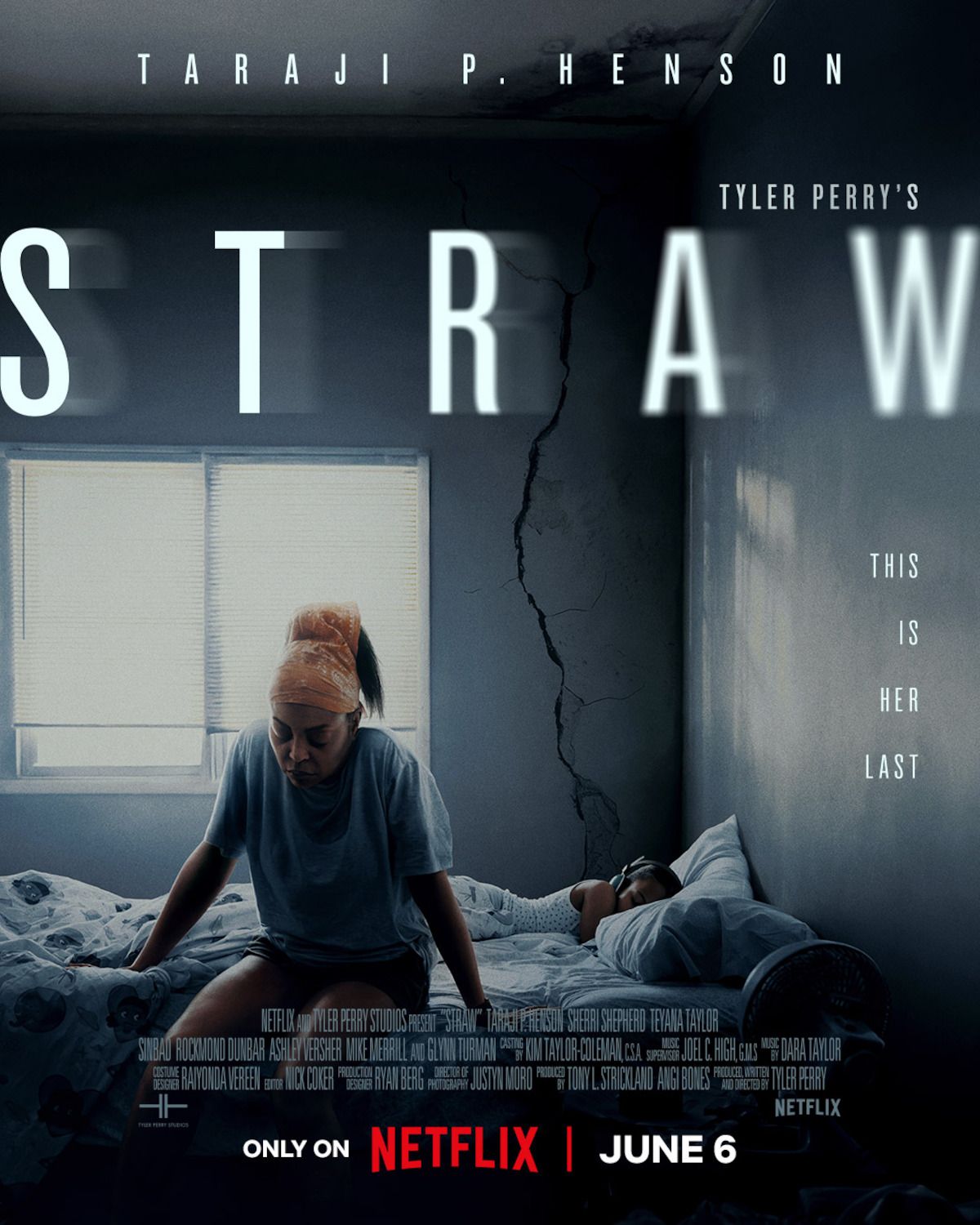
Straw (2025)

straw-poster.jpg


A tense thriller about a single mother whose life unravels over a single day following a series of crises: job loss, eviction, her daughter’s worsening illness. Her desperation to get her paycheque for her last work shift and to get it cashed so she can pay for her daughter's school meals spirals into a hostage situation at a bank. A interesting study of how desperate circumstances can lead a good person to do bad things. I wasn't entirely convinced of the twist at the end but a very good film nonetheless.
 

Willie Oleson

Telly Talk Schemer
LV
9
 
Awards
27
TAXI ZUM KLO (1980)

1749915425468.png

Have I really watched it when it was shown on Dutch television in the 1980s, or was I only aware of the buzz it's created?
Surely I would recognise the pornographic performances (not necessarily in detail) and it's very unlikely that we got a censored version, if only because we would never give the Germans the satisfaction that their films were too outrageous for the Dutch public.

Similar to Caligula it brings hardcore sex into mainstream cinema except that those scenes in TAXI are played by the cast, not the porn-extras as it happened in that other film.
If I'd only consider the film from this point of view then I guess it could be the most progressive gay film (that isn't a porn film) ever made.
But apart from the "ooh! & aah!" it doesn't have much to say, and the story unfolds like a documentary style look in to the life of the closeted male teacher/reckless cruiser by night.
That's still enough, or maybe plenty, for a good filmmaker to sink his teeth into the taboo subject, but Frank Ripploh was not one those filmmakers.
The best part is the dialogue: it's accessible and hasn't aged very much. There's no need for "historical" translations.
Everything else in the film looks rather aimless and that would be great if aimlessness was the point of the story, if it was meant to say something about the characters or the conditions they lived in, but the compilation of meandering scenes makes it hard work for the viewer.

I believe it's also supposed to be a gay comedy but I failed to see how, and I understand enough of the German language to be sure that nothing got lost in translation.
Nevertheless, there are a few Mike Leigh-esque scenes that amused me.
We hear a woman calling a radio station and she asks if the fluorescent disco motifs on her daughter's sweater could produce hazardous radiation.
Since this isn't something that would concern the average housewife (sorry, I mean domestic worker) we can assume that the 1980 media had raised awareness of the radiation issue.
In a scene between the protagonist and his female co-worker he compliments her on her pricey-looking furniture ("yes, well, I had to save up a bit") and the matching colour pattern in the curtains and lamp shades also does not go unnoticed.

There are a few practical jokes like being unintentionally locked out (naked, of course) so he has to enter his flat via the neighbour's balcony. Running out of toilet paper...that kind of cliché stuff.

It's perfectly fine if Frank Ripploh wants to show us a part of his life, but it needs more and better dramatisation especially since the events aren't terribly fascinating to begin with. But it's gay, yes it's definitely gay.
 

Willie Oleson

Telly Talk Schemer
LV
9
 
Awards
27
CHRISTIANE F. (1981)

1749982577593.png

I vividly remember our schoolyard talk about this allegedly shocking film, and it also got quite some coverage in the media. Perhaps it was impossible not to know of this film and yet I've never been tempted or compelled to watch it, until yesterday.
The most likely scenario is that another shocking thing happened (my discovery of soap operas?) and Christiane F. faded into the background.
I may as well confess that TAXI & F. was an intentional double bill feature combo DVD purchase (not released in the same package, thankfully).

I had prepared myself for a few or a lot cringe-moments - and I'd do exactly the same if it were a Dutch film - but I was surprised to see how very well made it is.
The only thing that proved to be a minor challenge was to mentally adjust myself to the film's setting. Christiane's story starts in 1976 but I've always thought of it as an early 1980s film.
I wondered if they had made an effort to capture the look of mid-seventies Germany but that became an exhausting exercise and after a while I decided to watch it "as is". It's not as if Christiane's ordeal couldn't have happened in 1980 or 1981.
The most significant reminder is probably the music and the nightlife entertainment, although I'm sure that the (what would become the) more traditional discothèques already existed. Boney M's Baby, Do You Wanna Bump was released in 1975 but Christiane just happened to be a David Bowie fan.
Anyway, I just wanted to highlight how difficult it can be to produce or to enjoy "period drama" when that period only represents a few years or just one decade.

Had the story been completely scripted then I'd struggle to believe that 13 y/o children were allowed to take the evening train to downtown clubland and come home whenever they felt like it.
But I didn't grow up in a big city and I don't come from a dysfunctional family, and I was not a girl.
The appeal of the underground scene and all the freedom that goes with it is self-explanatory. It even reminded me of a scene from TAXI ZUM KLO in which the gay teacher asks his pupils to act out the one thing they like to do most. Fighting, swearing, ruin their clothes with a pair of scissors - in other words: Pinocchio's Bad Boys Land.
Even I have experienced something similar in nursery school. Kids love chaos and it already starts there.

As for "drugs is bad and this is what could happen to you" it seems irrational to expect any big surprises, and we already know that the protagonist has managed to escape it all.
What makes this film so great is that it looks like a sci-fi/dystopian Night Of The Living Dead (or a better Blade Runner).
Citizens watch in horror how another group of citizens fall victim to a self-inflicted epidemic.
1749987976397.png
I wouldn't say that the film is unwatchably gritty, it never reaches the level of gore as seen in the opening scene of Withnail & I. Now that was hard to watch.
It's more like a predecessor to Trainspotting, minus the psychedelic effects.

Oh, and then there's Christiane's whoring little boyfriend Detlef played by Thomas Haustein. His only acting role, apparently.
1749988516668.png
He reminds me of the many inexplicably handsome and adorable guys I saw or knew in the early 80s (although the class group photographs in my photo album strongly suggests the opposite).
The thing is, beauty and sex and being in love never feels as strong as during those adolescent years. It's the unstoppable force of development, discovery, awareness and confrontation rolled into one. It's quite cruel, actually, and should not be dismissed as an insignificant crush.
Detlef is constantly fighting the gravity of his bangs, and combined with his broody and "unavailable" appearance it makes him look otherworldly attractive. "If Alain Delon and Tobey Maguire had a baby".....something like that.

CHRISTIANE F. was a very nostalgic and very satisfying experience, and David Bowie sang Heroes in German language. I can't ask for more.
 

Seaviewer

Telly Talk Warrior
LV
9
 
Awards
20
The Breakfast Club (1985)
Another of those "classics" that I've never seen before.
I don't think I was ever in the demographic that this film seems intended to reach but it's compelling enough, even if the characters are a bit stereotypical - albeit in a self-aware kind of way.
 
Top