Forgotten Faces of Hollywood's Golden Era

DallasFanForever

Telly Talk Supreme
LV
5
 
Awards
17
My interest in Old Hollywood hits its limit with the advent of sound. I have seen only a handful of Silent films, and regard them as little more than curiosities.

I have seen only snippets of Gish, Bow, Pickford and Bara and can't say I found any of them particularly intriguing. Bara in particular is a curious reminder of how much beauty standards have changed in the past 100 years. Even without the vamp-y makeup, she's pretty, uhhh, average by contemporary standards.
I have to wonder how so many of these silent film stars felt when sound finally became a possibility in movies. I would imagine that many of them had to feel quite regretful over what they had missed out on in their day. I just can’t imagine going to see movies on a regular basis with no sound and perhaps never knowing what ur favorite stars even sounded like. But I guess it left a lot to the imagination.
 

Crimson

Telly Talk Enthusiast
LV
2
 
Awards
9
9fa74e8de42c0c88fcdb0209b6049bdc.jpg

I find Silent films to be a tough slog. Some of the horror films (NOSFERATU) and comedies (Keaton) are interesting, but I still have limited enthusiam. Mostly, I find the acting hard to get past. I mean, it's basically watching people play charades.
 

darkshadows38

Telly Talk Star
LV
1
 
Awards
7
honestly i haven't really seen any Mary Pickford films but her life was really amazing the Talent that she did , she was one of the first i think female directors i think she wrote some of her films as well. plus she co-created United Artists with Charles Chaplin & Douglas Fairbanks i think Jr? i think there was one more but i can't remember who he was. that was Originally to help filmmakers who wanted to make it big if i recall able to get a budget and a chance at the big shots if i recall that was how it was started i doubt it's still like that but i have no idea. i think they all ended up at some point late in life selling their shares but than i could be wrong
 

darkshadows38

Telly Talk Star
LV
1
 
Awards
7
i love Silent films but to be fair it depends on the film and the music as well i've bad silent films but than you watch a film like The Unknown (1927) with Lon Chaney Jr. and a young Joan Crawford her first big role i think? it's her best silent i think too and that film is freaking amazing. i'm a huge Lon Chaney film and it breaks my heart so many of his films are still lost. he was the best make-up man ever to grace the screen and ever will i think. Rick Baker is i think #2 and Lon Chaney Jr. actually was trained in doing makeup and wanted to do it just like his father but his father apparently i think had trademark his work and he was unable to do it even though his father taught him. cause at first Jr did not want to be an actor than he changed his mind and used his real name Creigton Hale Jr. i think sorry for the bad spelling of his last name.

and he did get work but it did nothing to his career he wanted to make it on his own than was talked into using his father's name so as you know that's what name he made it big on.
 

Grant Jennings

Telly Talk TV Fanatic
LV
0
 
Awards
5
DOLORES GRAY
Dolores Gray 1.2.png
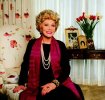
Dolores Gray had a voice described as "a freight-train slathered in honey". The daughter of vaudeville performers, she grew up in the mean streets of Chicago where she was shot in the chest in her early teens, the bullet was never removed but apparently never hindered her ability to sing. Her mother, who soon earned a reputation as an overbearing stage mother, recognized Dolores' talent and the two moved to Hollywood. Dolores was soon "discovered" by Rudy Valee who frequently featured the teenager on his show.

Dolores made uncredited appearances in Lady For A Night and Mr. Skeffington. At 21 she had her own radio program. She then headed to Broadway to pursue roles in musicals. Dolores was Ethel Merman's understudy for the Irving Berlin musical Annie Get Your Gun but when it came time to cast the London production, producers Richard Rodgers and Oscar Hammerstein thought Dolores was ill-suited. Mary Martin urged Rodgers and Hammerstein to let Dolores audition a second time; she won them over and was cast in the role which she played for three years. While in London, Dolores attended the Royal Academy of Dramatic Arts. Dolores continued to perform in the West End and on Broadway before returning to Hollywood in the mid 1950s.

In 1955 Dolores played smarmily insincere TV host Madeline in It's Always Fair Weather. The movie was originally intended to be a sequel to On The Town but was retooled when MGM head Dore Shary refused to hire Frank Sinatra and Jules Munshin to recreate their On The Town roles. Despite Gene Kelly (who co-directed with Stanley Donen) and Cyd Charisse performing some of their best dance numbers the film didn't do well at the box office, possibly due to its downbeat subject matter: three former G.I.s are reunited ten years after the war only to discover they have little in common. I think Dolores is the best part of the movie.

Kismet was also released in 1955, Dolores costarred with Howard Keel and Ann Blyth. Kismet lost money at the box office which gave Dore Shary another reason to oppose the production of more musicals. Sorry the picture quality is poor, at least the sound is good.

Stanley Donen, pleased with Dolores' performance in It's Always Fair Weather, offered her the role of Maggie, the Diana Vreeland inspired magazine editor in Funny Face with Audrey Hepburn and Fred Astaire but Dolores turned him down in favor of a larger role: Sylvia in The Opposite Sex. The Opposite Sex is MGM's 1956 technicolor remake of 1939's The Women with the addition of male cast members (including a very young Leslie Nielsen). The movie (also under Dore Shary's reign at MGM) can't seem to make up its mind whether or not its a musical. Grace Kelly (who left Hollywood for Monaco prior to production), Esther Williams and Eleanor Parker were all offered the lead role (with Williams going on suspension and ultimately leaving MGM out of opposition to being cast) before June Allyson was cast. June Allyson (lip-synching in at least one instance) is given some of the main song & dance numbers while Dolores, a much better singer, only sings the title song over the credits. Ann Miller is in the cast but doesn't perform in any of the musical numbers! Rosalind Russell was uncomfortable playing a bitch in The Women and was encouraged by director George Cukor to play Sylvia broadly, for laughs. Dolores' Sylvia bears her "Jungle Red" claws making her the film's real antagonist, reducing Joan Collins' Crystal (played by Joan Crawford in The Women) to a mere conniving opportunist. Despite a cast that also included Ann Sheridan, Agnes Moorehead, Joan Blondell with Carolyn Jones and Juanita Moore in bit parts The Opposite Sex was yet another musical that lost money for MGM. This is the movie where June Allyson didn't pull her slap but instead hit Joan Collins hard enough to knock off her earring and (according to Collins) cause ringing in her ears.
Dolores Gray opposite sex 2.jpg

Dolores' last film was 1957's Designing Woman with Lauren Bacall and Gregory Peck. Bacall is a fashion designer wed to sports writer Peck. Dolores plays Peck's old flame, an entertainer for whom Bacall is hired to design costumes. Despite not being a musical Dolores' character is seen in a dress rehearsal for a TV show. Sorry for poor picture quality, again, but this also sounds good.

In addition to appearing on several cast recordings and a few soundtracks (she sings Marilyn Monroe's part on the soundtrack to There's No Business Like Show Business) Dolores released several songs as singles. Unfortunately, like Rosemary Clooney at the time, Dolores was given many cutesy novelty songs. Dolores recorded one full-length album, Warm Brandy; instead of her signature belting Dolores coos and purrs her way through an assortment of romantic ballads.
https://www.youtube.com/watch?v=r63kcLbUSIE

Dolores appeared on several TV variety shows like The Bell Telephone Hour throughout the 50s before returning to Broadway and London's West End where her career thrived. Dolores won a Best Lead Actress in a Musical Tony for her lead role in Carnival In Flanders despite the show closing after only six performances. In Carnival In Flanders Dolores introduced what would become her signature song: "Here's That Rainy Day". Unfortunately there's no cast recording, this is a 1977 TV performance.

Dolores performed until 1988 appearing on stage in Destry Rides Again, Gypsy, 42nd Street and Follies among others. One of Dolores' last performances was in a 1988 episode of Dr. Who's Silver Nemesis serial. Here's a performance of "I'm Still Here" from Follies taped for television in 1987:

Dolores later donated her musical arrangements from some of her live shows to the Library of Congress. Performer John Epperson has said he based his drag character Lipsynka largely on Dolores; the two met in 1995 and Dolores saw Lipsynka off-Broadway, she was very flattered and entertained. Dolores passed away of heart disease in 2002 at the age of 78.
Dolores Gray 6.2.jpg


Crimson

Telly Talk Enthusiast
LV
2
 
Awards
9
Dolores Gray had a voice described as "a freight-train slathered in honey".

I only know her from the musical THE OPPOSITE SEX, which ...

The movie (also under Dore Shary's reign at MGM) can't seem to make up its mind whether or not its a musical.

is one of the worst movies of the decade. Remakes are rarely as good as the originals, but there's a special cinematic purgatory reserved those garish, overproduced, Technicolored remakes of earlier, better, B&W comedies. Classics ranging from IT HAPPENED ONE NIGHT, BALL OF FIRE, LIBELED LADY to THE PHILADELPHIA STORY got that treatment. None of these remakes are particularly good, but the remake of THE WOMEN is dismal.

One of the oddities of these remakes is how great stars were replaced by mediocre ones*. Myrna Loy being replaced by Esther Williams? Virginia Mayo replacing Barbara Stanwyck? Sheesh. Yet none of them were as poorly cast as THE OPPOSITE SEX. 1956 was really June Allyson's year for being set up to fail. Not only did she try replacing Claudette Colbert in a poor remake of IT HAPPENED ONE NIGHT, she got stuck in this dud. Comparing Collins to Crawford is like a pussycat next to a tigress.

*I think HIGH SOCIETY is inferior to THE PHILADELPHIA STORY but, at least, the cast has sufficient star power.
 

ClassyCo

Telly Talk Warrior
LV
5
 
Awards
11
Diana Dors was more British screen rather than Hollywood, but we'll slide her right in here. She was a Monroe-esque siren that made a host of successful pictures in her homeland. Dors briefly ventured to Hollywood in the mid-to-late-'50s and had a contract with RKO Pictures. Her publicity was substantial, but scandal pushed her out of town. Her then-husband Dennis Hamilton orchestrated a publicity stunt at a press party for Dors than ended up with Hamilton assaulting a reporter. Newspapers spread the story like wildfire, which the actress being urged to "Go home, Ms. Dors -- And take Mr. Dors with you!" In the '60s and '70s, Dors became known for her erotic "adult" parties and for appearing on talk shows.​

1626873513439.png
 

Crimson

Telly Talk Enthusiast
LV
2
 
Awards
9
I've never seen any film with Diana Dors other than the Joan Crawford film BERSERK! I think she looked more interesting as a middle-aged, somewhat frowsy character actress than in her younger days. Like a lot of actresses in the 50s, she was apparently regarded as Monroe-esque; but other than being busty and blonde, I don't see any similarities. Dors seems to be more of the Mamie van Doren / Joi Lansing type, who were too brassy to be more than superficially reminiscent of Marilyn.

judy-geeson-ty-hardin-joan-crawford-diana-dors-berserk-1967-BP9P1X.jpg

A journalist in the 60s once described Dors as "forgotten but not gone". I've always liked that as a way to describe those celebrities who stick around long after their expiration date.
 

ClassyCo

Telly Talk Warrior
LV
5
 
Awards
11
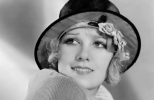
Anita Page reached fame at the end of the silent era. She was publicized as a "blonde, blue-eyed Latin" and appeared in a string of popular films, such as OUR DANCING DAUGHTERS (1928) with Joan Crawford and NAVY BLUES (1929), co-starring William Haines. She was known for having "the most beautiful face in Hollywood", and she made an easy transition to talkies at the start of sound cinema.

Page was a contract star for MGM during her career, a place she said she wanted to be because "they were so good for female actresses". THE BROADWAY MELODY (1929), an early talkie, is considered one of greatest triumphs, and the film itself was also the first winner of an Academy Award for Best Picture. Page was one of the busiest actresses of the early-'30s, and her fan mail rivaled some of Hollywood's biggest stars. She was passed over for the lead in RED-HEADED WOMAN in 1932 in favor of studio newcomer Jean Harlow, and she ultimately left show business when her MGM contract expired in 1933. She was just 23 years old.

She would return briefly to acting some 60 years later, but her roles were few and far between. Anita Page passed on September 6, 2008 at age 98.

1627399309015.png
 

ClassyCo

Telly Talk Warrior
LV
5
 
Awards
11
Nina Mae McKinney was one of the first black actresses trying to forego a film career during the Golden Age of Hollywood. She was dubbed "The Black Garbo" in Europe because of striking beauty, but her film career was basically a dud because of her race.

She made her film debut in HALLELUJAH (1929), which is typically known for being the first all-black movie musical. She later signed with MGM, but her career did not flourish there. Almost all of her scenes for the film RECKLESS (1935), a big-budget Jean Harlow vehicle, were left laying on the cutting room floor. She did have a leading role in THE DEVIL'S DAUGHTER (1939), a low-budget B-feature that vanished quickly. McKinney eventually fled to Europe, where she found better success on the stage. She was the first black entertainer to appear on British television. She would occasionally return to Hollywood for such character parts in movies like PINKY (1949), but her career ended in 1954.

Nina passed in 1967 at age 54.​

1627400269032.png1627400249017.png
 

ClassyCo

Telly Talk Warrior
LV
5
 
Awards
11
Let's hear for Signe Hasso, one of the many actresses promoted as "the next Garbo", but who had a quite unimpressive career overall. The Swedish-born actress finally made her way to America in 1940 where she soon signed with RKO Pictures. Her career was sadly underutilized and she often returned to the stage to make a living. Her film career stalled the following decade, and she slowly retired from acting.​

1628016983344.png
 

ClassyCo

Telly Talk Warrior
LV
5
 
Awards
11

Like it's been discussed so many times before, nearly major Hollywood studio in the 1950s tried to promote their own movie blonde bombshell in response to the success Marilyn Monroe had as a contract star for 20th Century-Fox. Metro-Goldwyn-Mayer, the Tiffany Studio of cinema's golden age, was by no means exempt from following this trend.

Barbara Lang was born in Hollywood in 1928. She was stricken with a serious bout of polio in 1953, and she would spend three weeks at the polio ward of Los Angeles General Hospital. After being told she'd never walk again, Lang turned her attention towards the Bible and prayed to God to give her a miracle. Over time, the muscles in her face were paralyzed and she had difficulty speaking. Although she eventually recovered, the lingering effects of polio rendered her tiring easily for the rest of her life.

Lang emerged as an actress when she appeared on DEATH VALLEY DAYS, a Western anthology series, beginning in 1955. She appeared on the show in total of six different times. In 1957, she signed with MGM, where the studio had plans of promoting her in similar fashion to Monroe. She was quickly sent to a dramatic school, and was soon given the female lead in HOUSE OF NUMBERS (1957), a prison drama co-starring Jack Palance. The film was filmed on location at San Quentin Prison in Mill Valley, California.

MGM then cast her in JAILHOUSE ROCK, starring Elvis Presley. Lang hoped the film would offer her the breakthrough she longed for. Before production began, however, Lang was abruptly replaced with Judy Tyler in the role of Presley's on-screen love interest. Lang was instead reassigned to a relatively minor role in PARTY GIRL (1958), a hapless Cyd Charisse vehicle, where she played a 1930s showgirl. Her MGM contract soon expired and was not renewed.

Lang spent the remainder of her career acting on television. She appeared on a variety of different shows, such as the TV version of THE THIN MAN (1957), the Westerns MAVERICK (1958), LAWMAN (1959), and OUTLAWS (1960), the sitcom THE BOB CUMMINGS SHOW (1958), and the detective series 77 SUNSET STRIP (1959). Her last television appearance was on a 1964 episode of THE TONIGHT SHOW STARRING JOHNNY CARSON, where she guest-starred as herself.

She retired from acting afterwards. Barbara Lang died at age 54 in 1982 from pneumonia.
1628018500426.png1628018565870.png

Barbara Lang was quite a beautiful woman. It's too bad her career was wasted. I've only seen her in HOUSE OF NUMBERS, where I felt she was serviceable in a rather routine "bad girl" role. Like many others, had her career had the proper guidance or chances, I'd argue she would've been a greater and better-respected actress.

At least had MGM let her do JAILHOUSE ROCK she would've been remembered as one of Elvis' leading ladies. She didn't even get that.​
 
Last edited:

ClassyCo

Telly Talk Warrior
LV
5
 
Awards
11
Unlike most of the quasi-Monroe bombshells of the 50s, she actually resembled Marilyn. At a quick glance of that photo, I thought it was Marilyn. She could easily have passed as Marilyn's sister -- or perhaps a missing Gabor.
I agree. Not even Mansfield really looked a whole lot like Monroe outside that generic "she's a pretty blonde" kind-of-way. Barbara Lang did resemble Monroe, and her "look" -- especially in the first photo -- does vaguely remind one of the glamour of a Gabor.​
 
Top