Forgotten Faces of Hollywood's Golden Era

ClassyCo

Telly Talk Warrior
LV
5
 
Awards
11
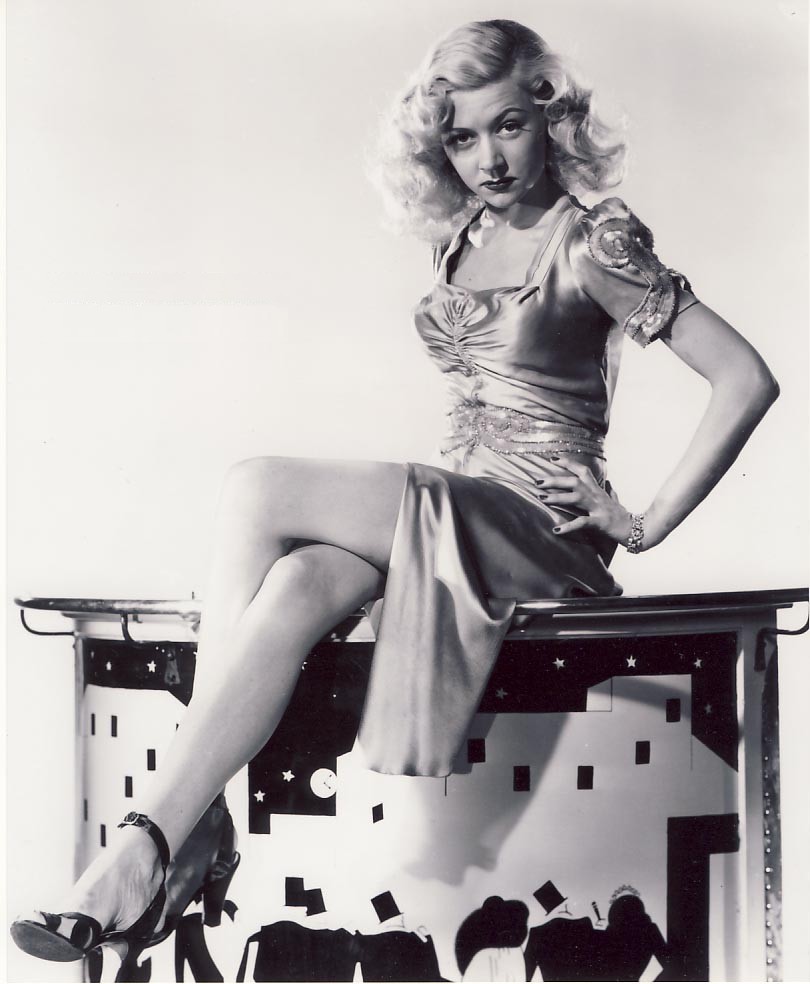
I was watching Joan Crawford: The Ultimate Movie Star, the well-produced TCM documentary, one day last week. At one point in the documentary, actress Virginia Grey was interviewed about her time working with Crawford on THE WOMEN in 1939. Grey says that she had "just the one sequence with Crawford at the makeup counter" and that she was glad she wasn't involved with the rest of the actresses during production because it was "just one big catfight".

Virginia Grey was born in Edendale, California in 1917. She was the youngest of three daughters born to director Ray Grey and his wife Florence. One of Virginia's earliest childhood babysitters was silent screen star Gloria Swanson. At just 10 years old, Grey made her film debut as Little Eva in UNCLE TOM'S CABIN (1927). Despite this, she would ultimately leave show business for the next few years to finish her education.

Grey gave up her ambitions to enter the medical and returned to acting in the 1930s. She started out working as an extra and receiving bit parts in various movies, such as SECRETS (1933), starring silent screen star Mary Pickford in one of her few attempts at talkies. Grey eventually signed with MGM in 1936, and her first picture there was the Oscar-winning biopic THE GREAT ZIEGFELD (1936), starring William Powell, Myrna Loy, and Luise Rainer. She appeared in the Laurel and Hardy comedy called OUR RELATIONS (1937), and had leading roles in B-movies like SECRET VALLEY (1937) and BAD GUY (1937). She had sizable roles in TEST PILOT (1938), DRAMATIC SCHOOL (1938), and IDIOT'S DELIGHT (1939), appearing opposite such stars as Clark Gable and Norma Shearer. She was the leading lady for Wallace Beery in THUNDER AFLOAT (1939).

In 1937, Grey was briefly considered by MGM to takeover for the recently deceased Jean Harlow in the unfinished SARATOGA. Harlow had died before completed all of her scenes, and the studio toyed with the idea of starting over with the film with Grey in Harlow's place. The idea was eventually scrapped, however, and Harlow's stand-in was used for the remaining (reconstructed) scenes. Grey eventually left MGM in 1942, although she continued to work successfully in motion pictures for the next two-and-half decades, primarily in secondary roles. She supported Fox's biggest star, Betty Grable, in SWEET ROSIE O'GRADY (1943), and played the title role in the quickie B-movie musical called GLAMOUR GIRL (1948). Into the '50s and '60s, she appeared in such films as ALL THAT HEAVEN ALLOWS (1955), JEANNE EAGELS (1957), PORTRAIT IN BLACK (1960), FLOWER DRUM SONG (1961), and MADAME X (1966), just to name a few. Grey's final film appearance came in THE MONEYCHANGERS (1976).

Like many other Old Hollywood faces, Virginia Grey has one aspect of her life that I find particularly interesting. Grey began an affair with Clark Gable, the undisputed King of Hollywood, after the death of his wife, actress Carole Lombard, in 1942. Grey and Gable were quite popular together, appearing together at restaurants and on the cover of tabloid magazines. It was widely speculated that Gable would propose to Grey, but everyone, including Grey herself, was openly stunned when Gable married Lady Sylvia Ashley in 1949. Grey was heartbroken by the events, but even after Gable divorced Ashley in 1952, the Grey-Gable affair was not rekindled.

Virginia Grey died on July 31, 2004, aged 87, in Woodland Hills, California.

1632324668828.png
 

ClassyCo

Telly Talk Warrior
LV
5
 
Awards
11
I found this little tribute of sorts to 20 of Old Hollywood's forgotten beauties. I believe the only ones on the list I had heard of previously were Gloria Grahame, Cleo Moore (who I could've sworn had been mentioned here before), Janis Paige, and possibly Laraine Day (her name looks familiar, but her pictures do not).​

 
Last edited:

DallasFanForever

Telly Talk Supreme
LV
5
 
Awards
17
I didn’t know most of those names either but it’s definitely nice to read about them. So many forgotten stars of that era that never got their due.
 

Crimson

Telly Talk Enthusiast
LV
2
 
Awards
9
Gloria Grahame

Gloria really doesn't belong on that list. She was a genuine movie star; maybe not top tier, but she had a solid career and even won an Oscar. The rest are obscure even by obscure standards; Janis Carter, Janis Paige and Cleo Moore are the only others I'm familiar with.
 

ClassyCo

Telly Talk Warrior
LV
5
 
Awards
11
I could've sworn Cleo Moore had been mentioned here before, but I suppose I was wrong. She's one of many little remembered actresses from the 1950s whose main claim to fame today comes from her name appearing on a seemingly never-ending list of women molded in Marilyn Monroe's likeness. Aside from the blonde hair and prettiness, Cleo's professional career or on-screen persona didn't parallel with Marilyn's. Where Monroe projected a sensitive sexiness, Moore presented a tougher, hard-boiled persona in her films.

She was born in Louisiana in 1929, the daughter of grocery store owners. When she was 15, she married a man named Palmer Long, but that marriage was brief. She moved with her family to California in 1945, determined to make a name for herself in movies. With her good looks, Moore started entering beauty contests, and she was crowned "Miss Van Nuys" in 1947.

Moore started acting in 1948. It was that year that she first gained attention for appearing in CONGO BILL, a movie serial starring Don McGuire in the title role. She played a white leader of an African tribe. Moore worked for Warner Brothers for a brief period in 1950, before shifting over to RKO, where she stayed until 1952. During this time, she appeared in several movies, often with big-name stars like Gary Cooper, Lauren Bacall, Victor Mature, and Ida Lupino.

In 1952, she signed with Columbia Pictures, where she'd do the bulk of her film work for the rest of her career. Her first film there was STRANGE FASCINATION (1952), a B-movie film noir that was made under the supervision of filmmaker Hugo Haas. Moore and Haas developed a strong working relationship, and the two worked together several more times over the course of her career. One of Moore's most-well-known films was ONE GIRL'S CONFESSION, a 1953 low-budget drama that solidified her unofficial status as the queen of B-movie bad girls. The majority of her roles were in B-movie crime dramas and melodramas, such as THY NEIGHBOR'S WIFE (1953) and THE OTHER WOMAN (1954). One of her bigger-budget movies was WOMEN'S PRISON (1955), in which she played a sassy prisoner opposite Ida Lupino and Jan Sterling. Her final film was HIT AND RUN (1957), which was made for United Artists.

Moore's career tapered off in the late-'50s. She never achieved the super star status of her contemporaries, but achieved fame in the 1980s when she and Mamie Van Doren were rediscovered as the quintessential bad girls of '50s B-movies.

Cleo Moore had been out of the limelight for several years when she died in 1973, aged 43. She was buried in her Inglewood, California.​

1633105616558.png
 

ClassyCo

Telly Talk Warrior
LV
5
 
Awards
11
Gloria really doesn't belong on that list. She was a genuine movie star; maybe not top tier, but she had a solid career and even won an Oscar. The rest are obscure even by obscure standards; Janis Carter, Janis Paige and Cleo Moore are the only others I'm familiar with.
Yeah, Grahame was actually a pretty big star and did some good movies. I know her most for movies like SUDDEN FEAR and THE BAD AND THE BEAUTIFUL.

I had never heard of Janis Carter before, but I had never heard of a lot of them before looking at this article. I have a vague memory I had at least seen the name "Laraine Day" before yesterday.​
 

DallasFanForever

Telly Talk Supreme
LV
5
 
Awards
17
I have a vague memory I had at least seen the name "Laraine Day" before yesterday.
She was more famous for whom she married than she was as an actress really. At one point she was married to Leo Durocher, who was a real famous baseball personality. My mother used to swear she was Doris Day’s sister but obviously that wasn’t true. I heard it so many times growing up that I actually believed it was true. Oh the naïveté of the pre-internet era!
 

Crimson

Telly Talk Enthusiast
LV
2
 
Awards
9
I'm only familiar with Cleo Moore to the extent that I would have recognized a photo of her, and knew she was one of the many busty blondes who were apparently considered knock-offs of Marilyn in the 50s.

Where Monroe projected a sensitive sexiness, Moore presented a tougher, hard-boiled persona in her films.

As with so many of the other ladies thought of as wannabe Marilyns, the similarities went no further than blonde hair and bustline. Only Jayne made any attempt at duplicating Marilyn's actual persona, and even she only took a small facet exaggerated to parody. The others -- Cleo, Mamie, Joi, Diana, Barbara, etc. -- were brassy and flinty; the antithesis of Marilyn. It's odd that no studio made a genuine effort to replicate Monroe; or, perhaps, the 50s was so obtuse that Marilyn really was seen as nothing more than a pair of boobs.
 

ClassyCo

Telly Talk Warrior
LV
5
 
Awards
11
When I first got into Marilyn Monroe, one of the first things that caused me to branch out from her were the endless parade of actresses supposedly created to rival her popularity. Barbara Nichols was an actress that showed up frequently on long lists of would-be hopefuls whose '50s careers were dwarfed because studios and execs saw them as Monroe wannabes.

Nichols was born in Mineola, New York in 1928, but was raised by her parents in nearby Queens. I couldn't scramble a whole lot together about her childhood, but I know one of her earliest jobs was as a showgirl. When she was approached by an influential nightclub owner to become a striptease performer, she declined the offer to focus on her dreams of movie stardom. She began modeling in the late-'40s in numerous cheesecake magazines, appearing in a few of morale-boosting pin-up-style pictures for soldiers overseas.

Barbara's first break as an actress came when she joined the cast of PAL JOEY on Broadway in 1952, a role she'd reprise in the successful 1957 film version. She later appeared in the Broadway production of LET IT RIDE in 1961. As a movie actress, her first role was as a dance hall girl in RIVER OF NO RETURN (1954), a Western starring Marilyn Monroe and Robert Mitchum. Over the following decade, Nichols had showy supporting roles in a number of A-list Hollywood films, such as THE KING AND FOUR QUEENS (1956) starring Clark Gable; THE PAJAMA GAME (1957) starring Doris Day; TEN NORTH FREDERICK (1958) starring Gary Cooper; THAT KIND OF WOMAN (1959) starring Sophia Loren; and WHERE THE BOYS ARE (1960) starring Connie Francis.

Unlike many of her contemporaries and other Monroe imitators, Nichols was rarely the star of the films in which she appeared. Where the likes of Mamie Van Doren and Cleo Moore solidified themselves as the star of B-movies, Nichols was typically ushered into the supporting cast of bigger budgeted A-list features. Barbara's best work was probably on television, where she appeared practically every year from 1953 to 1974. In 1961, she played Liz Powell in THE TWILIGHT ZONE episode called "Twenty-Two", about an overworked dancer who has nightmares about death. She also appeared as showgirl Chickadee Laverne in two 1963 episodes of THE BEVERLY HILLBILLIES, then the highest-rated series on television. She appeared on many other television shows, such as THE REAL McCOYS, GREEN ACRES, THE DORIS DAY SHOW, HAWAII FIVE-O, and ADAM-12. Her final acting role was in an episode of THE ROOKIES in 1974.

Barbara Nichols died on October 5, 1976 (the 45th anniversary of her death being tomorrow), aged 47. The cause of death was declared as complications of a damaged spleen and liver. She had sustained such injuries year earlier in a car accident.​

1633353196443.png
 

Crimson

Telly Talk Enthusiast
LV
2
 
Awards
9
Of all the smalltime Marilyn copycats, Barbara Nichols is both my favorite and the one who I think has the least in common with Marilyn. A hard-faced blonde with a harsh voice, Barbara was the brassiest of the lot. She was more like Jean Harlow's illegitimate daughter who was raised on the wrong side of the tracks and grew up to be a burlesque dancer.
 

ClassyCo

Telly Talk Warrior
LV
5
 
Awards
11
Of all the smalltime Marilyn copycats, Barbara Nichols is both my favorite and the one who I think has the least in common with Marilyn. A hard-faced blonde with a harsh voice, Barbara was the brassiest of the lot. She was more like Jean Harlow's illegitimate daughter who was raised on the wrong side of the tracks and grew up to be a burlesque dancer.
You know, I've never really thought about it quite this way, but you've definitely got a point. Outside of the color of her hair, Barbara had nothing in common with Marilyn. She was sexy, sure, in that "she's a brassy girl" kind-of-way, but she had a sass that none of the blonde-haired beauties had at the time. And where Mamie and Cleo (and even Jayne after her late-'50s splash) made their home as the leading lady of B-movie quickies, Barbara gave solid performances in a string of strong pictures, almost always in fine company with big-name stars.

When I used to plunder my way through the ever-growing list of Monroe clones that was found on nearly every Wikipedia page concerning these women, I always found myself drifting towards Barbara Nichols. Now, I've seen relatively little of her work, but what I have seen was good and she showed promise of being a bigger star than she was.

1633363514260.png

I used to have the above photo as the wallpaper on my phone... many, many moons ago.​
 

ClassyCo

Telly Talk Warrior
LV
5
 
Awards
11
One of the more obscure blonde beauties I've come across is Sabrina, an English model in the Monroe/Diana Dors mold. She was a popular glamour model in the 1950s, and she achieved as a British TV star on BEFORE YOUR VERY EYES in 1952. She was only 16 years old when she was cast as the lead character's ditzy sidekick. This eventually led to her having a film career. Sabrina received top billing in BLUE MURDER AT ST. TRINIAN'S (1957), only her third movie, but appears briefly in the film as a college co-ed reading a book oblivious to the mayhem happening around her. She later appeared in an episode of TARZAN in 1967. She replaced a recently deceased Jayne Mansfield in the low-budget horror flick called THE ICE HOUSE (1969), and starred with Troy Donahue in THE PHANTOM GUNSLINGER (1970). Her career hit the rocks after that, and she drifted in and out of the spotlight until she passed away in Los Angeles back in 2016. She was 80 years old.

1633442314994.png
 

ClassyCo

Telly Talk Warrior
LV
5
 
Awards
11
When I first got into Marilyn Monroe, one of the first things that caused me to branch out from her were the endless parade of actresses supposedly created to rival her popularity. Barbara Nichols was an actress that showed up frequently on long lists of would-be hopefuls whose '50s careers were dwarfed because studios and execs saw them as Monroe wannabes.

Nichols was born in Mineola, New York in 1928, but was raised by her parents in nearby Queens. I couldn't scramble a whole lot together about her childhood, but I know one of her earliest jobs was as a showgirl. When she was approached by an influential nightclub owner to become a striptease performer, she declined the offer to focus on her dreams of movie stardom. She began modeling in the late-'40s in numerous cheesecake magazines, appearing in a few of morale-boosting pin-up-style pictures for soldiers overseas.

Barbara's first break as an actress came when she joined the cast of PAL JOEY on Broadway in 1952, a role she'd reprise in the successful 1957 film version. She later appeared in the Broadway production of LET IT RIDE in 1961. As a movie actress, her first role was as a dance hall girl in RIVER OF NO RETURN (1954), a Western starring Marilyn Monroe and Robert Mitchum. Over the following decade, Nichols had showy supporting roles in a number of A-list Hollywood films, such as THE KING AND FOUR QUEENS (1956) starring Clark Gable; THE PAJAMA GAME (1957) starring Doris Day; TEN NORTH FREDERICK (1958) starring Gary Cooper; THAT KIND OF WOMAN (1959) starring Sophia Loren; and WHERE THE BOYS ARE (1960) starring Connie Francis.

Unlike many of her contemporaries and other Monroe imitators, Nichols was rarely the star of the films in which she appeared. Where the likes of Mamie Van Doren and Cleo Moore solidified themselves as the star of B-movies, Nichols was typically ushered into the supporting cast of bigger budgeted A-list features. Barbara's best work was probably on television, where she appeared practically every year from 1953 to 1974. In 1961, she played Liz Powell in THE TWILIGHT ZONE episode called "Twenty-Two", about an overworked dancer who has nightmares about death. She also appeared as showgirl Chickadee Laverne in two 1963 episodes of THE BEVERLY HILLBILLIES, then the highest-rated series on television. She appeared on many other television shows, such as THE REAL McCOYS, GREEN ACRES, THE DORIS DAY SHOW, HAWAII FIVE-O, and ADAM-12. Her final acting role was in an episode of THE ROOKIES in 1974.

Barbara Nichols died on October 5, 1976 (the 45th anniversary of her death being tomorrow), aged 47. The cause of death was declared as complications of a damaged spleen and liver. She had sustained such injuries year earlier in a car accident.​

View attachment 30861
Of all the smalltime Marilyn copycats, Barbara Nichols is both my favorite and the one who I think has the least in common with Marilyn. A hard-faced blonde with a harsh voice, Barbara was the brassiest of the lot. She was more like Jean Harlow's illegitimate daughter who was raised on the wrong side of the tracks and grew up to be a burlesque dancer.
You know, I've never really thought about it quite this way, but you've definitely got a point. Outside of the color of her hair, Barbara had nothing in common with Marilyn. She was sexy, sure, in that "she's a brassy girl" kind-of-way, but she had a sass that none of the blonde-haired beauties had at the time. And where Mamie and Cleo (and even Jayne after her late-'50s splash) made their home as the leading lady of B-movie quickies, Barbara gave solid performances in a string of strong pictures, almost always in fine company with big-name stars.

When I used to plunder my way through the ever-growing list of Monroe clones that was found on nearly every Wikipedia page concerning these women, I always found myself drifting towards Barbara Nichols. Now, I've seen relatively little of her work, but what I have seen was good and she showed promise of being a bigger star than she was.

View attachment 30862

I used to have the above photo as the wallpaper on my phone... many, many moons ago.​
Apparently Barbara Nichols was quite popular in Hollywood social circles. She was in the "in crowd" socially, and was invited to all the best parties. One commentator said that a Hollywood party wasn't complete without her presence.

1633442850907.png
 

Snarky Oracle!

Telly Talk Supreme
LV
8
 
Awards
21
Apparently Barbara Nichols was quite popular in Hollywood social circles. She was in the "in crowd" socially, and was invited to all the best parties. One commentator said that a Hollywood party wasn't complete without her presence.


Makes you wonder what really happened to her spleen.
 

ClassyCo

Telly Talk Warrior
LV
5
 
Awards
11
Carroll Baker was the blonde bombshell of the 1960s. She had started her career with standout performances in GIANT (1956) and BABY DOLL (1956), and eventually found her way into such trash as THE CARPETBAGGERS (1964) and duds such as HARLOW (1965), where she played the doomed '30s star Jean Harlow. I'm not terribly familiar with Baker's work, but I know she was a pretty big star for a good solid decade.​

1634737064151.png
 

ClassyCo

Telly Talk Warrior
LV
5
 
Awards
11
I know it totally isn't fair for me to think this way, but I cannot help but think of Lee Remick as the woman Dean Martin refused to co-star with in SOMETHING'S GOT TO GIVE in 1962, the ill-fated Marilyn Monroe vehicle that was ultimately never completed. If you know the story, Monroe was fired from Fox and after a few false leads, the studio decided on Remick as her replacement. Considering Martin had approval of his co-star, he refused to continue with Remick in place of Monroe.

Aside from that little tidbit, she made her film debut in A FACE IN THE CROWD (1957), starring Andy Griffith, which led to her having standout performances in such successes as ANATOMY OF A MURDER (1959), WILD RIVER (1960), BABY THE RAIN MUST FALL (1965), THE DETECTIVE (1968), and THE EUROPEANS (1979). Remick received an Oscar nod for her work in DAYS OF WINE AND ROSES (1962), and starred in the supernatural horror film THE OMEN (1976).

She was a beautiful and talented actress, but I'm barely familiar with her.

1634738786984.png
 
Last edited:

Crimson

Telly Talk Enthusiast
LV
2
 
Awards
9
Carroll Baker was the blonde bombshell of the 1960s

Carroll Baker seems like an actress Hollywood didn't know what to do with; she didn't fit into any of the standard boxes. She was too sexy to be the girl-next-door, but not sexy enough to be a sex symbol. The attempts at passing her off, circa '64 & '65, as the next big bombshell were hopeless; she came across as a 'serious' actress slumming as a pinup girl. She might have done well in Stanwyck/Crawford style roles, but Hollywood wasn't making them anymore.
 

ClassyCo

Telly Talk Warrior
LV
5
 
Awards
11
Carroll Baker seems like an actress Hollywood didn't know what to do with; she didn't fit into any of the standard boxes. She was too sexy to be the girl-next-door, but not sexy enough to be a sex symbol. The attempts at passing her off, circa '64 & '65, as the next big bombshell were hopeless; she came across as a 'serious' actress slumming as a pinup girl. She might have done well in Stanwyck/Crawford style roles, but Hollywood wasn't making them anymore.
Yeah, they tried to brand her as different "types", but it all seemed phony.​
 

ClassyCo

Telly Talk Warrior
LV
5
 
Awards
11

I was thinking sometime ago about how Hollywood studios used to hire men and women and place them under contracts specifically as dancers. This was especially common in the 1930s and 1940s when studios were making many movie musicals as escapist entertainment for audiences dealing with the complications of the Great Depression and America's involvement in WWII, respectively.

My wife and I watched STAGE DOOR (1937) last week for my birthday, and that movie features a very young Ann Miller as a dancer trying to make her way up the Hollywood ladder by dancing in nightclubs. She was only like 14 years old in the film (not even old enough to drive!), but she showed promise with her cheerful and likable on-screen charisma.

She was born Johnnie Collier in Texas in 1923, and she lived there until her parents divorced when she was nine. She was considered a childhood dancing prodigy, and she worked diligently to perfect her talents. In an interview she gave later in life, she commented that Eleanor Powell was an early inspiration of hers to become a dancer. Because her mother was deaf, she struggled to find work, leading the teenage Johnnie to find work as a dancer. It was around this time that she adopted the stage name Ann Miller, a name she'd use for the remainder of her professional career.

Miller was discovered by Lucille Ball and comic Benny Rubin in 1936. It was through this friendship that Miller was brought to RKO Studios, where she was soon signed to a contract. Miller apparently lied about her age, providing a fake birth certificate to the powers-that-be at RKO that told them she was 18. STAGE DOOR (1937) was an early assignment for Miller at the studio, where she tap-danced professionally on-screen with Ginger Rogers. She played the always-dancing Essie Carmichael in YOU CAN'T TAKE IT WITH YOU (1938), the winner of the Academy Award for Best Picture. After her contract with RKO expired, Miller moved over to MGM, where she found her stride by appearing in a host of successful musicals, such as EASTER PARADE (1948), ON THE TOWN (1949), and KISS ME KATE (1953).

Later in life, Miller claimed to have invented pantyhose in the 1940s as a solution to a constant issue of tearing her stockings while dancing. Miller was well-known for her speed in tap dance. Studio publicity releases claimed she could tap 500 times per minute, although this was later disputed. As her movie career ended in 1956 as the studio system lost its momentum because of television, Miller refocused her attention to the stage. She starred as the title character in the Broadway musical MAME in 1969, and later co-starred with Mickey Rooney in SUGAR BABIES in 1979.

Ann Miller died from lung cancer at age 80 on January 24, 2004.

1634744874393.png

Another Old Hollywood dancer used in a variety musicals was Cyd Charisse, a dancer who practically took over from Miller as an MGM dancer in the early 1950s. Charisse appeared in such classics as SINGIN' IN THE RAIN (1952) and THE BAND WAGON (1953), although she stopped dancing in movies in the late 1950s. She was involved in the ill-fated SOMETHING'S GOT TO GIVE in 1962, and continued her professional career right up until her death in 2008.

1634748560831.png
 

ClassyCo

Telly Talk Warrior
LV
5
 
Awards
11
I've been watching the old game show WHAT'S MY LINE? a lot the past few days, and that TV show brings several old names back to one's memory. I watched the episode where Marilyn Maxwell shows up as a mystery guest from 1953, and it got me interested in exploring the lady herself.

Marilyn Maxwell (sometimes called "the other Marilyn" in reference to '50s popular culture) was born in Iowa in 1921. While still a teenager, she began her professional career as a singer with the Ted Weems big band of the '40s. At 20, she signed a lucrative contract with MGM as a contract player. She made her film debut in STAND BY FOR ACTION (1942), starring Robert Taylor. She was a frequent guest star on such radio programs as BEAT THE BAND and THE ABBOTT AND COSTELLO SHOW.

Maxwell became a popular pin-up girl during and after WWII. She toured frequently in USO shows, often as a companion to comedian Bob Hope. Maxwell and Hope's off-screen love affair was quite well-known in Hollywood circles, and the duo appeared together in films like THE LEMON DROP KID (1951) and OFF LIMITS (1953). Maxwell and Hope introduced the popular Christmas song "Silver Bells" in the former. She also appeared opposite such well-known comedians like Jack Benny, Red Skelton, and Jerry Lewis in film and on television. She headlined the TV version of BUS STOP in 1960, the story Monroe immortalized on celluloid in 1956. It lasted a single season.

Maxwell died of a heart attack, aged 50, in 1972.

1636380747061.png
 
Top