What was the last film you watched?

James from London

International Treasure
LV
6
 
Awards
18
The Shawshank Redemption and The Green Mile have kind of merged into one for me. Lots of green prison uniforms and Oscars.
 

Willie Oleson

Telly Talk Schemer
LV
9
 
Awards
27
And then there's Tim Robbins vs. Tom Hanks, which is like Al Pacino vs. Robert De Niro or Harrison Ford vs. Kevin Costner (and sometimes I even have the nerve to confuse Clark Gable with Gary Grant, because they're both considered to be the most famous Classic Hollywood actor).

A little mnemonic device that could help us to distinguish between the two prison dramas:
The prison guard bully in Shawshank is TALL and the prison guard bully in Green Mile is SMALL. Naturally, if you insist on confusing "tall" and "small" then there's simply nothing I can do for you.
But at least I can say "I've tried".
 

DallasFanForever

Telly Talk Supreme
LV
5
 
Awards
17
I'm not sure if it deserves to be rated as one of the greatest films ever made (as the 9.3 score on IMDB would suggest) but I can definitely see what makes it a "favourite".
I can definitely see why it gets such a high rating. Even after 30 years its a movie I can’t really find anything to criticize. For me it still holds up quite well.


The Green Mile,
It’s never had the impact of Shawshank for me. To be honest when I saw it for the first time I was actually very disappointed. Considering all I had heard about it I expected to love but I just didn’t care for it very much. I found it a little far fetched and hokey at times but of course that’s nothing new in Hollywood. It has its powerful moments but overall I don’t put it on the same level as Shawshank.
 

Seaviewer

Telly Talk Warrior
Top Poster Of Month
LV
9
 
Awards
20
Die Hard (1988)
I've been avoiding watching this for the past 25 years because it just didn't seem like something I would like, but it happened to be on TV on Saturday night in an easy timeslot so I broke down - and was pleasantly suprised.
Simply put, it has a lot more "heart" than I expected. The characters are sharply drawn; Bruce Willis is not quite the oaf he appears to be in the clips I've seen over and over, and there are some nice turns by Bonnie Bedelia as the wife, and Reginald VelJohnson as the only local cop with any nous.
It's kind of like Ocean's 11 if they were the villains with Alan Rickman the charming leader.
I'm actually curious, now, to learn the answer to the question posed in the trailer for Die Hard 2 - how the same man gets caught in the same situation again - although I won't be suprised if there isn't one.
 

Mel O'Drama

Admin
LV
16
 
Awards
44
Victim (1961)

iu


Context of the time and place makes a huge difference to appreciating this one.

Watching Victim now, it feels at times like the kind of film that I feel I might have stumbled upon one rainy Sunday afternoon in the Eighties. It's dramatic and most certainly dark at times, but also accessible with lots of charming period footage of London (mostly central and West/SW, I think) to hold the interest. But it captures much more than just the physical world of the time. It goes far deeper in its exploration of Britain in the early-Sixties.

How this film is received could depend on the starting point. Certainly I was born into a generation where homosexuality had been partially decriminalised, but was also acutely aware of the inequity when it came to the age of consent or relationship privileges. We now have a generation who have only ever known a world where acceptance and inclusivity is the standard (the listing on ITV provides a helpful warning for the oversensitive: "Contains outdated language and attitudes which some viewers may find offensive"). Gay men and women can - and increasingly do - get married, produce biological children, get in over their heads with joint mortgages, and buy into any area of status-related crap society says they need to be complete. These First World problems are a world away from a short time ago when sex between consenting men was a criminal act and committed couples, if they were found out, faced imprisonment or blackmail. In a literal sense, being gay was still "the love that dare not speak its name", with homosexuality only spoken about in euphemistic terms. But this was the world in which Victim was made. And it is the film's raison d'être. This is exactly why Victim is so important. The facts it exposed were very real, and the much-needed discourse coming from putting it into the mainstream public consciousness would certainly have been an important stepping stone towards the initial reforms which would come in 1967.

There's no doubt this is a film with a message, and an important one. There are moments when the dialogue is a tad preachy. That is to say, it necessarily gives voice to facts that would have been implicitly understood by gay men at the time. As a result, occasional moments of exposition - such as earnestly decrying "the blackmail charter" - have an unintentional whiff of Meg Richardson's "I never should have swerved to avoid that cat". As said, it was necessary to do this for the story to make sense to those who weren't aware of the politics, so it's all for the greater good. It was certainly a big help watching the film six decades down the line.

Overall, the film's voice is a strong one. What is not said feels as though it comes from a place of understanding audience intelligence rather than censorship. And what is says is powerful. There's no hiding behind euphemisms or mistaking what this film is saying. The word "homosexual" is openly used, along with slurs like "queer", "invert" and "perversion". And there's also Melville Farr's candid admission to his wife "(b)ecause I wanted him". Do you understand? Because I WANTED HIM!" (a line said to be written by Dirk Bogarde himself to avoid any danger of the film skirting the issue of his character's involvement).

And this brings me to a key strength of the film: the performances. Ugly truths are brought out in to the open, but it's extremely disarming to find numerous examples of gay men which mostly avoids stereotyping. Some are more pleasant than others (which is fine. I'll take nuance over saccharine any day) but the film invites a great deal of empathy from the audience. It seems to have been much-said that Dirk Bogarde was courageous to take on this role which in many ways echoed his own life as a closeted gay man, and this is true - particularly when it's considered that he pushed to make the film's subject matter truthful and for his character to openly express his feelings for another man. But many of the actors were heterosexual and at this time that, too, to play these parts would have taken a great degree of bravery. With this in mind, it's heartening to see almost all of them are sensitively and truthfully played.

The film presents several different ways in which characters respond to the blackmail, all of them horrifying prospects: We see the man who commits suicide to avoid harming others with exposure. We see the man who sells out and gives the blackmailers the names of his friends in exchange for the promised return of the material which gives them a hold over him. And we see the man who has everything to lose decide it's still worth what might be gained from being transparent and speaking the truth out loud and in public. In each of these I found myself feeling sympathy.

In among the persecution, there are moments of unexpected compassion that take the viewer by surprise. John Barrie as the Detective Inspector and Noel Howlett as Farr's assistant William are two that stuck with me, leaving a sense of hope in humanity to balance things out.

One of those rare films that feels equally important as both a work of art and an important social document.​
 

Willie Oleson

Telly Talk Schemer
LV
9
 
Awards
27
I find the collector (on the motorbike) a very creepy character.

the listing on ITV provides a helpful warning for the oversensitive: "Contains outdated language and attitudes which some viewers may find offensive"
I think there's something spoiler-ish about that.

These First World problems are a world away from a short time ago when sex between consenting men was a criminal act and committed couples, if they were found out, faced imprisonment or blackmail
Thankfully, we were saved by the French laws, so while gay emancipation still had a long way to go in the 1960s at least it wasn't as grim as the situation in the UK.
 

Mel O'Drama

Admin
LV
16
 
Awards
44
I find the collector (on the motorbike) a very creepy character.

Yes. And those goggles only add to the creepiness.


I think there's something spoiler-ish about that.

I know what you mean. At the same time I find it quite tantalising.

I'm currently re-watching episodes of a British soap from the Eighties and every episode comes with the caveat: "Contains language and attitudes of the time*". It's kind of funny to try and get my head round my teenage years being some distant point in time that's so ancient it's considered period.


* Every so often there'll be the additional warning: "Contains scenes which viewers may find distressing", which makes an episode even more inviting. At the same time I remember repeats used to air at 5pm on a Saturday and nobody batted an eye, much less warned anyone. Yet we lived through it unscathed.


Thankfully, we were saved by the French laws, so while gay emancipation still had a long way to go in the 1960s at least it wasn't as grim as the situation in the UK.

Interesting. I'm reasonably familiar with LGBT history of this era in Britain. Perhaps I should expand and read up on neighbouring countries. Out of interest, are there any films you'd recommend which are set during this time in the Netherlands?
 

James from London

International Treasure
LV
6
 
Awards
18
Every so often there'll be the additional warning: "Contains scenes which viewers may find distressing", which makes an episode even more inviting. At the same time I remember repeats used to air at 5pm on a Saturday and nobody batted an eye, much less warned anyone. Yet we lived through it unscathed.

I seem to remember that the end of episode shot of Sheila being dragged into the bushes was cut from that week's omnibus. You heard it, but didn't see it.
 

Willie Oleson

Telly Talk Schemer
LV
9
 
Awards
27
Out of interest, are there any films you'd recommend which are set during this time in the Netherlands?
Pff, I'm rather uneducated when it comes to Dutch cinema. The way I remember it, nobody liked those films unless there was something saucy or controversial in it.
Perhaps the biggest fame was Dutch actress Sylvia Kristel in the French film Emanuelle (1974) which, incidentally, was the first film in what would become the first - and to this day, most extensive - movie franchise.
 

Mel O'Drama

Admin
LV
16
 
Awards
44
I seem to remember that the end of episode shot of Sheila being dragged into the bushes was cut from that week's omnibus. You heard it, but didn't see it.

Oh, that's interesting. I'm fairly sure I missed that entirely the first time around (omnibus included) so I'm glad to have that context. Now you mention it, I remember similar cuts being ordered for certain episodes of EastEnders (Angie's overdose springs to mind) and Corrie (Brian's stabbing, which I seem to remember was also one of the earliest Corrie omnibuses), but have no memory at all for which Brookie episodes got this treatment.

I do remember reading that Sue Johnston filmed a lot more of that sequence in the woods but it ended up cut and never made it to air.


The way I remember it, nobody liked those films unless there was something saucy or controversial in it.

Oh, that sounds like a challenge for filmmakers... daring them to make something risqué enough that people will actually watch it.


Perhaps the biggest fame was Dutch actress Sylvia Kristel in the French film Emanuelle (1974) which, incidentally, was the first film in what would become the first - and to this day, most extensive - movie franchise.

I've heard of the films, of course. Although I'm actually more familiar with the parody Carry On Emmannuelle, itself one of the final entries in that very long-running franchise (and generally considered one of the worst).
 

Monzo

Telly Talk Enthusiast
LV
1
 
Awards
9
I watched A Hero, which won the Grand Prix at the Cannes Film Festival in 2021. For this reason, I had high expectations of the film, which were neither fulfilled nor disappointed.


It is a strong film that I probably won't remember very well because there wasn't a moment that really touched me.
 

Willie Oleson

Telly Talk Schemer
LV
9
 
Awards
27
It is a strong film that I probably won't remember very well because there wasn't a moment that really touched me.
Last year I watched LEVIATHAN (2014) mostly because I'm intrigued by "the way things go in Russia".
The story is OK but there's nothing spectacular about it, but I will never forget it because of this scene:
It sounds like those funny, high-speed disclaimers or warnings at the end of a radio or TV commercial, except in this scene it goes on and on and on. And on.
The best part is that it's not clear if it's meant to be funny (I suspect it was) but there's no comedic tone in the context of the story.
 

Willie Oleson

Telly Talk Schemer
LV
9
 
Awards
27
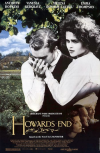
I have no idea how it compares to HOWARDS END (what? no apostrophe?) but I plan to find out.
1724244503789.png

Whereas REMAINS has that enticing stiff-upper-lip atmosphere and meticulous narrative from the very beginning, HOWARDS END has a rather messy start.
There are various scenes that are not strongly connected, there are three youg men with blond hair therefore it's difficult to see who's-in-what-scene, and after 30 minutes I still didn't know who or what the main focus of the film was going to be.
The only reason I kept watching was because of Vanessa Redgrave's character, while hoping the story would find its groove, as it were.

But no, it actually becomes much messier and maybe that's not what I expected or wanted from this film, but it's what I needed.
It's as gorgeous as all the other Merchant Ivory productions but at the same time I think it's also the darkest thing they've ever done.
Ruth Wilcox (Redgrave) comes across as a likeable character because she befriends Emma Thompson and they talk about the trees and the lovely meadows, but it's the innocent and passive snobbery that makes her such a monster. Sobbing about the demolition of a fancy house someone happened to be born in while the working class struggles to find a decent home they can afford.
"I can't understand that people would want to live in flats" - it's because it's slim pickings for the ordinary peeps but she doesn't even understand that, or doesn't want to.

Unlike Krystle Carrington, Emma Thompson does not succeed in redeeming husband Antony Hopkins, but there's also a scene in which they're dancing excitedly in his office, and in that moment they are the likeable protagonists.
This dual mood continues until the very end, it's what makes it a little problematic but also very interesting and unpredictable.
Is it about good people doing or saying ugly things or is it about ugly people doing something good every now and then? It's hard to say, to be honest.

The tragedy at the very end looks a bit silly but also shocking as the aristocrat literally hits the poor man when he's down.
There are plenty of humorous moments, mostly because of Charles and Dolly Wilcox, an unexpected reveal from the past, Helena Bonham Carter's character's quest for justice even though it doesn't seem to be appreciated by anyone, a frustratingly unfulfilled romance (but not without consequences) and then there's Howards End itself which isn't nearly as important to the story as the beginning suggested.

Messy, but in a very, very good way.
 

Mel O'Drama

Admin
LV
16
 
Awards
44
In The Electric Mist (2009)

iu

One of those spontaneous viewings, with the film randomly plucked from a shortlist of titles leaving Prime in the next few days.

I read a bit of the description but didn't clock the protagonist's name, so was pleasantly surprised to find I was watching a film based on an entry from James Lee Burke's Robicheaux series. This series had been recommended to me many years ago and I bought one of the novels but couldn't get into it, which I felt a little bad about.

Curiously, this film is based on the sixth novel. It's also not the first Robicheaux adaption: Alec Baldwin had previously played the character thirteen years earlier in an adaption of the second. I have no idea whether or not Electric Mist is the ideal starting point, but as a standalone piece it worked. If anything, any baggage from groundwork done in previous stories added texture here and I didn't feel I was missing anything apart from what the writer wanted to audience to feel they were missing (if that makes sense).

Describing the film's appeal is difficult. There's a lot that really should have been a struggle. The diction was a biggie: not just the thick accents of the characters, but the lack of enunciation. A key characteristic of the Southern drawl - as presented here, at least - is the tendency to mumble. It felt like most of the time characters were pushing dialogue downwards into their own chests, where it would become forever distorted and lost. Subtitles for an English-speaking film are an anathema to me and I didn't use them... but I think I may have have understood the plot better if I had.

Casting was really good overall. Tommie Lee Jones was suitably world-weary, and I think I've underestimated his acting talents as he gave a really nice performance*. Mary Steenbergen was a comforting presence, while Ned Beatty was practically unrecognisable compared with other works in which I've seen him. The weakest links in the cast were the actresses playing the actress (ironically) and Robicheaux's daughter (who just felt too much like a kid who knows she's in a film and wants to be endearing). Neither was bad... they just weren't up to the standard of those around them. Mileage will vary on whether or not John Goodman being ever-recognisable as John Goodman is a good thing for the film, but I was invested enough in the story for it to work.

Even with the odd obstacle, I found the entire thing absorbing. The Louisiana settings are full of character and quite attractive, which contrasts nicely with some brutally ugly goings on and language. There was something curiously comfortable about the film and even though it didn't overtly wow me, I still feel I could settle down and watch several more just like it.


* As fine an actor as Alec Baldwin is, I can't help feeling he was too young and too pretty in 1996 to play a character written as a grizzled fifty-something. Image searches for Heaven's Prisoners bear this out. I'd probably still be up for watching it, though.
 

Mel O'Drama

Admin
LV
16
 
Awards
44
Dockers (1999)

iu

The first thing that grabbed me about this film was the very large number of writers. A bigger team seemed to be involved in this than would write an American sitcom. The only two names I recognised were Jimmy McGovern and Irvine Welsh. This became clear at the end when text on the screen informed the viewer that the film was the first project of a group of the sacked dockers, some of whom were involved in writing. Reading up on it, this was apparently "an experiment in 'democratic television'", and a little of the process can be seen here with Jimmy and a few of the writers:
​

It's wonderfully written. I feared the number of writers might muddy things but it's a very intimate film. Casting and performances, too, are spot-on. There were a few familiar faces: Ricky "Bobby Grant" Tomlinson, Lee "Dodger" Ross and Peter "Bill Webster" Armitage being the best-known to me. Incidentally, when I read Peter Armitage's name on screen, I confused him with Peter Adamson (a nice bit of casting, I thought, with him being from Liverpool) and spent the first third of the film marvelling at how young the Len Fairclough actor looked with his hair dyed. Then it dawned on me it wasn't him at all (it was Ken Stott). It's a little bizarre to see Ricky Tomlinson playing a scab for part of the film when it would be an anathema to his Brookie character (and no doubt Ricky himself).The lesser-known (to me) faces were great too. Crissy Rock was given some really nice moments and did good things with them.

As a Jimmy Mac project, this is typically political, edgy, realistic and proudly Liverpudlian. I found it fascinating to watch the first act without a clue what was really going on, slowly fitting the pieces together. There's very little information that's spoon-fed to the audience. We just discover them organically as they go about their lives.

I knew very little about the Dockers' Strikes so I found the film informative. Watching early Brookside has given me a taste for the union politics and there's plenty of that here. We see families torn apart by different viewpoints and really get a sense of the devastation caused. The fallout has parallels with McGovern's earlier Hillsborough, which I watched very recently, and also with Pride which has the backdrop of the Miners' Strike of the mid-Eighties.

Worth viewing for the background and unique production process alone. Besides which it's a great film.


Seaviewer

Telly Talk Warrior
Top Poster Of Month
LV
9
 
Awards
20
Klondike (1932)
About a doctor who tries to start a new life in Alaska after being accused of manslaughter when one of is patients dies after brain surgery.
Klondike is both a place name and the name of his potential love interest played by, you guessed it, Thelma Todd. The name strikes me as rather unattractive for a person, and the fact that the YouTube subtitles occasionally render it as "Clown Dyke" doesn't help.
 

DallasFanForever

Telly Talk Supreme
LV
5
 
Awards
17
Reagan (2024)

I didn’t know what to expect from this going in, and I’m not the most politically driven person when it comes to making decisions so my reasons for seeing this were more because I grew up in the 80s and therefore grew up during the entire Reagan administration as well.

I was surprised at how much ground they covered, from his acting career to his marriage to Jane Wyman all the way up to his run for Governor and eventually the presidency. It was certainly a full life and made for an interesting story. I enjoyed this movie very much.
 

James from London

International Treasure
LV
6
 
Awards
18
The French Connection v Get Carter

Did a 1971 crime double bill as both films were about to fall off the iPlayer. I've seen them both before but not for years and years. The French Connection is as exciting but difficult to follow (I blame myself) as I remember, while Get Carter is even more gloriously grubby and fantastically nasty than I was expecting.

I guess you could say that each is about one man (Gene Hackman/Michael Caine) pounding the mean streets (of New York and Newcastle respectively) on an all-consuming quest for what he considers justice (busting a heroin ring/avenging a brother's death) with scant regard for the collateral damage that accumulates along the way. But apart from that (and plenty of early '70s sex), they're as different as can be. Hackman's character is a cop. Caine's most definitely isn't.

The scenes involving club singers neatly illustrate the contrasting vibe of each film.


Last edited:

Seaviewer

Telly Talk Warrior
Top Poster Of Month
LV
9
 
Awards
20
Yesterday (2019)
After a freak accident, a man finds himself the only person who remembers the Beatles. Indeed, the Beatles seem to have been wiped from history altogether.
It's really only a one-joke story, albeit with an unexpectedly emotional climax. But the logical underpinning doesn't stand up to close scrutiny.
 

Mel O'Drama

Admin
LV
16
 
Awards
44
Crocodile (2000)

iu

It's bad. It's as bad as the cover suggests. It's as bad as the reviews say.

And I have nobody to blame but myself considering I bought a DVD copy over 20 years ago for something like £1.99 in Woolies and thought it was terrible at the time. 'But no', I thought, mind opened to new and exciting possibilities. 'It might be better than I remember.'

It's a little bit frightening to revisit what still feels to me like a new film and suddenly realise it's a period piece. In terms of the character types, it's clear we're in immediately-post-Scream-era with everyone attempting (and failing) to channel the same cynicism and wit. Nobody's really distinguishable from the person next to them, and there's very little screen presence (kind of like some of the kids from Jaws 2, but much, much blander). And they're all so unlikeable (in fact, the ones who are meant to be the "nice" ones are possibly the least-likeable). It also struck me that this film has bland teens and Tobe Hooper's traditional "Hicksploitation" type characters (the grotesque locals would have fitted comfortably into The Texas Chain Saw Massacre) and nothing in between.

The effects are poor. Ten minutes in the sledgehammer writing tells us exactly who is going to survive and who isn't. More time is spent on tedious, shallow love triangles than the main story. But there's still some perverse entertainment to be found in watching. And I can't explain why.
 
Top