Mary Tyler Moore Show and Its Spin-Offs

Snarky Oracle!

Telly Talk Supreme
LV
8
 
Awards
21
It's about as perfect a finale as any series has had. It's not one of those fake, 'everyone gets their perfect happy ending' endings; nor is it excessively disruptive to the vibe of the series. It's a definitive ending -- the group will no longer be working together -- but one can easily imagine them merrily staying in each others lives, continuing their friendships.

(Although I suppose LOU GRANT and the terrible MARY & RHODA TV-movie rained on that parade, but I've never seen the former and I've mostly forgotten the later.)

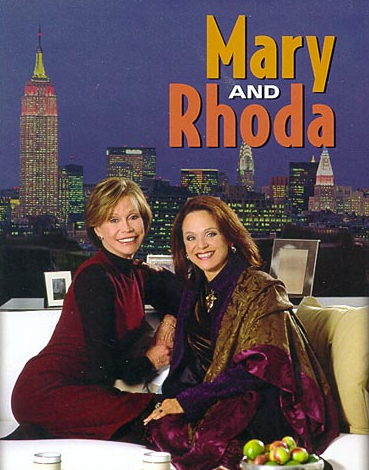
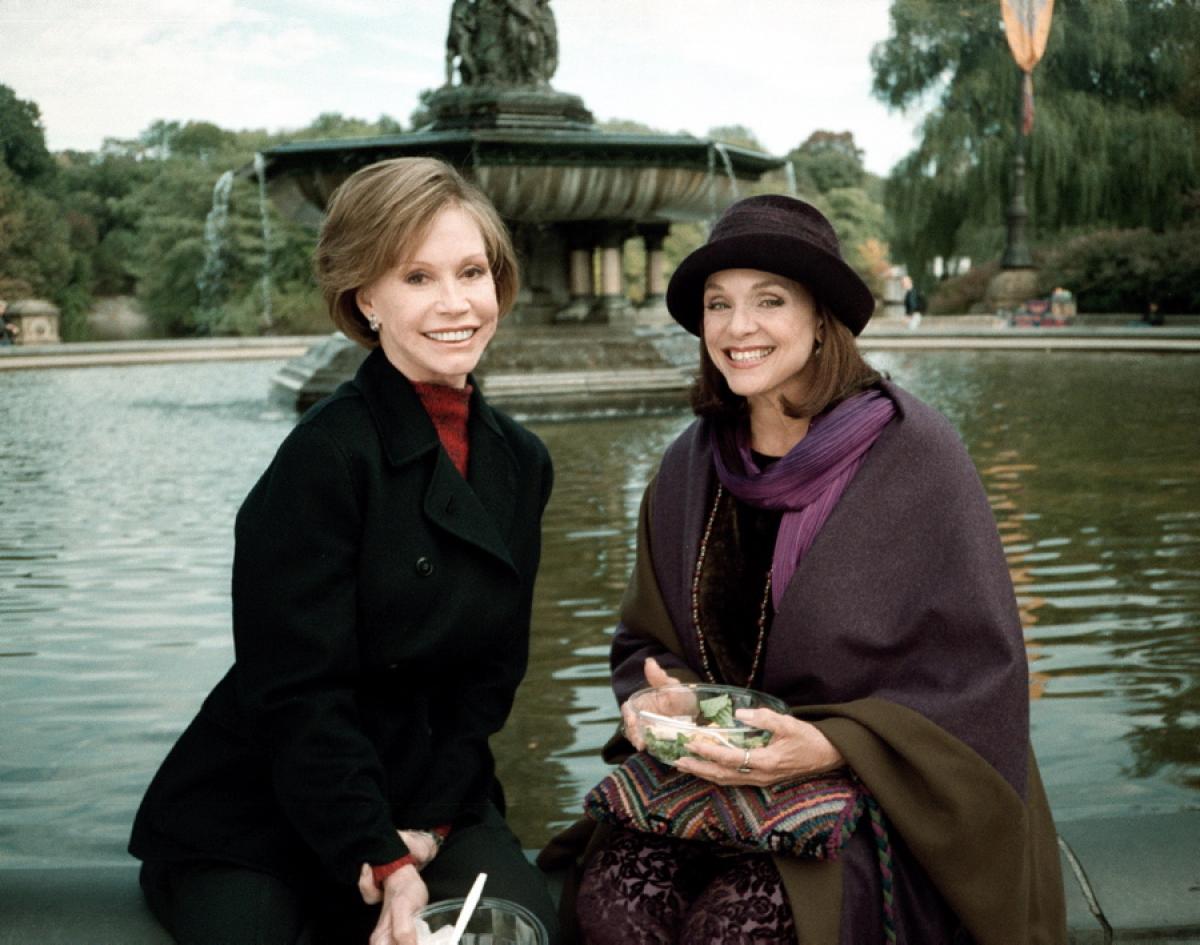
Moore and Harper filmed a few episodes of a prospective MARY & RHODA series for ABC in the late-'90s, but they were rejected for being "not as good as the best of THE MARY TYLER MOORE SHOW." Moore and Harper thought the episodes were fine... So ABC commissioned the anemic MARY & RHODA movie instead, and when it aired with good ratings, the network wanted to re-start the series effort.

Harper was game to continue on, but Mary felt jerked around and withdrew.

These episodes will likely never see the light of day.

MaryandRhoda1.png

mary-and-rhoda-750198l.jpg
 
Last edited by a moderator:

Seaviewer

Telly Talk Warrior
LV
9
 
Awards
20
Rhoda lasted another year after MTM had finished. I remember Valerie Harper on Dinah Shore's talk show in answer to an audience question saying that Mary was still a person in Rhoda's life so a guest appearance that season was possible but sadly it never happened.
 

ClassyCo

Telly Talk Warrior
LV
5
 
Awards
11
The finale was perfect and it just shows you that you don't need long "farewell" seasons to craft a proper series ender.
MARY TYLER MOORE's finale is practically flawless. I really love how Rhoda and Phyllis come back, and the rest of the cast gets a proper sendoff.

1653675969416.png

Moore and Harper filmed a few episodes of a prospective MARY & RHODA series for ABC in the late-'90s, but they were rejected for being "not as good as the best of THE MARY TYLER MOORE SHOW." Moore and Harper thought the episodes were fine... So ABC commissioned the anemic MARY & RHODA movie instead, and when it aired with good ratings, the network wanted to re-start the series effort.

Harper was game to continue on, but Mary felt jerked around and withdrew.

These episodes will likely never see the light of day.
It would be nice if someone would include the episodes -- or at least one or two of them -- as a special feature to the larger box sets.​

In retrospect, I wish Rhoda had never been spun-off at all or, at least, they had waited for MTM to end. I'm sure it made sense at the time, but RHODA is barely a footnote in TV history now and MTM, while a topnotch show till the end, wasn't quite the same without Rhoda.
Yes, MARY TYLER MOORE was never the same without Rhoda in the mix. I adore Valerie Harper as an actress, and her presence on the show is surely missed once she went aboard her spinoff. Taking breakout characters and giving them their own series was hot stuff in the '70s, with Top 10 series MAUDE spinning off their Florida Evans character into GOOD TIMES, which received high Nielsen ratings for several years. MTM wanted to expand their brand, and who better to do it with than Rhoda? In hindsight, however, Rhoda's show might've come off better, lasted longer, and be better regarded in TV history had they waited for MTM to end and then spin Rhoda off -- in a similar fashion CHEERS continued with FRASIER after the former ended.​
 

tommie

Telly Talk Hero
LV
3
 
Awards
9
It would be nice if someone would include the episodes -- or at least one or two of them -- as a special feature to the larger box sets.​
I don't think they were filmed. The only thing I can find is that they did a pilot script which ABC didn't like. It's possible that they did more scripts but it doesn't sound like they filmed something.

Edit: the pilot script from Valerie Harper's estate was sold, two pages can be shown here with her notes, pointing out what happened to her dad and Brenda:

 
Last edited:

Snarky Oracle!

Telly Talk Supreme
LV
8
 
Awards
21
Yes, MARY TYLER MOORE was never the same without Rhoda in the mix. I adore Valerie Harper as an actress, and her presence on the show is surely missed once she went aboard her spinoff. Taking breakout characters and giving them their own series was hot stuff in the '70s, with Top 10 series MAUDE spinning off their Florida Evans character into GOOD TIMES, which received high Nielsen ratings for several years. MTM wanted to expand their brand, and who better to do it with than Rhoda? In hindsight, however, Rhoda's show might've come off better, lasted longer, and be better regarded in TV history had they waited for MTM to end and then spin Rhoda off -- in a similar fashion CHEERS continued with FRASIER after the former ended.​

I thought the MTM Show did admirably well without Rhoda, even though she was missed, but Betty White filled in the gaps pretty well. Too bad RHODA fell pretty quickly.

I don't think they were filmed. The only thing I can find is that they did a pilot script which ABC didn't like. It's possible that they did more scripts but it doesn't sound like they filmed something.

Edit: the pilot script from Valerie Harper's estate was sold, two pages can be shown here with her notes, pointing out what happened to her dad and Brenda:


Interesting -- that's certainly different from the scenario I'd read.

I almost put in a bid for Barbara Bel Geddes' golden globe, and I still wish I had. It went for, I think, "only" $2,000 and was bought by one of the tabloids (although I'm not sure what they'd want it for).

28cdb0184fe789ab88fc65d43de498d6.jpg
 

ClassyCo

Telly Talk Warrior
LV
5
 
Awards
11
I thought the MTM Show did admirably well without Rhoda, even though she was missed, but Betty White filled in the gaps pretty well. Too bad RHODA fell pretty quickly.
MARY TYLER MOORE certainly didn't need Valerie Harper to continue, but since she had been there from the start, she was so easily missed. You're right, though, in saying Betty White (and even Georgia Engel) filled in the gaps Valerie and Cloris Leacham left (who I didn't miss anyway).​
 

Seaviewer

Telly Talk Warrior
LV
9
 
Awards
20
Betty White filled in the gaps pretty well.

You're right, though, in saying Betty White (and even Georgia Engel) filled in the gaps Valerie and Cloris Leacham left (who I didn't miss anyway).
In my mind, Georgette was Rhoda's replacement and Sue Ann was Phyllis's but you're right: Betty White did fill the wisecracker void as well.
Also worth noting that the replacement characters were centred on the workplace, largely removing Mary's "apartment life" as a second focus.
 

ClassyCo

Telly Talk Warrior
LV
5
 
Awards
11
In my mind, Georgette was Rhoda's replacement and Sue Ann was Phyllis's but you're right: Betty White did fill the wisecracker void as well.
When you think about it, that's basically the voids Georgette and Sue Ann filled.​
Also worth noting that the replacement characters were centred on the workplace, largely removing Mary's "apartment life" as a second focus.
Yeah, the final two seasons especially focused on Mary's life at WJM-TV. Sue Ann had her own show there, and Georgette was connected to Mary through Ted, a long-time coworker of Mary's. I'm sure such a decision to make the newer characters was easier for the writers to keep the stories at the workplace, and also cheaper for the producers to use less sets.​
The reason why Georgette / Sue Ann works is because they're not literal replacements and can stand on their own as characters.
Quite true. Sue Ann and Georgette are jewels and just as important to the MARY TYLER MOORE legacy as Rhoda and Phyllis are.​
Often when someone leaves a show they try to recreate said character that leaves and that almost always fail.
Quite true. Especially on sitcoms, the producers don't want to shake the status quo and when a character leaves, they try their hardest to recreate a cookie-cutter character that typically takes just the most basic characteristics of the one that left.

I often think about DESIGNING WOMEN. When Delta Burke left in 1991, she was replaced with Julia Duffy. They traded a brunette for a blonde, but Suzanne and Allison -- the actresses' respective characters -- were meant to mirror one another. What they didn't give Allison, however, was a sense of humanity or likability to the audience or the other ladies in the show. They were more successful in transitioning from Jean Smart to Jan Hooks, also in 1991.​
 

Seaviewer

Telly Talk Warrior
LV
9
 
Awards
20
The reason why Georgette / Sue Ann works is because they're not literal replacements and can stand on their own as characters. Often when someone leaves a show they try to recreate said character that leaves and that almost always fail.
Also, they were introduced before the original characters left so the sense that they were replacements at all was not so strong.
 

Snarky Oracle!

Telly Talk Supreme
LV
8
 
Awards
21
MARY's first Christmas episode, December 1970; it's not really all that funny, wimpy Mary and her silly nice-girl problems, but it's the bittersweet period mood which sells it:

 
Last edited by a moderator:

Crimson

Telly Talk Enthusiast
LV
2
 
Awards
9
Although MTM could be amusing and even hilarious at times, I've never thought of the humor as being its main asset. The show's vibe and atmosphere -- cozy yet wistful -- was vital, although that faded a bit through the years (particularly in that generic later apartment). Equally important, the show's appeal depending heavily on the sheer likability and relatability of its characters. More than any other of the great classic sitcoms, rewatching MTM feels like visiting with old friends.

Until recently, I had no idea why the Xmas episode was called "Christmas and the Hard-Luck Kid II"; interesting that it was named after an episode of THAT GIRL, the show's spiritual predecessor. There are a handful of holiday-themed sitcom episodes that are among my seasonal viewing habits and both of Mary's Christmas episodes are as important as IT'S A WONDERFUL LIFE and the Grinch to me.
 

Snarky Oracle!

Telly Talk Supreme
LV
8
 
Awards
21
The show's vibe and atmosphere -- cozy yet wistful -- was vital, although that faded a bit through the years (particularly in that generic later apartment).

And that distinctive '70s melancholy did subside as the decade went along, somewhat in keeping with Mary's apartment change. I mean, that atmosphere was still, to a point, there in the late-'70s (and arguably through the calendar year of 1980) but it lessened a great deal after, say, 1975.

mtmdynastier.jpg
 
Last edited by a moderator:

TaranofPrydain

Telly Talk Fan
LV
0
 
Awards
6
And that distinctive '70s melancholy did subside as the decade went along, somewhat in keeping with Mary's apartment change. I mean, that atmosphere was still, to a point, there in the late-'70s (and arguably through the calendar year of 1980) but it lessened a great deal after, say, 1975.

View attachment 42467
The general mood in America changed around 1975. After the Watergate scandal and the fall of Saigon, audiences were so demoralized that they wanted feel-good material rather than the grim material that was often seen in theatrical films in the first half of the decade. But the trend continued to TV as the ratings for All in the Family and Maude were overtaken by the ratings for the bubble-gum like Happy Days and Laverne and Shirley.
 

Snarky Oracle!

Telly Talk Supreme
LV
8
 
Awards
21
The general mood in America changed around 1975. After the Watergate scandal and the fall of Saigon, audiences were so demoralized that they wanted feel-good material rather than the grim material that was often seen in theatrical films in the first half of the decade. But the trend continued to TV as the ratings for All in the Family and Maude were overtaken by the ratings for the bubble-gum like Happy Days and Laverne and Shirley.

Well, the late-'70s were a bit of a refractory period -- a little less melancholy (although it was still there to a point) -- a little breezy, with a slightly pervy underbelly (it was The Serial Sex Slayer era), before the neocon greed-is-good Reagan/Thatcher thing kicked in in the '80s which was so small and petty and fundamentally dishonest on a cellular level.

Those things certainly affect the tone of TV shows.
 
Last edited by a moderator:

Snarky Oracle!

Telly Talk Supreme
LV
8
 
Awards
21
Nice little piece, although he uses the word "queer" more than once, so read ahead with caution...


Jeffrey Davies
Mon, July 3, 2023


Picture it, North America, 2017: A new year was upon us. Thousands of women were about to march in Washington after Donald Trump was elected president of the United States. Twitter had never been as on fire, figuratively or literally, as it was the day of his inauguration.
I was in my second year of college, a Canadian who liked to believe he could watch the madman’s circus from a safe distance without it affecting him. But no one was exempt from witnessing this dreaded moment in history.
Then, to top it off, Mary Tyler Moore died.

I don’t remember the very first time I saw “The Mary Tyler Moore Show.” The same way I can’t vividly recall the first rerun I saw of “All in the Family,” “Maude” or “The Jeffersons.” To me, merely watching these shows as background noise was a subconsciously subversive act, one that would make an adult enter the room and say, “You’re watching this?” Looking back, it was a solid precursor to my budding queerness, the burning desire to be set apart from the pack. But then I grew up and learned that attempting to age backward in childhood as a so-called “old soul” had its own mental health repercussions.

In January 2017, I was facing what I’ve heard quite a lot of college students face at one time or another: the crushing realization that I had no real idea of what I wanted to do with my life. I knew I wanted to be a writer of some kind, and that was about it. Many told me I didn’t need to have it figured out beyond that, but they were no match for the voices in my head, mounting in volume as they tried to mentally prepare me for the day when I would be on my own.

I was in a near-constant vulnerable emotional state for my post-secondary years, so I jumped at the chance to enjoy a “Mary Tyler Moore”marathon on the now-defunct Canadian retro channel, Comedy Gold, the weekend following her death. When I watched old episodes of “The Mary Tyler Moore Show” for the first time in years, it felt like the biggest warm hug anyone could ever ask for.

In this episode of


The theme song alone was enough to comfort me away from probing inner anxieties. While the opening credits of “Mary Tyler Moore” would change and evolve over its seven seasons, it never strayed from adequately portraying what the show was about: a single woman, holding down a steady job with friends who care about her but was, at the end of the day, alone. Mary Richards lived alone, shopped alone, slept alone. And she was fine, fulfilled and even happy.

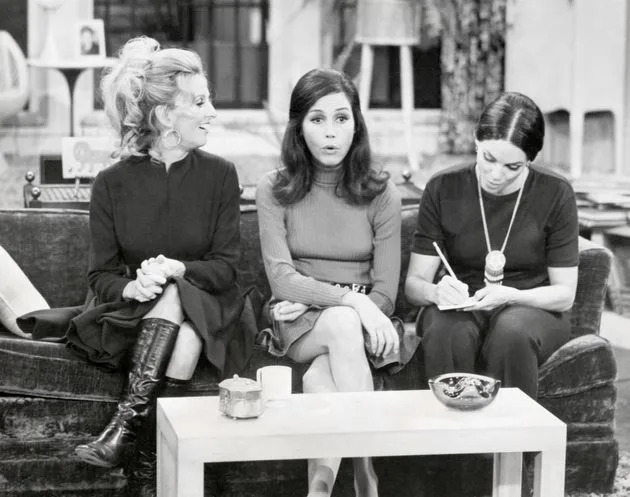
This message was, of course, monumental during the series’ original run between 1970 and 1977 during the rise of second-wave feminism. While some of its office politics might appear dated on the surface, almost everything about “The Mary Tyler Moore Show” holds up in a modern context. It’s the ultimate home and workplace comedy, where Mary can never manage to throw a successful dinner party, but her work colleagues and best-friend neighbors Rhoda (Valerie Harper) and Phyllis (Cloris Leachman) never hold it against her. Mary’s mistakes never define her. They’re presented as just another roadblock on the hideously unpaved highway that is adulthood.

As an only child and a queer person born and raised in suburbia, I’d known what it was like to be alone. I liked it, even. I’d honed my skills as a professional introvert throughout much of my teen years, but that was not enough for well-meaning adults who told me I needed to break out of my shell and open myself up to new experiences — even if I already knew said experiences would not be for me.
I like to say that I raised myself on classic sitcoms of the 20th century because it isn’t an exaggeration. Growing up, I’d always gravitated toward things that other kids didn’t, mostly so it could be something that was “just mine.”

But classic sitcoms went further than that, because I knew that the adults around me had connections to them, too. They grew up when they were on TV, and I liked nothing better than daydreaming what it was like to live in a time that wasn’t my own. The old-soul adage and now cliché of, “You were born in the wrong generation,” has been lobbied at me in my life more times than I can count.

Once I got older, watching “The Mary Tyler Moore Show” allowed me the chance to breathe and rest from constantly trying to solve the riddle of adulthood for myself, as I would soon learn after purchasing all seven seasons on DVD. It showed me that someone can be fundamentally on their own, as I’ve always been, and still live a successful, content life. It showed me that friends can come and go but still become family in the best possible ways. It showed me that a job can just be a job, and not something that you must lose sleep over. Above all, it showed me that regardless of what storm life chooses to send our way, we are all worthy of the chance to make it after all.


But how would I make it on my own? This world is awfully big, as Sonny Curtis reminds us in the original opening theme from the first season, and girl, this time you’re all alone. Sadly, there are only so many life lessons one can infer from a television show about fictional characters who do not exist. There are only so many times one can watch “Mary Tyler Moore” alone in bed on their few days off from an impossibly hectic school/work schedule and think that it will solve the anxiety that would choke me at any given moment.

A television show can change your life; it can heal you in all the ways you need it to ― but it doesn’t replace legitimate treatment for an anxiety disorder.

It can’t, I know that now.

In fact, the last time I rewatched “The Mary Tyler Moore Show” was in the weeks leading up to the breakdown that landed me in a university health clinic. There was once a time when the task of living felt like a burden so heavy I didn’t know how to lighten it. I was prescribed the anti-anxiety medication I should have sought out years ago. In my darkest moments, I’ve still believed that the healing power of a good TV show can solve all my problems.

“Mary Tyler Moore” gave me an excuse to keep living during those times, to not give up simply because the task of becoming myself was too hard and too painful. I now have additional support systems in place to help me when that pain hurts more than it should, but I don’t believe I would’ve developed the courage to reach a place like that if it hadn’t been for Mary Richards and her blueprint for “successful” adulthood.
I don’t worry about being successful anymore. I just focus on taking my nothing days and trying to make them seem worthwhile.

 
Top