Random TV Ratings

Snarky Oracle!

Telly Talk Supreme
LV
8
 
Awards
21
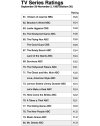
Okay, I need one of the numerous Dallas experts we keep on retainer here to explain what was going on during that Nov. 3-9 week. I assume this was the Big Reveal of Who Shot What's-his-name, but four episodes in one week?:dance:

Due to the legendary actors' strike during that long, hot summer of 1980, the fall TV season started late -- not until November (instead of the usual September). So, to maximize ratings, CBS was repeating the lead-up-to episodes of "WSJR?'" all over the damned place.

As I recall, in the hour prior to the Friday 21 November 1980 "Whodunnit?" episode, the network re-aired the "WSJR?" episode (even though three new episodes had already aired in the previous weeks).

But it's been 45 years. So don't hold me to the details.


Carrie Fairchild

Telly Talk Star
LV
3
 
Awards
7
Okay, I need one of the numerous Dallas experts we keep on retainer here to explain what was going on during that Nov. 3-9 week. I assume this was the Big Reveal of Who Shot What's-his-name, but four episodes in one week?:dance:

Due to the legendary actors' strike during that long, hot summer of 1980, the fall TV season started late -- not until November (instead of the usual September). So, to maximize ratings, CBS was repeating the lead-up-to episodes of "WSJR?'" all over the damned place.

Not a Dallas expert but as @Snarky Oracle! mentioned, the writers strike led to later premiere dates that season, so the gaps in the schedules were filled in with repeats. The week in question saw two new Dallas episodes airing - the season four premiere on Friday (which was preceded by the season three cliffhanger repeat) and episode two of season four on Sunday (the top rated episode of the week). Airing two new episodes in one week was either to build momentum or just fill in a gap as series began returning. The Thursday episode was presumably a repeat of the second last episode of season three.

IMG_6815.jpeg
 

Snarky Oracle!

Telly Talk Supreme
LV
8
 
Awards
21
Not a Dallas expert but as @Snarky Oracle! mentioned, the writers strike led to later premiere dates that season, so the gaps in the schedules were filled in with repeats. The week in question saw two new Dallas episodes airing - the season four premiere on Friday (which was preceded by the season three cliffhanger repeat) and episode two of season four on Sunday (the top rated episode of the week). Airing two new episodes in one week was either to build momentum or just fill in a gap as series began returning. The Thursday episode was presumably a repeat of the second last episode of season three.

View attachment 57738

I still say they reran "A House Divided" yet again in the hour preceding "Whodunnit" on 21November 1980.

I just believe it!
 

Snarky Oracle!

Telly Talk Supreme
LV
8
 
Awards
21

Carrie Fairchild

Telly Talk Star
LV
3
 
Awards
7
When it comes to accurate TV listings, ultimate70s is the perfect place to go, as it also lists the correct reruns.


The Thursday episode was presumably a repeat of the second last episode of season three
That’s a great resource. Looking at the listings for Thursday 6th, the episode aired was indeed a rerun of the second last episode of season three “The Wheeler Dealer”.
 

DallasFanForever

Telly Talk Supreme
LV
5
 
Awards
17
Today, it's just another one of those '80s entities that's hard to sit through.

There was a time when I probably wouldn’t have agreed with this but I think I do now. After the first couple of seasons it does start to get repetitive. Funny ‘cause back then I watched all eight seasons without noticing a drop in quality at all but it’s pretty obvious when viewing it now.
 

Jock Ewing Fan

Telly Talk Star
LV
0
 
Awards
8
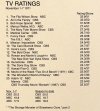
What does the 54.1 rating for Texaco Star Theater in 1951 mean compared to the 32.0 rating for All in the Family in 1973? Does that really mean more viewers, or is it not really comparable because fewer people had televisions in 1951 and there were fewer people living in the United States in 1951 than in 1973?
Maybe it is because there were only a few major networks at the time. TV shows that were getting millions of viewers then were cancelled, even though far more people saw those shows, compared to now. I still think overall quality was better in the 60s 70s and 80s
 

Daniel Avery

Admin
LV
9
 
Awards
24
I agree that the lack of competition had a lot to do with it. I think that even in the late-1960s, ABC was not treated as an "equal" to NBC and CBS as far as networks go. In the chart shown in Post # 75, almost all the "Bottom" rated shows were ABC series. This is similar to how the Fox Network looked in the first ten or so years of its existence---a few hits but many, many more losers that filled up the "bottom rated" lists.
 

Daniel Avery

Admin
LV
9
 
Awards
24
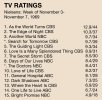
Had I been alive in this period ;) I would have been a total couch potato, because all the top shows were "my kind of soap," so to speak. ATWT was basically unstoppable in this period; any network exec would wet themselves if they had shows with these types of ratings/shares. Another World was firing on all cylinders because they had Agnes Nixon as the Head Writer, while The Edge of Night had a late-afternoon slot that allowed them to capture a large male viewing audience (men coming home from work) that no other soap could really capture. All these soaps were half-hour at most, so there were more opportunities to see multiple shows per day.
 

Carrie Fairchild

Telly Talk Star
LV
3
 
Awards
7

All these soaps were half-hour at most, so there were more opportunities to see multiple shows per day.
The 1969-70 season was the peak of the daytime soap opera boom, with nineteen different soaps airing over that period. Starting with Love of Life at 11.30am, viewers could watch up to ten different back to back soaps a day if they wished.
 

Jock Ewing Fan

Telly Talk Star
LV
0
 
Awards
8
I agree that the lack of competition had a lot to do with it. I think that even in the late-1960s, ABC was not treated as an "equal" to NBC and CBS as far as networks go. In the chart shown in Post # 75, almost all the "Bottom" rated shows were ABC series. This is similar to how the Fox Network looked in the first ten or so years of its existence---a few hits but many, many more losers that filled up the "bottom rated" lists.
.
Fred Silverman to the rescue for ABC:

"Silverman was named president of ABC Entertainment in 1975,[10] putting him in the ironic position of saving Happy Days, the very show that Good Times had brought to the brink of cancellation. Silverman succeeded in bringing Happy Days to the top of the ratings and generating a hit spin-off from that show, Laverne & Shirley (another spin-off, Mork & Mindy, was also a ratings winner initially ending its first season at number three but the ratings quickly free fell).

At ABC, Silverman also greenlit other popular series such as The Bionic Woman (a Six Million Dollar Man spin-off), Family, Charlie's Angels, Donny & Marie, Three's Company, Eight Is Enough, The Love Boat, Soap, Fantasy Island, Good Morning America, long-form pioneer Rich Man, Poor Man, and the award-winning miniseries, Roots. These moves brought ABC's long-dormant ratings from third place to first place. However, Silverman was criticized during this period for relying heavily on escapist fare (it was Silverman who conceived the infamous The Brady Bunch Hour with Sid and Marty Krofft in late 1976) and for bringing T&A or "jiggle TV" to the small screen with numerous ABC shows featuring buxom, attractive, and often scantily-clad young women (such as the popular Battle of the Network Stars).

ABC Daytime had mediocre ratings, so in order to increase them, Silverman hired Gloria Monty to produce the ailing General Hospital. He gave Monty thirteen weeks to increase the serial's ratings or it would be cancelled. He later expanded General Hospital, All My Children, and One Life to Live to a full hour, and created a 3+1⁄2-hour afternoon serial block. Among game shows, Silverman introduced Goodson and Todman's Family Feud to the network."


Daniel Avery

Admin
LV
9
 
Awards
24
ABC Daytime had mediocre ratings, so in order to increase them, Silverman hired Gloria Monty to produce the ailing General Hospital. He gave Monty thirteen weeks to increase the serial's ratings or it would be cancelled. He later expanded General Hospital, All My Children, and One Life to Live to a full hour, and created a 3+1⁄2-hour afternoon serial block. Among game shows, Silverman introduced Goodson and Todman's Family Feud to the network."
I guess then it was likely his idea to pick up The Edge of Night from CBS in late 1975. CBS had mis-handled the show by moving it from a strong 4pm (Eastern) slot (literally airing at "the edge of night") to mid-afternoon, where the ratings fell like a stone. Rather than admit their mistake and move it back to 4pm CBS announced they were cancelling it. it aired its final episode on CBS on a Friday, and a 90-minute episode aired (3pm to 4:30) the following Monday on ABC to "reintroduce all the characters and plotlines" to ABC viewers before the show settled into its new/old timeslot of 4-4:30pm. It lasted nine additional years on ABC.

ABC first experimented with expanding GH and OLTL to 45-minute episodes but ultimately decided it was best to stick to the 30-minute/60-minute blocks that Nielsen preferred to use when charting their ratings. CBS had also experimented with 45-minute soaps previously and abandoned it in favor of eventually expanding Guiding Light and As the World Turns to 60 minutes each.
 
Last edited:
Top