Three's Company

Crimson

Telly Talk Enthusiast
LV
1
 
Awards
8
March 15th was the 49th anniversary of THREE'S COMPANY debut. I watched a couple first season episodes this week; the show started out much breezier, far less frantic, than it evolved into.

I said this, in the ALICE thread:

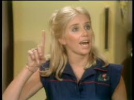
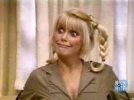
Chrissy Snow started out as an appealing character but, like most dumb sitcom characters, she evolved to be so stupid as to seem like a mental defective. Plus the way Suzanne began to play the character -- the dead-eyed stare, the weird snorting laugh, the knock knees, the odd hairstyles that looked like a polyester wig -- was very off putting.

It's even worse than I recall. Chrissy Snow was such a cute, likeable character at first. Pretty and sweet; naive and innocent but certainly not dumb, in fact it's mentioned in the second episode that her parents expected her to be the best in school. And somehow the character devolved into being borderline brain-damaged and vaguely grotesque.
1773875979212.png 1773876097690.png

It's the worst instance of Flanderization that I've seen.

1773876354445.png
 

Mel O'Drama

Admin
LV
16
 
Awards
44
I watched a couple first season episodes this week; the show started out much breezier, far less frantic, than it evolved into.

Most of the first season episodes appear to be adaptions of the original Cooke/Mortimer storylines, so I'd guess this might be a significant factor.

While I've never watched Three's Company, I have viewed a couple of videos directly comparing early episodes. Most of the original Man About The House script made it across intact. At that point, the US writers' main role seemed to be changing a word, phrase or name here and there and softening a couple of risqué or coarse lines to make it more identifiable for the different audience.

Here's one comparing In Praise Of Older Men/Chrissy's Date:

It's notable that the girls' roles are switched in the episode. In the British version, blonde Jo is the ditzy one, but she's still smart enough for the roles to be switched in translation, with Janet getting Jo's lines, and US-Chrissy getting the lines of British-Chrissy (the smart, brunette).

MATH was never art, but the series and its characters did remain endearing and watchable to the end (and - to a degree - beyond, including the spinoffs).
 

Crimson

Telly Talk Enthusiast
LV
1
 
Awards
8
Here's one comparing In Praise Of Older Men/Chrissy's Date

Interesting. I knew THREE'S COMPANY was based on a British sitcom, but didn't know the scripts were such direct translations. Lots of '70s American sitcoms were pilfered from the UK, but I thought they were just borrowed premises. Now I wonder how many scripts ALL IN THE FAMILY or SANFORD & SON were direct copies.

Funniest thing about the comparison video: except for baby-faced John Ritter, all of the men in that video looked SO OLD. When the British guy made a joke about 30 being old I thought, "come on man, you look 50". And then the 30 year old showed up looking even older. In the US version, the "40" year old (Dick Sargent, an actor I've never liked) showed up, my reaction was "damn, he looks 60".
 
Last edited:

Mel O'Drama

Admin
LV
16
 
Awards
44
I knew THREE'S COMPANY was based on a British sitcom, but didn't know the scripts were such direct translations.

Yes. I've watched some of the first episode of Three's Company and it's the same story.


Now I wonder how many scripts ALL IN THE FAMILY or SANFORD & SON were direct copies.

I don't know for sure but would guess that AITF would have needed more input from native writers. There were a number of social, political and topical references in Till Death Do Us Part which may have lost something in translation. The coarseness of the language would again probably have needed to be toned down. The only episodes I've seen were the two Maude episodes so I don't have much to go on. Watching them, as I did, immediately after the British series, AITF felt broader, glossier and safer, but I know that one proper episode doesn't give me much to go on (and I'm also aware it tackled some heavy topics during its run).

I've never watched either Steptoe or Sanford (I do have Steptoe lined up to watch on DVD), but I would have thought Galton & Simpson's writing would adapt fairly easily. Based on episode credits - and a comment under the comparison video I posted - most of Sanford's first season is based on Steptoe scripts. Whether it's as literal as the Three's Company adaptions, who knows.


When the British guy made a joke about 30 being old I thought, "come on man, you look 50". And then the 30 year old showed up looking even older.

Incredibly, both actors were under 30 at the time.

Norman Eshley (Chrissy's date) appeared in the series in a couple of different roles and would go on to play the Ropers' snooty neighbour, Jeffrey Fourmile (adapted as Jeffrey P. Brooks III) in the spinoff.
 

Crimson

Telly Talk Enthusiast
LV
1
 
Awards
8
Incredibly, both actors were under 30 at the time.

It's the hairstyles for sure. Also that generation tended to be smoking boozers but I see that actor lived to 81, so perhaps not him.

Going off very brief clips is perhaps not fair, but I admit to preferring the American version. That might just be familiarity -- maybe even a tad bit of nationalism --but I didn't find the British actors especially appealing. They seemed like the kind of people one would meet at a local bar (pub), whereas the Americans seem like the kind one would hope to meet at a local bar.
 

Mel O'Drama

Admin
LV
16
 
Awards
44
It's the hairstyles for sure.

Yes. It's surprising how ageing (or aging) a hairdo can be and how different someone can look when just that is changed.

iu


I admit to preferring the American version. That might just be familiarity -- maybe even a tad bit of nationalism --but I didn't find the British actors especially appealing. They seemed like the kind of people one would meet at a local bar (pub), whereas the Americans seem like the kind one would hope to meet at a local bar.

And I think that underlines the reason for the series being remade for the American market rather than simply imported.

I suppose my takeaway from the comparison is akin to yours but in reverse (and possibly for similar reasons). It's interesting to see how very different the intonation of the same line can be, though, and how much impact it can have on the feel of a series.

On a related note, this video may be of interest. It's an American perspective on the difference between American and British comedy and why remakes often change in tone while being adapted:


Crimson

Telly Talk Enthusiast
LV
1
 
Awards
8
And I think that underlines the reason for the series being remade for the American market rather than simply imported.

That but also the number of episodes. Although the first season of THREE'S COMPANY is only 6 episodes, the rest were 22 to 28. No season of MATH was more than 7 episodes. Americans would have been very unaccustomed to such short seasons.

Probably also the reason the first season of THREE'S COMPANY so closely matches MATH, the writers didn't have to fully invent new scripts.

this video may be of interest

I didn't have to click past the title, "Americans Don't Get British Humo(u)r", before I already agreed. I always feel a bit guilty to admit it, but British humor seldom lands with me. From Benny Hill and Monty Python onward, I just don't get it. ABFAB is the only British comedy I watched and even then I probably missed 20% of the references and jokes.

I feel the same about Canada's famed SCTV too, so I might just be comedically provincial.
 

Mel O'Drama

Admin
LV
16
 
Awards
44
That but also the number of episodes. Although the first season of THREE'S COMPANY is only 6 episodes, the rest were 22 to 28. No season of MATH was more than 7 episodes. Americans would have been very unaccustomed to such short seasons.

Yes, MATH ran less than forty episodes in total. It had actually wrapped up before Three's Company began, so technically there would have been enough material for almost two full-length American seasons, but yes, that would have then been followed by a (probably quite jarring) change in writers.


I always feel a bit guilty to admit it, but British humor seldom lands with me. From Benny Hill and Monty Python onward, I just don't get it. ABFAB is the only British comedy I watched and even then I probably missed 20% of the references and jokes.

For what it's worth, I'd say Monty Python and (to a lesser extent) Benny Hill are somewhat "out there" by British standards, too. I've seen some of both but I never really found Benny Hill terribly funny, and the Python material, experimental as it was, seems to be a Curate's egg.

I'm always intrigued about the (relatively small) number of British sitcoms that seem to make it across the Atlantic. Keeping Up Appearances and Are You Being Served? seem to have been popular Stateside, while most other vehicles from their respective writers don't seem to have been. AbFab has elements - wry, cynical outlook and often unlikeable characters - that I've seen cited as being off-putting to non-Brits. I remember feeling surprised when I realised it was a hit in America.

None of this is problematic for me, but count me as slightly bemused about the reasons behind this block. Just when I think I've worked it out, there's a spanner in the works.

It seems comedy is one area where we are indeed "two nations separated by a common language". It could be interesting to study, but I suppose someone in TV land has already done that and decided that remaking British series is a safer/preferable option than screening the originals.
 

Crimson

Telly Talk Enthusiast
LV
1
 
Awards
8
but count me as slightly bemused about the reasons behind this block. Just when I think I've worked it out, there's a spanner in the works.

There's a saying in America that might not mean much to you: "We have McDonald's at home." I could modify that here and say, "We have Hollywood at home". Without devaluing the quality and quantity of other countries' entertainment industries, Hollywood has been the dominant source of movies and TV for the past century. Many Americans probably don't feel the need to seek out anything else.

In my younger days, I was disinterested in British TV for a reason already covered: the short seasons. Watching a TV show with 7 episodes per season felt like sitting down for dinner and only getting an appetizer. Now, I consider a season of more than 10 episodes to be onerous. So, I should probably poke around some British TV shows. I mean, worse case I'm on the hook for, what?, 30 episodes of a long running Brit show? It's not like when you started MTM and found yourself down a path of 200+ episodes.

Oh, and I've seen some clips of LITTLE BRITAIN that made me laugh till my sides hurt. So I guess there's that.
 

Chris2

Telly Talk Dream Maker
LV
0
 
Awards
5
The early episodes of both Three’s Company and spinoff The Ropers were often directly adapted from scripts from the British originals, Man About the House and George & Mildred, respectively (and credited to Mortimer/Cooke). This type of script adaptation didn’t happen for the other spinoff, Three’s a Crowd, which was based on MATH spinoff Robin’s Nest.

And I don’t believe any of the scripts for All in the Family were directly adapted from the British source material. I can’t speak for Sanford and Son because I have only seen a few episodes.
 

Mel O'Drama

Admin
LV
16
 
Awards
44
Without devaluing the quality and quantity of other countries' entertainment industries, Hollywood has been the dominant source of movies and TV for the past century. Many Americans probably don't feel the need to seek out anything else.

Oh yes, I know that's the case for many. American TV networks also appear to have leaned heavily into this (certainly if the Random Ratings thread is anything to go by), and it's far more commonplace for non-American shows to be remade entirely rather than imported, which gives even less reason to seek out anything else.


In my younger days, I was disinterested in British TV for a reason already covered: the short seasons. Watching a TV show with 7 episodes per season felt like sitting down for dinner and only getting an appetizer.

Yes. There's a huge difference in the number of episodes shot. It's part of the reason I started one thread here in which to discuss/watch/rewatch British sitcoms. Sometimes by the time I've made two or three posts the series has run its course.


I should probably poke around some British TV shows. I mean, worse case I'm on the hook for, what?, 30 episodes of a long running Brit show? It's not like when you started MTM and found yourself down a path of 200+ episodes.

Fawlty Towers is almost certainly the best-known example of this. Most people know it - or at least are aware of it - but it ran for just twelve episodes. John Cleese was recently talking about a revival, which I think would be a huge mistake.

As an aside, Britain can also lay claim to the world's longest-running live-action sitcom in terms of duration. Last Of The Summer Wine began in 1973 and ran until 2010, running for almost 38 years, and a relatively modest 295 episodes. It's frequently overlooked, as many online lists and sources defer to US defaultism.


I've seen some clips of LITTLE BRITAIN that made me laugh till my sides hurt. So I guess there's that.

:gotcha:


This type of script adaptation didn’t happen for the other spinoff, Three’s a Crowd, which was based on MATH spinoff Robin’s Nest.

That's interesting. It's many years since I've watched Robin's Nest, but I recall it feeling fairly removed from the original series and so probably more "tweakable". I see this is a rare example of the British version having more episodes than the adaption.
 

Chris2

Telly Talk Dream Maker
LV
0
 
Awards
5
I was poking around the Internet Archive, and they had a copy of “Beane’s of Boston”, the late 70s busted pilot for an American adaptation of “Are You Being Served?” It was produced by Garry Marshall and Paramount.

They used the script for the German Week episode with very little changed, right down to the “Are you free?” lines, which seemed odd for an American show. They kept all the sexual innuendo, unusual for a Marshall-produced show at that time. TBH, it wasn’t half bad, although kind of pointless since it was so close to the original, just with American accents. Even the set was similar. Charlotte Rae was very good as Mrs. Slocombe.
 

Mel O'Drama

Admin
LV
16
 
Awards
44
TBH, it wasn’t half bad, although kind of pointless since it was so close to the original, just with American accents.

I'd heard of this but never got round to watching. I just took a look at it and I can see why it wasn't picked up. Compared withThree's Company, which created a different identity from the British version (even using the same material), Beane's mostly just felt to me like watching the life sucked out of the original (and familiarity with that didn't help my experience).

I suppose casting is vital and this one had the double-whammy of trying to both match very specific archetypes that also had great screen chemistry. I'd say it fell down on at least one of those. I had read that Jeremy Croft felt that Alan Sues was miscast as Mr Humphries, and I wouldn't disagree.

Also, were Mrs Slocombe's trademark cat double entendres excised from the adaption? I thought I'd watched Beane's in full, but missed it if there were any (the British episode of the adapted script had a lovely moment where Wendy Richard can be seen trying not to corpse at Mollie Sugden's solemn delivery of "this sort of thing just isn't fair on my pussy").
 

Soaplover

Telly Talk Fan
LV
0
 
Awards
3
Yes, MATH ran less than forty episodes in total. It had actually wrapped up before Three's Company began, so technically there would have been enough material for almost two full-length American seasons, but yes, that would have then been followed by a (probably quite jarring) change in writers.


For what it's worth, I'd say Monty Python and (to a lesser extent) Benny Hill are somewhat "out there" by British standards, too. I've seen some of both but I never really found Benny Hill terribly funny, and the Python material, experimental as it was, seems to be a Curate's egg.

I'm always intrigued about the (relatively small) number of British sitcoms that seem to make it across the Atlantic. Keeping Up Appearances and Are You Being Served? seem to have been popular Stateside, while most other vehicles from their respective writers don't seem to have been. AbFab has elements - wry, cynical outlook and often unlikeable characters - that I've seen cited as being off-putting to non-Brits. I remember feeling surprised when I realised it was a hit in America.

None of this is problematic for me, but count me as slightly bemused about the reasons behind this block. Just when I think I've worked it out, there's a spanner in the works.

It seems comedy is one area where we are indeed "two nations separated by a common language". It could be interesting to study, but I suppose someone in TV land has already done that and decided that remaking British series is a safer/preferable option than screening the originals.
I can contest that the following were popular UK sitcoms here in the states:

Keeping Up with Appearances, Are you Being Served, Faulty Towers, AdFab, and The Vicar of Dibley

AdFab - A lot of people here in the states felt such sympathy for the daughter because she had to sacrifice her life/childhood to parent her.

A sitcom that was remade in the 2000s (I think) was called Coupling where they used the original UK scripts and the show fell flat. Right before the show was yanked off the schedule, the show produced an original episode that was somewhat funny.. but it was little to no late for the show.

In regards to Chrissy Snow:

Suzanne Somers said that the pony tail came because of issues with bleaching her hair and it was used to cover it.. and the show kept it as a look for the character... and SS stated she didn't view the Chrissy character as working after the first two seasons so she slowly started to go more broad and over the top in how she played the Chrissy character.

It was sort of what happened to SS on Step by Step where she said she had to really focus on not going for the punchline/funniest bit because she was playing the sitcom mom trope.. and that it was difficult for her at times. On that show, you did see the Carol character changing somewhat with her becoming a bit more broad in the later seasons vs her more matronly lower key take in the earlier seasons.
 
Last edited:

Chris2

Telly Talk Dream Maker
LV
0
 
Awards
5
I can contest that the following were popular UK sitcoms here in the states:

Keeping Up with Appearances, Are you Being Served, Faulty Towers, AdFab, and The Vicar of Dibley
Aside from appearances, the other three had US adaptations. AYBS, Vicar, and Abfab all had unsold US pilots. and Fawlty Towers had two official, short-lived adapatations in the US: “Amanda’s” starring Beatrice Arthur and “Payne“ starring John Larroquette.
 

Crimson

Telly Talk Enthusiast
LV
1
 
Awards
8
SS stated she didn't view the Chrissy character as working after the first two seasons so she slowly started to go more broad and over the top in how she played the Chrissy character.

Seems like code for not getting enough attention on camera and she wanted to go even broader than John Ritter; not that I blame her, all's fair in love and brinkmanship. SS may have been a media sensation but by S3 there was no doubt Ritter was the star of the show.
 

ClassyCo

Telly Talk Warrior
Top Poster Of Month
LV
5
 
Awards
11
Seems like code for not getting enough attention on camera and she wanted to go even broader than John Ritter; not that I blame her, all's fair in love and brinkmanship. SS may have been a media sensation but by S3 there was no doubt Ritter was the star of the show.
Apparently, there were issues when Ann Wedgeworth joined the cast at the start of Season 4. As the story goes, some of the cast were annoyed by the amount of screentime Wedgeworth got as Lana, the lusty divorcee who had eyes only for Jack, while dodging Mr. Furley around every corner.

If I had to bet, I'd say it was Suzanne Somers (and maybe even Joyce DeWitt) that complained about Wedgeworth's screentime, and in all honesty, I can understand the frustration. Ann was a newbie on the show, while Suzanne and Joyce had been there for three seasons already. I can also see Suzanne being irritated at the laughs Ann got from the audience.
 

Daniel Avery

Admin
LV
9
 
Awards
24
Fawlty Towers had two official, short-lived adapatations in the US: “Amanda’s” starring Beatrice Arthur and “Payne“ starring John Larroquette.
Plus at least one failed pilot Snavely, with Harvey Korman and Betty White (!!!), made in 1978.

If anyone could have captured "American Basil Fawlty" it would have been Korman.
 

Crimson

Telly Talk Enthusiast
LV
1
 
Awards
8
If I had to bet, I'd say it was Suzanne Somers (and maybe even Joyce DeWitt) that complained about Wedgeworth's screentime, and in all honesty, I can understand the frustration.

While I don't doubt Somers and DeWitt did not welcome another woman cutting into their screen time, it was apparently Ritter who complained about Lana. He was said to find it implausible that horny Jack would turn down the advances of horny Lana, even if she was "older". Of course that whole cast was a mess of pathologies and rivalries, so who knows the real reason?

I find it interesting that Ritter seemingly escaped without taking any reputational damage. At minimum, he was content to be cast as the golden boy while his female co-stars were sidelined and discarded. And that's kindly assuming he wasn't actively conspiring with the network and producers to focus the spotlight on himself. Considering that he at least passively treated DeWitt quite shabbily at the end of the series run, I don't know that I give him that benefit of doubt.
 

ClassyCo

Telly Talk Warrior
Top Poster Of Month
LV
5
 
Awards
11
While I don't doubt Somers and DeWitt did not welcome another woman cutting into their screen time, it was apparently Ritter who complained about Lana. He was said to find it implausible that horny Jack would turn down the advances of horny Lana, even if she was "older". Of course that whole cast was a mess of pathologies and rivalries, so who knows the real reason?
Yes, I do know that John Ritter had issues with Lana as a character. "What am I doing?" he supposedly asked during rehearsal. "Saying it for a twelve-year-old?" Which, that in itself is a little disturbing.

Anyway, I recall their being off-camera circulations of jealousy concerning Wedgeworth's screen time and how the audience responded to her, and I don't see that coming from Ritter. But I could very well be wrong. I see Suzanne stomping her feet about cutting Ann's scenes and being upset that the audience laughed at her jokes.

I find it interesting that Ritter seemingly escaped without taking any reputational damage. At minimum, he was content to be cast as the golden boy while his female co-stars were sidelined and discarded. And that's kindly assuming he wasn't actively conspiring with the network and producers to focus the spotlight on himself. Considering that he at least passively treated DeWitt quite shabbily at the end of the series run, I don't know that I give him that benefit of doubt.
When you look at it, I'm sure Ritter was perfectly okay with ABC and the producers making THREE'S COMPANY into "The John Ritter Show". He already had it in his contract that he'd make more per episode than all of his co-stars, which apparently hurt Somers' renegotiation strategy in 1980 (among other things). I believe Joyce DeWitt is quoted as having said that Ritter, along with the producers, "lied to my face" about the show blurring into a continuation/spin-off at the conclusion of the eighth season. I mean, you know John was in the loop, as ABC saw him as their sitcom star, but he was perfectly fine leaving Joyce out on what was being planned. Maybe I'm wrong, but you don't do that type of stuff to your friends.
 
Top