Marvel Watching the Marvel Cinematic Universe from the beginning...

Mel O'Drama

Admin
LV
16
 
Awards
44
Moon Knight

Season One (2022)


iu


The Goldfish Problem / Summon The Suit / The Friendly Type

Five-and-a-half months on from Hawkeye, Phase Four resumes.

For me it’s often a plus when an MCU project features a character towards whom I've never previously felt particularly connected. Moon Knight certainly fits that profile.

He’s one of those characters that I feel I know because I’m familiar with his name, costume and Marc Spector alter ego. But when I stop and think about it, I struggle to remember reading a single specific comic in which he appeared. I dare say he was somewhere on the periphery, but he’s never been a character I remember from any of my regular titles.

That’s not to say I didn’t find aspects of the character appealing. I especially loved the cowl and cape, which reminded me of Hobgoblin or Cloak (though it’s fairer to say that they stole his look, since he was around many years before either one).

I must say I don’t remember any of the dissociative personality stuff or the Steven Grant alter. And the visuals of him chaining himself to his bed in fear at nighttime reminded me far more of Marvel’s Jack Russell than Moon Knight. I also know nothing of the supporting characters, so there’s no risk of getting hung up on whether or not they’re faithful translations in the way that I did with Jessica Jones’s Trish Walker.

I seem to remember it was felt the character was essentially a Marvel take on Batman, and in many ways it’s pleasing that the series is finding a tone that’s far removed from the Dark Knight.

The opening episode in particular was enjoyably disorientating, even having scanned a brief synopsis (unavoidable when clicking through to stream episodes sometimes). The blackouts. The voices (appearing on different speaker channels to add to the confusion). It all felt extremely subjective, almost to the point of discomfort.

Having pieces of the puzzle which are slowly put together over the first few episodes makes for an interactive and immersive experience, and that’s been a good thing.

Tonally, I hoped this series was going to flow well immediately after some one hundred and sixty one episodes of Marvel’s Netflix series. I got quite a gritty, noir-ish vibe from the teaser trailer, which seemed similar to series such as Daredevil. It is pretty dark in places, but doesn’t feel as oppressive as the Netflix series because it’s balanced out by lighter moments.

At first I found the humour very welcome, and I’ve laughed out loud at a few little character-based moments. The banter between Steven and Snarky Donna, his manager at the gift shop has been a joy, and Oscar Isaac has injected a great deal of natural humour into Steven’s responses to the situations. His little utterance of “oh bollocks” in response to a threat was hilarious. And there’s always gold to be mined in amnesia, particularly when he bumps into someone who tells him she’s his wife. Even the cupcake van chase set to the tune of Wham!’s Wake Me Up Before You Go-Go worked really well because we were still learning about the character and trying to figure things out and it was told in such an interesting way.


continued...
 

Mel O'Drama

Admin
LV
16
 
Awards
44
Moon Knight

The Goldfish Problem / Summon The Suit / The Friendly Type

continued


Oscar Isaac’s performance in particular has impressed me. He really gets across the duality of the character, and has me convinced that Steven and Marc are two different characters because his performance is so incredibly different. Even when they appear together, looking identical, I can easily “forget” they’re played by the same actor. He’s also great at accents. Watching last night I’d assumed he must be the umpteenth brunette Brit actor to sneak in and steal a leading role as an American character (I’d always assumed the comics’ Marc Spector was American, but since I’ve previously only read him in a few comics panels I could well be wrong). As it turns out, Isaac is a Central American actor playing a Brit. Turnabout is fair play, so that’s pleased me. And his South-West England accent is flawless - it had me fooled.

One moment that raised red flags for me was after Steven summoned the “psycho Colonel Sanders” suit and was trying to trash talk his opponents. The look of the mask paired with the broad humour reminded me of Deadpool. On top of this, Steven’s physical language and voice, plus the fact he was in a ridiculous situation but making the best of it strongly evoked Frank Spencer, which again was unwelcome (Some Mothers Do ‘Ave ‘Em is a great sitcom, but it has no place in this particular series). Even on return appearances of the Colonel Sanders suit, I’m getting these same vibes, and it’s diluting the series’ potential for me. I hate this bloody suit and hope they ditch it quickly.

Compared with the Netflix series, the budget does feel bigger here. The set pieces and in particular the location work feels much more expansive and epic. There’s a sense of scale. Again, though, this feels like a Curate’s egg. There’s an awful lot of CGI fakery that feels particularly jarring after watching mostly practical series like Jessica Jones. I’ve already briefly mentioned the Deadpool mask, but there are also the more cartoony elements of Spider-Man in how the mask’s eyes are used for expression that feel unnecessary and distracting. After watching Daredevil’s mask, Moon Knight’s ends up looking a bit daft.

Fight sequences, too, have a similar artifice at times. Perhaps because of the backdrops, the scale of the fights in Moon Knight feels grander than any I’ve watched recently. But they also feel faker and, as a result, less compelling. With Netflix series I’ve been admiring the choreography behind the fights, but something about the action in Moon Knight feels too polished. It’s the visual equivalent of the difference between hearing a song that’s sung from the heart and one that’s auto-tuned into perfection.

I’ve never been a fan of Egyptian mythology (Marvel’s Apocalypse - another character played by Isaac usually had me glazing over when he appeared in the comics). Computer generated characters such as Khonshu don’t particularly help.

Some of my doubts around the series would no doubt be overcome in time, once I’ve become more attuned to Moon Knight’s voice and more connected with the story. Though since it’s only six episodes of which I’ve already devoured half, I suspect this may end up one of my less-remembered MCU experiences in the long term.
 

Crimson

Telly Talk Enthusiast
LV
1
 
Awards
8
Five-and-a-half months on from Hawkeye, Phase Four resumes.
Hard to believe it's been that long, but you're back into territory that I have more than vague recollections of; although, in this case, not great enthusiasm. I didn't care much for MOON KNIGHT and found that episodes lingered, unwatched, for weeks after they aired.

For a show called MOON KNIGHT, there was surprisingly little Moon Knight. The show should more have accurately been called MARC/STEVEN. It's hard for me to pinpoint my ambivalence about the show; conceptually all of the pieces of the show seemed sound, but it never connected or resonated with me. Like LOKI, I found myself mildly perturbed by the whole thing.

I must say I don’t remember any of the dissociative personality stuff or the Steven Grant alter.

I'm not especially familiar with Moon Knight's comic history, but I'm pretty sure all of this was a much later addition. Early on he was straightforward riff on Batman.
 

Mel O'Drama

Admin
LV
16
 
Awards
44
For a show called MOON KNIGHT, there was surprisingly little Moon Knight. The show should more have accurately been called MARC/STEVEN.

Yes, that's a good point, and I can understand that could easily affect enjoyment. For me, given that I've found Oscar Isaac's performance very engaging as both Mark and Steven (the latter in particular) and the issues I have with some aspects of the Moon Knight mask I'm viewing the lack of Moon Knight as a good thing at the moment. Daredevil barely featured Daredevil during its first season (and at other times beyond that), so this aspect hasn't particularly bothered me.


It's hard for me to pinpoint my ambivalence about the show; conceptually all of the pieces of the show seemed sound, but it never connected or resonated with me.

Having already reached the first season's halfway point, it's looking likely I'll end up feeling the same way. The first episode felt like it had potential to fire on all cylinders for me, but the second and third have been less impressive.


I'm pretty sure all of this was a much later addition. Early on he was straightforward riff on Batman.

Thanks - that explains it. That's pretty much how I remembered the character from the little I read of him.
 

Mel O'Drama

Admin
LV
16
 
Awards
44
Moon Knight

The Tomb / Asylum / Gods And Monsters


And there we go. In two sittings, Moon Knight has begun and ended.

It’s refreshing to have a series this short after watching 13-episode seasons that sometimes ran upwards of an hour per episode. Not only is Moon Knight shorter by episode length, a good chunk of that time is devoted to the end credits: compared with the Netflix shows, the crews here appear to be legion. Not that it feels that much more premium, really.

There was some really good stuff in these episodes. In particular, the subjective storytelling around Marc/Steven’s dissociative identity disorder. The extent to which the viewer is on Marc/Steven’s level, questioning reality is actually quite unsettling. This aspect of the series was far and away the best for me. The “locked in a psychiatric hospital nightmare” is a cliche of film noir, thriller, drama and horror genres, but it’s a cliche for a good reason and the fact that we were seeing things through Marc/Steven’s eyes made it more powerful.

The more unreal sequences, such as the talking hippo and the flying boat, I found myself accepting more than not, because of what they represented. The embodiment of a space to revisit past events to find balance made it palatable enough to get past the fact that it felt like watching a Pixar film (and not one of their better ones at that).

The series has many failings, but perhaps one of the key ones is the lack of a strong antagonist. Ethan Hawke might be a “name”, but I doubt he’d have been cast if not. He lacked gravitas and there was nothing about his character that was compelling or even particularly interest. On the contrary, his habit of peppering his speech with “OK?” and “right?” during the psychiatric hospital scenes became an irritant and undermined the tension.

Incidentally, I was delighted to see that the hospital was called the Sienkiewicz Psychiatric Hospital. He was one of my favourite Marvel artists during the Eighties, thanks to his work on The New Mutants and his glorious painted covers for other titles like Dazzler. Even though I never read Moon Knight, I know he was one of the artists who was key in shaping that title’s visuals, so it’s good to see him get some recognition.

Perhaps the most telling thing I can say about my experience of watching is that some fourteen hours on from watching the final episode I’m already struggling to remember many details of the series itself and how it ended. That said, it’s far from the worst of the MCU. There were some elements I thought were really good and, thanks to its brevity, it was easy to watch and never outstayed its welcome. But it certainly helped that I went in with expectations fairly low.


the visuals of him chaining himself to his bed in fear at nighttime reminded me far more of Marvel’s Jack Russell than Moon Knight.

Also, the amnesiac alter ego thing strongly reminded me (to begin with) of early issues of Ms. Marvel where a similar device was briefly employed and Carol Danvers not even realising that she was a super heroine.

Speaking of things Ms. Marvel, I suspected that the girl who asked Layla if she was an Egyptian superhero could be Kamala Khan. Looking at IMDb suggests otherwise, but it would have been a nice tie-in (albeit I don't know what she would be doing in Egypt). The moment seemed to suggest a deep significance, but I suppose an Egyptian superhero is significant enough.
 

Mel O'Drama

Admin
LV
16
 
Awards
44
Ms. Marvel

Season One (2022)

iu


Generation Why / Crushed / Destined


There are a good number of reasons why I might not have felt connected to this series.

For a start, Kamala Khan came along more than two decades after I’d stopped reading comics with any regularity, so she isn’t my Ms. Marvel.

I grew up with the legend of Carol Danvers. And I say “legend” because by the time I began regularly reading comics, Carol was no longer Ms. Marvel and was off the radar. I read her title in back issues, but in then-current comics her story was playing out via the X-Men’s Rogue who had permanently absorbed Carol’s powers and persona. Even when the short-lived Sharon Ventura version of Ms. Marvel came along it was clear to my young self that she was a poor replacement for Carol.

Fortunately, Kamala’s Ms. Marvel tackles this thorny problem head-on by not just acknowledging that she is a wannabe Carol Danvers but by making this the driving force for her character. Kamala may not have met Carol at this point, but she’s connected through her fandom. And I have to remind myself that as far as the MCU goes, Kamala will be the first Ms. Marvel.

Thanks to the geek culture and AvengerCon, the series has an abundance of wink-wink Marvel in-jokes. The first episode had MCU Easter eggs wherever you looked. Almost too many, one might think. In context they’ve been fine. Yes, it’s meta, but this is a world where superheroes have been part of the reality for a long time. In the MCU timeline we’re exactly thirty years on from Captain Marvel’s arrival on earth (and over eight decades since Captain America). Kamala Khan and her friends were born into a world where superheroes simply always were. In that respect, she represents younger fans who have grown up with the MCU as part of the fabric of their world.

And this brings us on to a big part of Kamala’s appeal. She feels like “us”. A fan of superheroes who has geeked out over them; studied them; compared notes with her friends; chosen favourites; bought the merch. And she’s a fantasist: something with which young me strongly identifies. As mentioned earlier in the thread, I’m reminded of the time thirteen year old Kitty Pryde joined the X-Men and as a young reader I suddenly had someone my own age to identify with, which made this world seem even more accessible and tangible. And before Kitty there was Robin. The Teen Titans.

And, of course, Peter Parker. It’s no coincidence that the tone isn’t dissimilar to that of the first MCU Spider-Man film, from the animation of the titles to the dynamics among the characters. In fact, Ms. Marvel pushes the “four-colour comic brought to life” tone much further, with vibrant colours that pop and animated fantasy sequences that seem ridiculous but somehow really capture how it feels to be young and fired-up with imagination and potential. It’s an extremely youthful-feeling series.I feel like I would usually find this off-putting, so it’s difficult to explain why I find it appealing here. But I do.

The biggest struggle for me is the teen dialogue. The rapidity of speech, the accents and buzzwords means that I'm missing some of what's said in scenes featuring exclusively younger actors. Resorting to subtitles feels like admitting defeat, though, and it hasn't quite come to that yet.

One difference I’ve noticed in returning to the Marvel Studios series after the Netflix ones is that the Phase Four series feel very easy to consume. Each episode goes down like a delicious spoonful of sweet ice cream. With short episodes (averaging under 45 minutes) and very short seasons, they don’t feel overwhelming.

More than any other Marvel TV series I’ve watched, Ms. Marvel feels cinematic. It felt natural to watch the three episodes back-to-back without any breaks and even now I feel as though I’ve stopped a film halfway through. And I can't wait to resume and see how it ends.
 

Crimson

Telly Talk Enthusiast
LV
1
 
Awards
8
it’s refreshing to have a series this short after watching 13-episode seasons that sometimes ran upwards of an hour per episode.

I agree, but the sentiment goes far beyond the MCU. With very few exceptions, I find the prospect of any TV series with more than 10 episodes to be exhausting; 6 to 8 seems to be the sweet spot. And, if I'm being honest, I don't think many shows should last more than 5 seasons. Often, by the third, I'm already losing interest.
 

Mel O'Drama

Admin
LV
16
 
Awards
44
Ms. Marvel

Seeing Red / Time And Again / No Normal


As I start to write this, I have watched all but the last few minutes of the series. And when I say few minutes, we’re probably talking far less than that. The app tells me there are 4 minutes remaining, which probably includes several minutes of end credits.

Not that this is by choice. I’m not one for watching TV episodes piecemeal. Especially ones this short. And especially when it’s the last few seconds of a season finale when I’ve been binge watching the series. Unfortunately, we lost our wi-fi during Kamala’s chat with her father on the rooftop. It returned an hour or so later and we started to finish it off, but after around 5 seconds it died again. Most frustrating. By the time I post this I hope to have watched that elusive final minute, but we’ll see.

In the first few episodes, Ms. Marvel had taken time to establish Kamala’s world in Jersey City - the family dynamics at home; the interactions at school and Kamala’s relationships with her friends; the sometimes irreverent and perfunctory prayer life at the Masjid. It’s a bold move at the halfway point to leave most of it behind for two of the remaining three episodes.

Kamala’s quest for truth in an exotic locale reminded me of Stephen Strange’s journey to Tibet, and it’s all added to this series feeling like a traditional superhero origin film. And one of the more enjoyable ones at that.

What I’ve really appreciated with this series is that it’s changed locations without losing its voice. There’s still been the vibrance and youthfulness, but the Pakistan scenes have fleshed it out and added depth. I feel the series took a couple of deliberate tangents which have helped add variety stop it feeling too saccharine.

Better yet, the fifth episode was essentially a period piece, told mostly through flashbacks of Kamala’s great grandmother Aisha fleeing the British army, meeting her husband and giving birth to Kamala’s grandmother Sana before being murdered by a fellow Clandestine. It was wonderfully done. I know shamefully little about the Partition Of India, so this piece of history being brought to life in some small way opened my eyes.


continued…
 

Mel O'Drama

Admin
LV
16
 
Awards
44
Ms. Marvel

Seeing Red / Time And Again / No Normal

continued


The journey to Pakistan has helped this series feel really expansive and pretty epic. The street scenes were full of life and the heat practically emanated from the screen (the fact that it was a stuffy and humid 34º here made it a pretty interactive experience, though it didn’t make me feel any cooler). The location work is very impressive and I assumed the crowds were actually all extras, though the size of the crowds during the scenes set during 1947 at Karachi station made me wonder if some sort of CGI was used to make it seem bigger. It seems it would be pretty risky to have such a huge throng in the current climate where Covid hasn’t gone away. It it was CGI, it was a judicious use, which I applaud. However it was done, it looked wonderful.

However, CGI has let series down for me in other areas. The nature of Kamala’s powers means action scenes are frequently CGI-heavy. In moderation I can suspend disbelief, but there are just some times where it’s impossible. Kamran inheriting similar powers and battling Kamala in the finale gave prolonged scenes of frankly unconvincing cartoony effects.

It’s not all down to computer imagery, either. A chase sequence in the fourth episode felt as though it went on too long, and I found myself tuning out. As with Moon Knight, watching after the Netflix series I couldn’t help feeling that the action sequences lacked a sense of immersion and subjectivity compared with the more intimate practical work on the Netflix series.

While I appreciate this is an origin story, I also felt an absence of a key antagonist. There were threats from Damage Control, Najma and the Clandestines (it’s hard to write that without conjuring up images of a Pakistani female singing group) and Kamran, but there’s no one Big Bad that springs to mind when thinking back over the season. But it’s early days.

Granted, I know none of the actors from other projects so I have no real idea of their filmographies, but I’m a little confused about why Matt Lintz receives second billing (even in episodes in which he didn’t appear). He was perfectly adequate in a tertiary character way as the geeky friend-who-knows in the first episode or so, but that kind of billing brings expectations regarding quality of performance and these were never met*. At times when he has appeared, he’s done very little except suck his cheeks in and start every other sentence with “So…” or “OK”. Bruno might be an important character in the comics, but if so that hasn’t translated to screen. It raised my eyebrows that, in a series with so many substantial supporting characters played by South Asian actors with far more range, the young white guy who does very little is billed ahead of them. So much for this series celebrating diversity.

The rest of the supporting cast has been wonderful. Every member of Kamala’s family is cast to perfection to give a great energy to every scene. Zenobia Shroff as Kamala’s mother, Mohan Kapur as her father and Samina Ahmad as Kamala’s grandmother Sana have been note-perfect. Hilarious, touching and likeable. The Hulk cosplay scene with Kamala and her father Yusuf was wonderful. You know someone’s a great actor if they can cover themselves in green paint and lark about, only to break your heart slightly when you see the hurt look in their eyes. The strained mother/daughter relationships (Muneeba/Kamala and Sana/Muneeba) gradually becoming eased by the understanding gained in Pakistan have been a satisfying journey through the season.

Having finally managed to watch the end, there was - as expected - a nice little Easter egg for The Marvels in a post-credits sequence. But still more exciting was Bruno describing Kamala’s powers as a “mutation”, accompanied by a little sample of the theme from X-Men: The Animated Series. Mutants entering the MCU proper opens up a world of new possibilities, and it’s clearly recognised as being very significant. I’m looking forward to seeing where this goes. Eventually.
 

Mel O'Drama

Admin
LV
16
 
Awards
44
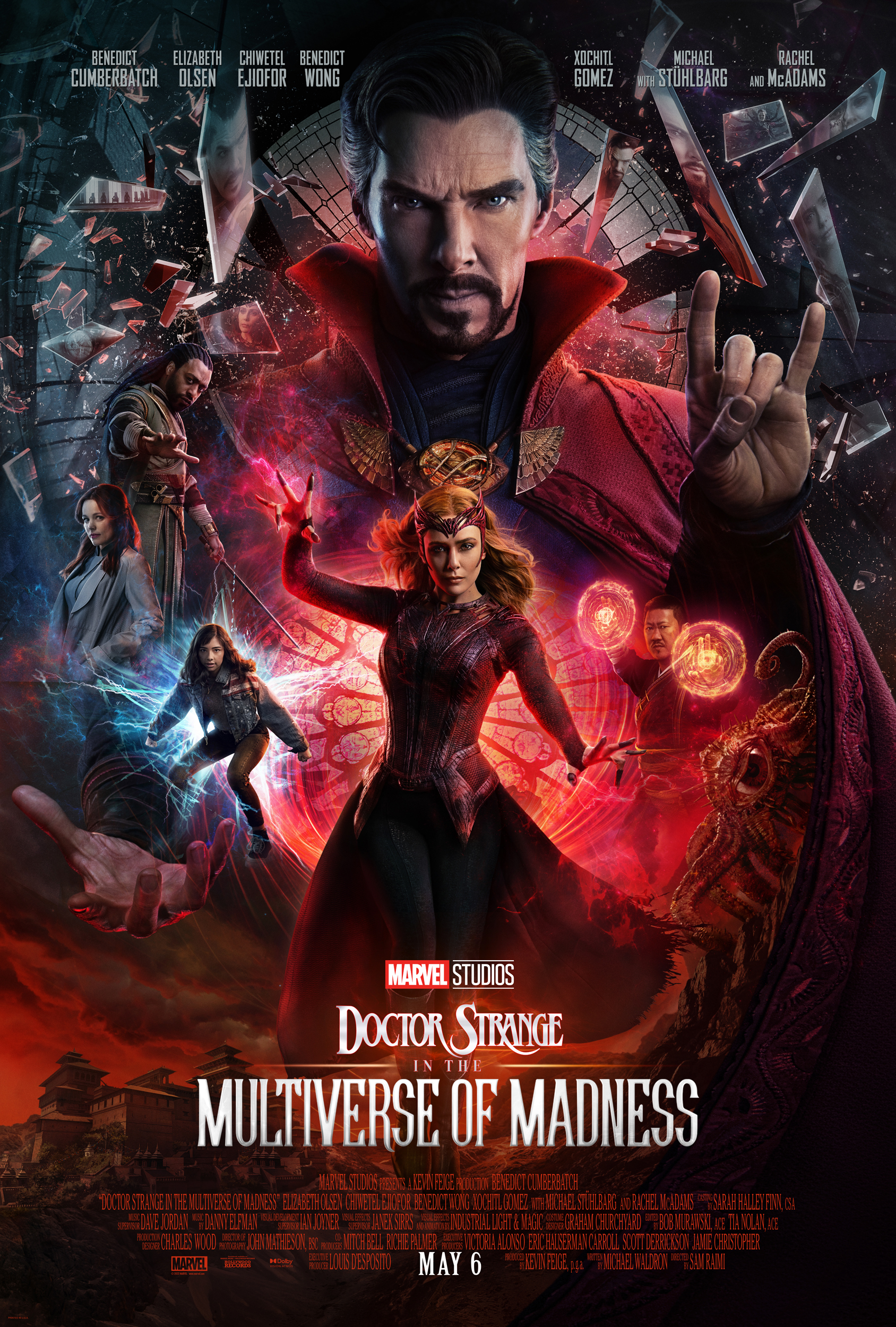
Doctor Strange In The Multitude Of Madness (2022)

MV5BNWM0ZGJlMzMtZmYwMi00NzI3LTgzMzMtNjMzNjliNDRmZmFlXkEyXkFqcGdeQXVyMTM1MTE1NDMx._V1_.jpg


Looking back, I’m shocked to realise that I watched every instalment from the first three MCU phases in under three weeks, while Phase Four up to this point has taken me over six months, and will eventually run into years. There are a number of reasons for this, including the sheer number of projects - including a number of TV series; my pace slowing down and me watching a hefty chunk of other Marvel-related shows. The key reason, though, is that I’ve near enough caught up with the MCU and have had to wait for projects to be released. Ms. Marvel and Multitude Of Madness are as close as I’ve got to enjoying the MCU “live”.

This is my longest gap of time between Marvel films. Eternals (least said, soonest mended) was a whopping five-and-a-half months ago! With me having viewed Doctor Strange at the beginning of January, this is also the longest I’ve gone (in this chronological journey, at least) between two films from the same series.

You’d think this would make for a different experience, but it didn’t feel as different as you’d think. Happily, it doesn’t feel as though I’ve been away from the series for that long. Even with so much continuity under its belt, it seems the films are just as accessible even with bigger gaps.

Notably, I’m watching this slightly out of release chronology. This was released in cinemas before Ms. Marvel began airing. And I’ve also skipped Spider-Man: Far From Home since that’s still not shown up on Disney+ (no doubt in large part to avoid cutting into ticket sales for the upcoming re-release). But, as Crimson pointed out, there are no real spoilers. The only reference I noticed was a comment that Spider-Man had recently had an experience with the multiverse, so if there were more specific references they were oblique enough to go over my head.

Naturally, this is a film with a lot of effects, and the opening act felt very action-heavy in a way that reminded me (and not on a good way) of a couple of the Avengers films. The opening scene was the climax of a full-on inter-dimensional CGI battle, followed shortly thereafter by a lengthy scene of a battle with an octopus thingy. And in between, a brief scene of Rachel McAdams clearing her throat. This film could have been a challenge for me.

Actually, I didn’t hate the CGI. Instead I found myself accepting it while simultaneously stepping back and observing how detached the CGI made me feel compared with practical effects. As the film went along and the story played out, the effects felt a little less bothersome. Yes, I could have done with less animation but then it wouldn’t be Doctor Strange.

One more quick irritation, before moving on to the pros: I cannot stand that the MCU seems determined to ram the Earth 616 designation down the audience’s throat. It was used by Mysterio in Spider-Man: Far From Home and by parallel earth Christine Palmer in this film. While it could be argued this is coincidence (especially in Mysterio’s case since he was actually making it all up), it infuriates me whenever it’s used. I fully accept the MCU as an official universe. But it’s a different universe from the primary Marvel universe of the comics. It’s the only thing that makes sense, otherwise, the MCU chronology would be identical to that of the comics, issue by issue.

Rant over. Now, on to the good stuff.


continued…
 

Mel O'Drama

Admin
LV
16
 
Awards
44
Doctor Strange In The Multitude Of Madness

continued


The performances were great. Benedict Cumberbatch was fine. Sometimes with his Strange I get the sense that he’s almost phoning in his performance in what I presume to be his big moneymaking gig rather than an acting challenge. However, I don’t know if it just seems that way because he makes it look so effortless. Yet more good news is that his vocal creak has been greatly toned down here compared with earlier films. I barely noticed it here, while it was one of the more distracting elements of the first Doctor Strange film.

Elizabeth Olsen was great as Wanda. Her more villainous Scarlet Witch read like The Queen from Snow White And The Seven Dwarfs, which is great. Who doesn’t love an arch bitch. But at the same time I really felt her tap into the emotion of the entire WandaVision arc to inform her performance so that there were many layers and nuances, which really paid off as the film went along. By the time she was dreamwalking into her “nice” alternative universe self, I really bought they were two different people. And she made the film’s climax feel that much more important and meaningful. This may be a Doctor Strange sequel by name, but as a WandaVision follow up it’s even more satisfying. On reflection, I’m viewing this as a Scarlet Witch film, guest-starring Doctor Strange.

On the subject of guest-stars, one of this film’s big surprises was spoilt for me by one of those autoplay trailers on a certain well-known video sharing site, which opened with Patrick Stewart’s distinctive voice addressing Stephen Strange. Naturally, I clicked immediately out so I didn’t have context, but it seemed a dead cert that Strange would meet a parallel universe version of Charles Xavier at some point.

Thankfully, his appearance was a little more substantial and prolonged than I’d expected. What’s more, his introduction was accompanied by with an even less subtle interpolation of the theme from X-Men: The Animated Series than we heard in Ms. Marvel. This leads me to suspect that the MCU’s take on X-Men might well be at least partially influenced by that series, itself influenced by Jim Lee’s Blue/Gold era on the comics. Even in this film there were a few little flourishes that evoked the comics. Cartoony it may have been, but I really liked the “rippling wave” visual effects when Charles used his telepathy, which evoked how his power was shown at times in the early comics. I couldn’t help noticing that while he’s still a youthful octogenarian, Patrick Stewart now looks and sounds significantly older and frailer than he did a few years ago, which makes me feel that even if he’s Marvel’s (and the fans’) choice, he’s unlikely to want the rigours of playing Charles in a new series of X-Men films over the next decade. With this in mind, I made the most of his appearance here and think it’s nice that he’s made it into the MCU, even if this is it. By the way, is this the third or fourth time poor Charles has been violently killed-off now?!

Along with Charles came with a bunch of other surprises that I really wasn’t expecting with a bunch of parallel universe versions of some familiar faces. Anson Mount’s Black Bolt, segueing from Inhumans to the MCU; Hayley Atwell making another return as Peggy Carter, this time the enjoyably colourful Captain Carter version from What If…? And as close as we’ve got to Monica Rambeau’s version of Captain Marvel with her mother Maria taking the mantle in this universe (I didn’t actually recognise the actress until I Googled afterwards. I thought it was a new character. Even so, I enjoyed the similarities to the Captain Marvel I grew up reading).

The most intriguing Illuminati for me is Reed Richards, said to be a member of the Fantastic Four and wearing a full FF uniform. With the FF film on the schedule, is this a taste of the FF we’ll get (actor included)?, or will the film go in a different direction? I’m going to enjoy the possibilities.

Somewhere along the way, I'd read that Clea was also in the film but frankly her cameo felt like a damp squib after the excitement of the Illuminati members.

As with the original, the score was wonderfully rousing and slightly retro. I’d assumed as I watched it was Michael Giacchino, but it turns out it was Danny Elfman (on reflection, it does have a lot of his hallmarks). With Sam Raimi directing (putting his horror background to good use), it’s pretty much the return of the original Spider-Man film team (Raimi even gives his lucky charm Bruce Campbell the final word).

I enjoyed this far more than expected so, with no new MCU material on Disney+ and little to excite me about projects coming in the short term, Multitude Of Madness makes a perfectly decent coda to my seven month MCU journey.

For now.
 

Crimson

Telly Talk Enthusiast
LV
1
 
Awards
8
Ms. Marvel

I enjoyed your reviews, although perhaps not enough to actually watch the series. Perhaps if my MCU fatigue begins to wane, but until then I'm sticking to my onward selectiveness.

Kamala will be the first Ms. Marvel.

And that mildly irks me. The name Ms. Marvel makes no damn sense for a 16 year old girl. In the comic books, she picked up Carol Danvers' abandoned codename so there was some logic to the name there. But why would a 16 year old in 2022 choose Ms. without that connection? As titles go, it seems like a relic from the 70s (I don't think I've encountered a single woman in my entire life who used it) and it's not even age appropriate. Miss Marvel, I could see but I guess Marvel isn't willing to preemptively step on Jean Grey's toes.
 

Crimson

Telly Talk Enthusiast
LV
1
 
Awards
8
This may be a Doctor Strange sequel by name, but as a WandaVision follow up

True, and what soured WANDAVISION for me was MoM's undoing as well.

To start, I enjoyed MoM. It satisfied my basic requirements for a movie: I wasn't bored. On second viewing and after kicking it around in my head a bit, the movie more or less collapsed.

I approached the introduction of the multiverse into the MCU with some wariness. The first film to delve into the matter was exhilarating, but the concept is already becoming exhausting. And this may be the primary source of my MCU burnout: the MCU has caught up to comic books. I abandoned comic books ages ago because I found them increasingly tedious. Too many characters. Too many alternate versions of the same characters, passing around iconic identities to random new character. Too many cameos, crossovers and events. The weird obsession with power levels, as if the value of characters is who's stronger. The muddled, sloppy morality. The sheer inconsequentialness of it all. (Character dies? Doesn't matter! We'll bring in one from another universe!) All that is pretty much the MCU at this point.

I thought WANDAVISION was somewhat ruined by its manipulative morals with Wanda: she was the villain of the story but, boohoo!, feel bad for her. MoM ran wild with that. Wanda is now one of the most terrible villains the MCU has introduced, but the entire story is structured to make her last minute sacrifice seem noble. That's STAR WARS level simplistic and awful morality. (On the matter of Wanda's basic storyline here, going nuts for not having kids, I couldn't stop thinking of Pam wanting to throw herself off a building in DALLAS.)

And then there's magic and how tricky it is to incorporate into a story so that it makes any sense. So Wanda can make body parts disappear (Black Bolt's mouth)? So why didn't she just make Strange's hands disappear, so he couldn't cast spells? Why didn't she make America's legs disappear, so she couldn't keep running? I accept narrative fiction is built on contrivance, but this is what Roger Ebert used to call an Idiot Plot: the story should have been over in 5 minutes, if every character wasn't written as being dumb.
 

Crimson

Telly Talk Enthusiast
LV
1
 
Awards
8
Excluding SPIDER-MAN: NO WAY HOME until you've seen it, and obviously MS. MARVEL since I haven't watched it. I couldn't incorporate the Netflix shows into this if I tried; I don't recall them well enough. I did, however, add in THOR: LOVE & THUNDER since I've already shared my opinions on that one.

  1. Captain America: The Winter Soldier
  2. Guardians of the Galaxy vol 1
  3. Captain America: Civil War
  4. Thor: Ragnarok
  5. Avengers: Infinity War
  6. Hawkeye
  7. The Avengers
  8. Avengers: Endgame
  9. Iron Man
  10. Captain America: The First Avenger
  11. Spider-Man: Homecoming
  12. WandaVision
  13. Black Panther
  14. Spider-Man: Far From Home
  15. Doctor Strange
  16. What If ... ?
  17. Avengers: Age of Ultron
  18. Guardians of the Galaxy vol 2
  19. Shang Chi and the Legend of the Ten Rings
  20. Thor
  21. The Incredible Hulk
  22. Ant-Man
  23. Doctor Strange In The Multiverse of Madness
  24. Black Widow
  25. Moon Knight
  26. Ant-Man and The Wasp
  27. Loki
  28. Captain Marvel
  29. Iron Man 3
  30. Iron Man 2
  31. The Falcon and The Winter Soldier
  32. Thor: The Dark World
  33. Thor: Love & Thunder
  34. Eternals
Updated: MCU Ratings on Google Sheets
 
Last edited:

Mel O'Drama

Admin
LV
16
 
Awards
44
Slightly belatedly. I completely missed your posts from Thursday:


The name Ms. Marvel makes no damn sense for a 16 year old girl. In the comic books, she picked up Carol Danvers' abandoned codename so there was some logic to the name there. But why would a 16 year old in 2022 choose Ms. without that connection? As titles go, it seems like a relic from the 70s (I don't think I've encountered a single woman in my entire life who used it) and it's not even age appropriate.

I agree with this but, if it helps, the way her codename is coined in the series goes some way to making sense of that. It's first used by an older character.


Miss Marvel, I could see

Weirdly, the first time it's used, that's exactly what it sounds like. To my ears at least.


the MCU has caught up to comic books. I abandoned comic books ages ago because I found them increasingly tedious. Too many characters. Too many alternate versions of the same characters, passing around iconic identities to random new character. Too many cameos, crossovers and events. The weird obsession with power levels, as if the value of characters is who's stronger. The muddled, sloppy morality. The sheer inconsequentialness of it all. (Character dies? Doesn't matter! We'll bring in one from another universe!) All that is pretty much the MCU at this point.

We're on exactly the same page with this. This very thought has crossed my mind several times since I'd heard abut the multiverse, and again when I watched this film. In fact, when Wanda perished at the film's end, I found myself cynically thinking "she'll be back", which undermined any impact it might have had.


Wanda is now one of the most terrible villains the MCU has introduced, but the entire story is structured to make her last minute sacrifice seem noble. That's STAR WARS level simplistic and awful morality.

This didn't bother me too much and now that I read your thoughts about it I realise it's possibly because this arc reminded me of The Dark Phoenix Saga.


(On the matter of Wanda's basic storyline here, going nuts for not having kids, I couldn't stop thinking of Pam wanting to throw herself off a building in DALLAS.)

Ha ha. You're absolutely right.


Wanda can make body parts disappear (Black Bolt's mouth)? So why didn't she just make Strange's hands disappear, so he couldn't cast spells? Why didn't she make America's legs disappear, so she couldn't keep running? I accept narrative fiction is built on contrivance, but this is what Roger Ebert used to call an Idiot Plot: the story should have been over in 5 minutes, if every character wasn't written as being dumb.

Great point and absolutely spot on.


18 episodes? Sheesh.

It's almost like they read your post about 10+ episodes being exhausting and decided to really test that theory.

At the moment I'm excited by the prospect of the Netflix series' world continuing in the "mainstream" MCU. There's part of me that wants to know what Karen Page, Foggy Nelson, Jessica Jones, etc. are doing. At the same time, I fear Disney might end up diluting a lot of the grit and darkness.


Excluding SPIDER-MAN: NO WAY HOME until you've seen it, and obviously MS. MARVEL since I haven't watched it. I couldn't incorporate the Netflix shows into this if I tried; I don't recall them well enough. I did, however, add in THOR: LOVE & THUNDER since I've already shared my opinions on that one.

I think the placements for the newer projects are about what I'd have expected.

It's so long since I've ranked the films I'm not even sure my previous list would stand. I might have to start from scratch based on how they're resonating with me.
 

Crimson

Telly Talk Enthusiast
LV
1
 
Awards
8
It's almost like they read your post about 10+ episodes being exhausting and decided to really test that theory.

Although 18 episodes is a lot regardless, I hope it's at least not one ongoing story. As much as I like serialized drama, the value of having separate, side adventures to breakup the overall narrative was too overlooked by the Netflix shows; there's nothing wrong with some standalone episodes.
 

AndyB2008

Telly Talk Well-Known Member
LV
0
 
Awards
6
Runaways


Kingdom / Metamorphosis / Refraction


Well, the soapy stakes have certainly been raised in these episodes. A brain tumour cured by a mid-season miracle; triangles and affairs galore; angst over sexual identity; familial discord. Victor’s dramatic public outing of Robert and Janet’s affair felt genuinely exciting and really put the cat amongst the pigeons.

After half a dozen episodes of blending into the wallpaper while other women did dreadful things, Janet Stein has emerged as the least sympathetic, most entitled and manipulative of them all. First she cheats on her husband with a mutual friend. Then she agrees with her lover that they’ll both leave their spouses to be together. After Robert and Tina’s split she changes her mind and stays with her husband. Then she goes ahead and shoots her husband anyway. She also managed the incredible feat of remaining entirely vapid through it all.

Meanwhile, my blood pressure has been tested by Molly when she dropped yet another clanger by pretty much telling Catherine that she’d seen them in robes. I’d only just recovered from her stupidity in causing the flash that blew their cover in the first place. I get that she’s meant to be young and unworldy, but I found myself sighing and rolling my eyes. Which I suppose is a sign that I’m still invested (Kevin Weisman’s overacting is testing on a different level, and presumably a less intentional one).

The group all discovered one another’s powers and weapons pretty much in one hit in Kingdom. Meanwhile, the adults have caught on to the fact that the children are trying to bring them down. All of this while two key events are taking place: the PRIDE Gala and the Atlas Open House (the latter being a glorified Parent/Teacher Evening). It’s all worked well.

The series has also done a consistently good job of casting down to the smaller roles. Andre - PRIDE’s latest sacrifice - was a nice example of this.

With things getting so sudsy it’s right that Jonah, the mogul/religious founder/virtual deity should be portrayed by none other than Home and Away’s Ben Lucini ((the one who married Carly). It hasn’t slipped my memory that Julian McMahon also played Doctor Doom in the Noughties Fantastic Four films. Could this be significant?

Speaking of Marvel Easter eggs, Timely Coffee is a really nice touch. It’s certainly the most recognisable Marvel reference in the series for me. Well, the second if you count Stan Lee’s obligatory cameo.
Oh, and Julian worked with Ian Rawlings on The Power The Passion and Robert Davi on Profiler - actors who primilarly made their names as villains although they have played good guy roles (Ian in particular with Neighbours).

Clearly that helped for Charmed and Fantastic Four.
 
Last edited:

Mel O'Drama

Admin
LV
16
 
Awards
44
Spider-Man: No Way Home (2021)

iu


It’s almost two-and-a-half since I last watched a solo Spider-Man film, but key details of the films remain easily accessible in my often-poor memory. A testament to the films’ structure and simplicity.

In most ways, the two years since put a hold on my MCU journey have gone very quickly indeed, which is why it was a surprise this week to see No Way Home arrive on British television. In my mind it feels like the film is barely out of the cinema so at film’s end it was quite a shock to see the year of production as 2021, which now seems so far away.

Mercifully, the film was on BBC, which meant I could catch up on iPlayer and watch it ad-free (the very idea of breaking up a film with commercials is sacrilege to me). I wasn’t entirely spoiler-free, though. It would have been next to impossible not to know that Tobey Maguire and Andrew Holland’s Spider-Men appeared. Likewise Willem Dafoe and Alfred Molina.

Fortunately, I was blessed to have forgotten about the other Sony Spidey villains debuting in the MCU, as well as Charlie Cox’s cameo as Matt Murdock.

I knew the premise of the film centred around the Multiverse and came from one of Doctor Strange’s spells as he tried to fix the ending of Far From Home. With so many guests and such a grand scale as the multiverse, I levelled my expectations for a film that was busy, stylish and probably clever but that wouldn’t have the intimacy and heart I like in a friendly neighbourhood superhero. As with the previous film, this managed to inject quite a bit of both intimacy and heart while also being busy and stylish.

Time away from the MCU has helped greatly. I was weary of The Multiverse Saga, and take the view that this multiple earth stuff dilutes things. While in canon it’s hardly as necessary as DC’s original Crisis On Infinite Earths (the benchmark for such concepts, and arguably where such things could have ended) I also can see the value in addressing universes created by Sony or Fox when they’re being absorbed into the MCU. They could have just started over and ignored the other stuff but when it works - and this film is a case of the concept working well - there’s a reverence for the material that’s come before that is appreciated. It also means we can retain (or at leat revisit) some familiar characters and actors.

That’s not to say there aren’t questions coming out of this. Like why does the J. Jonah Jameson of the main MCU look exactly like the one in Sam Raimy’s world, when the Peter Parkers look so very different? And if two characters can look identical in different universes, are we certain that this is the same Matt Murdock as the one we met in The Defenders Saga?

The interaction between the Peters really made this for me. As I said, I knew Tobey and Andrew would appear. What I hadn’t expected was to get a physical reaction as Tobey’s Peter appeared on screen for the first time. I actually got chills, felt my skin move an all the hairs on my arms standing on end. That alone made this film worth it.

I’m glad I didn’t know a great deal about the film before watching so I had no idea we’d spend so much time with the actors from earlier iterations. On paper I would greatly dislike the concept, but watching it unfold I actually loved it. Yes, of course there’s the novelty aspect of seeing them all together almost giving one another the seal of approval, but something about it just felt right. I even appreciated that moment where they reenacted that pointing meme which comes from the ’67 series.

Bonding over their various villains, similarities (back issues from web-slinging) and differences (Raimi Peter’s organic webbing) was great fun.

I’m not sure if it was a help or hindrance that I’ve watched the first two animated Spider-Verse films. Certainly, the concept is very similar. Miles Morales is even alluded to when Max Dillon expresses disappointment that Andrew’s Peter is white, but says there must be a black Spider-Man out there somewhere while Peter smiles knowingly (a moment that felt more like Andrew Garfield acknowledging he’s seen that film than Peter agreeing with an idea).


continued...
 

Mel O'Drama

Admin
LV
16
 
Awards
44
Spider-Man: No Way Home
continued


Something I particularly liked was the different ways in which the two earlier Spider-Men were utilised.

The fact that Tobey is in his mid-forties gives his Peter a very specific tone. Even at the time of the first Spider-Man film, I remember feeling he was a little too old to play teenage Peter Parker. In No Way Home, his Peter is quite enigmatic, with nothing too specific about what’s gone on for him, but he gives the sense of a man who is contented and living a life he enjoys. This felt right considering his film series was a trilogy and a kind of closure. It also gave his stabbing in the climactic battle more weight. This Peter feels like someone with something to get back home for, and I was rooting for him to achieve that. There was also a strange kind of sadness to him: very subtle compared to his younger, more emotionally demonstrative counterparts, but the quiet is what made it feel more powerful.

Meanwhile, Andrew’s Peter - probably by token of the fact that he only got two films and no proper ending - clearly has unresolved baggage. Andrew cries well, and utilises every opportunity to show the audience this trick. But it works perfectly well here. In fact of the three, his is the Peter that has the most solid arc in this film as we see him working out his grief over Gwen’s death and even having a cathartic moment where he is put in a similar situation with a happier outcome.

Seeing the return of these two Peters did reaffirm that Tom Holland is my least-favourite Spidey actor. I want to like him, but I find myself torn. He's a good actor. He looks right. I like the tone of the films. But he still mostly irritates me and I still view him as a necessary evil to be tolerated.

Perhaps he’s just too good at being an annoying teenager. In the (key) scene where he repeatedly interrupted Strange’s spell I found him beyond unlikeable.

How old is Holland's Peter meant to be, anyway? He’s applying for college which I’d have thought puts him at around 18 or 19. But the official MCU Timeline puts this film exactly eight years after Homecoming in which I’m pretty sure he was said to be 15. That would make him 23, which is just a year or two younger than Holland himself. But he still plays him like a 14 year old.

On the subjects of tiresome Toms, I had no idea what was going on in the mid-credits sequence, nor who the two characters were. The incomprehensible mumbling from the patron of the bar helped not a bit. After he left and we saw the black globule, I assumed we’d been watching Topher Grace in a cameo, then did a search and found out it was an actor I’ve only seen him in a couple of other films, where I haven’t enjoyed either performance (I can’t get past him being the worst thing in the otherwise wonderful remake of Tinker, Tailor, Soldier, Spy). As a result I actively avoided the Venom films and had actually forgotten they even existed (confession: Venom was never a character I cared for. I associate him with the silly excesses of the Nineties comics where “superstar” artists could get away with drawing crap into tired stories).

As far as the main villains go, Willem and Alfred turned in terrific performances, while Jamie Foxx’s Electro came across better here than in ASM2. It was a nice touch to see Sandman and The Lizard, but the transformation sequences at the end were extremely underwhelming and anti-climactic, with the limitations (presumably connected to actors’ unavailability) most glaring.

This feels like one of the MCU films with the highest proportionate number of British actors: Holland, Andrew Garfield, Alfred Molina, Benedict Cumberbatch, Rhys Ifans, Charlie Cox, Tom Hardy. I became aware of this during one of the scenes taking place in the “prison” in Strange’s Sanctum where most of the American characters were played by Brits.

May’s fate didn’t hit as hard as it could have, but it did get me thinking: did the MCU’s Peter have an Uncle Ben? I can’t remember if he’s been mentioned in earlier films (though he may have been), but I've always assumed there was simply because it’s so much an intrinsic part of who Peter (every Peter) is. Since the MCU skipped the origin story (understandably, with it being done twice in recent cinema history), I can understand this is the MCU’s equivalent but does this mean he didn’t have a similar experience with Ben?

Incidentally, in a film filled with treats, another one was hearing the line as it was written back in Amazing Fantasy #15. Most adaptions use the less accurate “with great power comes great responsibility”, and there’s been a bit of a Mandela Effect around that one (not just the words, but with the general belief that Ben said them).

Ned’s promise not to become a supervillain and attempt to kill Peter was kind of a nice oblique reference to 616 Ned, which was in turn a slightly unwelcome reminder that MCU Ned is effectively a completely different character.

I was mixed on Michael Giacchino’s score. Overall it was great, but there were a couple of points where I found it a bit distracting. There’s a particularly jazzy piece in a scene at the school where I was more aware of the music than what was happening in the scene. The notes mention that it features the various characters’ themes from earlier films which I must confess I hadn’t noticed. Perhaps a sign that I was invested.

That final scene featuring Spider-Man in what seems to be the most comic-accurate costume yet seen felt especially joyous. I was never a fan of black accents, go-faster stripes on the ams and legs and the silly Iron Spider business, so I hope this new look is a sign of things to come.

I’m not sure when my next MCU film will come along, but since it’s Thor: Love & Thunder, there’s no rush as far as I’m concerned.
 
Top