What was the last film you watched?

Mel O'Drama

Admin
LV
16
 
Awards
44
Shattered Glass (2003)

iu

Prime's solicit synopsis - presumably assuming the story be common knowledge - wasn't exactly subtle or spoiler-free, so I knew what this was about despite none of it being familiar to me. Not the film. Nor the events that inspired it. Nor even the publication in question (beyond perhaps hearing or seeing the name mentioned once or twice). This could have gone either way.

Fortunately, familiarity isn't required. I'd go further and say I almost wish I hadn't read anything about it beforehand. Still, though, it was fascinating to watch it unfold because of the way in which the film is constructed. I wouldn't say this is linear storytelling. There's a degree of flashing backwards or forwards, and by its very nature the key narrator is unreliable. Which is exactly why the story was worth telling.

It was no surprise this morning to read that the writer/director had screened All The President's Men for cast and crew immediately before commencing filming. I didn't consciously pick up on parallels with this film (even though I now realise they are glaring, especially considering each is an account of a then-still-very-recent controversy), but as I watched I did liken it to Fincher's Zodiac: another film which owes its style to to All The President's Men (oh - I've just realised Shattered Glass was some four years before Zodiac, which makes this film still more impressively pioneering in its scope). There were other films that sprang to mind as I watched. American Psycho was another due to the unreliable narrator element, and a key character unfolding before one's eyes... even Chloë Sevigny is here, once again playing confidante and loyal supporter of the unstable key character.

On that note, the cast is terrific. I was sold upon seeing Chloë's name along with Steve Zahn, since I find they invariably choose interesting characters and projects. Steve plays a fact-checker who is stumped when he can't find sources, and it becomes part of this intense chess game with numerous players all making different moves.


With Hayden Christensen's performance I felt torn. He's playing a real person, who I've never seen or heard, so it's difficult to know how accurate it is. He played him rather childlike and borderline whiny and monotone. It's also the least-nuanced performance. This morning I realised Hayden would have been perhaps twenty one here. He's interacting with experienced performers of whom he is generally the youngest, so it's a big ask. This morning, with the film still resonating, even though I still suspect other young actors may have played it differently - and probably better - I find myself feeling it might just be a better performance than I realised

The actors who did grab my attention as I watched were Hank Azaria and Peter Sarsgaard, both of whom were terrific. I've seen Hank in a couple of things, I think, but mostly associate his name with The Simpsons. It's a treat to see him turning in such a nice performance. His energy and charisma reminded me of RDJ at his best, which is no bad thing. Meanwhile, writer-director Billy Ray has said that the film really started working for him when he realised that Sarsgaard's character was the film's real protagonist, and it's a very satisfying journey to see him emerge almost from the background to become one of the most exciting and dynamic things in the film. The scene at the end in which he arrives to face his staff was unexpectedly powerful and moving because of how it was presented and because the film had sneaked up on me and won my investment without me fully realising.

I suppose this is a film about trust and belief, and the response to the betrayal of these. It's explored here in as fascinating a way as I've ever seen . The investigative element is riveting, with the characters so well-developed that even the most prosaic of moments becomes compelling.


Willie Oleson

Telly Talk Schemer
LV
9
 
Awards
27
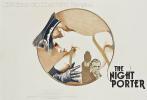
The Night Porter (1974)

1768314962484.png

Another one from the to-watch list, mostly because of Dirk Bogarde and Charlotte Rampling.
It's a psychological, erotic WWII drama, and because the motivations only make sense to the main characters it's a film with multiple readings.
While I understand the negative and emotional response to the film, especially from those who have experienced the holocaust, I simply can't catagorise The Night Porter as exploitative Nazi "porn".
I had expected it to be much more vulgar, but that isn't even the point.

The story can be described as an extreme example of Stockholm syndrome, or, from an erotic point of view, an extreme example of a sadomasochistic relationship.
Personally, I interpret it as the story of two characters who have survived the war; in Max's case because he got away with it, in Lucia's case because she didn't die. But to survive and to live aren't necessarily the same thing.
Max is dehumanised for the monster he became and he can no longer live in daylight. Lucia feels dehumanised for having been subjected to that extreme kind of depravity.
If it's not possible to move forward, if there's no cure or forgiveness, then it almost makes sense that they would try to find some emotional attachment in the only hellish reality they understand, no matter how sick it looks to other people.
A paradoxical love story, as it were.

Another interpretation is that, rather than having her revenge, Lucia's decision to voluntarily reenact that disturbing relationship gives her the agency that she lost once she was imprisoned.
She could even trick herself into believing that it's always been a matter of choice, and that the holocaust circumstances was only background noise.
Regardless of what the story is supposed to express, I found it a rewarding and thought-provoking experience.
It also shows that the war didn't end when the Nazis surrendered as we watch the escaped SS officers trying to bury their guilty conscience.
Just when you thought it couldn't get more evil...

The film has one problem: the vocal dubbing of the continental European actors. It doesn't have to be a problem if it's well done, but in this case it's so bad that it makes those actors look like amateurs, and sometimes it almost took me out of the story. Thankfully, these scenes are relatively short.
Charlotte Rampling looks frighteningly believable as the younger and skinnier version of Lucia - she looks like a beautiful alien - even more so because she made this film only four months after giving birth (according to wiki).
It's not a film for everyone but at the very least it should be celebrated for being unique. I'm going to add it to the growing list of "best of 1974".
 

Mel O'Drama

Admin
LV
16
 
Awards
44
And So It Goes (2014)

iu

This one pretty much does what it says on the tin. The poster - and particularly Prime's imagery of Diane Keaton and Michael Douglas enjoying one another's company - means there aren't really any surprises. It's one of those "let's pair up two reliable actors and see what the chemistry is like". Keaton in particular seemed to fall into this niche in the last couple of decades with a revolving door of leading men, and it always worked in spite - or because - of the safe predictability.

Rob Reiner directs, so there's a little more depth and heart than the average romcom and it does look very nice. There's a warmth to it all the way through. Tonally it feels different from A Few Good Men which I watched just last week. Curiously, it reminded me more of Misery, despite that film's oppressively icy cold aesthetic on location. This I put down to the small town vibe with its quirky characters. Frances Sternhagen proves to at least as much of a scene-stealer here as she was in Misery. Once again, she's smart-mouthed and insouciant, this time she he has a cigarette almost permanently in her left hand, elbow on the desk or table and forearm facing upwards so the fag is parallel with her face. This was her last role before she presumably retired around a decade before her death, and it's certainly a memorable one. I think I've only seen Frances in these two roles, and wouldn't mind checking out some more.

Douglas plays the grumpy old man none of the neighbours like: a kind of toned-down version of Jack Nicholson's character from As Good As It Gets (a similarity that dawned on me in the second half of the film, when I realised that they even sound a little alike). Truthfully, it's a role that would have been better filled by Nicholson (if they could have got him). I'm generally lukewarm towards Douglas. He's been in a number of projects that I've enjoyed and he's generally watchable enough, but I don't think of him as a great actor, nor do I find him particularly charismatic. This doesn't always read into on-screen chemistry. He had it with Kathleen Turner and Glenn Close (if memory serves. It's a long time since I've watched Romancing The Stone or Fatal Attraction). The chemistry between Douglas and Keaton is rather flat, though. Their sparring relationship worked really well up to the point of that clumsy kiss, after which it felt awkward. This was somewhat in keeping with the plot, but I just found myself thinking how they don't convince as a couple, even if their hard won friendship does work well.

Still, the romance was just one plot and it worked overall. The little girl playing the granddaughter was sweet (even if she did glance towards camera a number of times).

Keaton plays her usual slightly awkward, slightly neurotic, slightly emotional plucky type of role (if it's not broken, don't fix it). Her character is a lounge singer, and she sounds great. Really good. After being caught out with that We Are The World video I had to search online to check that it was Diane singing, and some evidence suggests it is actually Diane's voice we hear. In which case, brava.

Marc Shaiman's score is pretty, but there was one refrain repeated a number of times that was starting to distract me because it reminded me of a specific song I could not place. This morning, having hummed through enough of it to remember some lyrics ("it was a Sunday we buried you in the rain"), a quick search confirmed it reminded me of I'm Still Waiting by Jamie O'Neal.
 

Willie Oleson

Telly Talk Schemer
LV
9
 
Awards
27
I think I've only seen Frances in these two roles, and wouldn't mind checking out some more.
I'm pretty sure you've seen her in more roles than just those two, but I think she's mostly known (and therefore somewhat unknown) for her supporting/guest roles in countless films and TV series.
Tess Harper and Bibi Besch are also actresses who "were always there" without their respective names firmly attached to anything.
 

Mel O'Drama

Admin
LV
16
 
Awards
44
I'm pretty sure you've seen her in more roles than just those two

I don't doubt it. I scanned over her IMDb before posting before, but on second look I've also spotted The Mist and The Laramie Project, and I dare say I might have also seen her in ER or Cheers or some such supporting or guest role which, as you mentioned, she seemed to do quite a bit.


Tess Harper and Bibi Besch are also actresses who "were always there" without their respective names firmly attached to anything.

Oh yes. Bibi's name came up not so long ago when I confused Georgann Johnson with Ellen Geer (each of those, like Bibi, being solid supporting players on series of a certain era).
 

Mel O'Drama

Admin
LV
16
 
Awards
44
Man On A Ledge (2012)

iu

It has the most descriptive-but-unoriginal title since Snakes On A Plane, and I wasn't expecting that much. I was pleasantly surprised.

The construction of the film is pretty perfect, with information given piecemeal to the audience allowing us to work out slowly what's going on while being kept interested by the characters and situations. It's much more elaborate than it first appears, but keeps things feeling simple by mostly focussing on one thing at a time. And just when the audience has caught up on certain facts, the story turns them on their head and reveals different motivations. Added into this is a "who can be trusted" element, and the thrill of a heist. When the strands come together it feels genuinely rewarding.

There is, of course, an over-the-top element to the film's grand scheme, much of which is really only there because it's cinematic. But with this genre it's really best to just go with it and not overthink.

There are a number of familiar faces, several with Marvel connections: Betty Brant, Ben Grimm and the Falcon are present and correct. And the main character looks very much like Peter Quill (but without the questionable church stuff and wanton destruction of revered mid-century modern homes and gardens). Elizabeth Banks had a kind of Farrah Fawcett look to her. I recognised the name but couldn't place her. Turns out I know her from the Raimi Spider-Man films where she had one of the most comic scenes of the series. Then there's grown-up Billy Elliott. Jamie Bell, attractive in a thuggish kind of way, brings a nice intensity to things. I haven't seen Anthony Mackie outside of the MCU, but his characters persona here feels almost identical to Sam Wilson, leading me to believe he generally plays the same likeable, amiable sidekick. Which is fine. Ed Burns is enjoyably villainous. One almost wants to boo and hiss whenever he's on screen.

This would probably have been great fun on a cinema screen, and would work well in 3-D (even though I don't believe it was released that way). It's not as traumatic as Fall (when it comes to creating acrophobia, nothing is as traumatic as Fall), but the sense of being in a precarious position at great height is tangible enough. It certainly removed any desire I may have had to even get near an open tower block window again.

The denouement feels very abrupt and very Hollywood, but I'll take it.
 

Willie Oleson

Telly Talk Schemer
LV
9
 
Awards
27
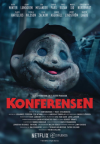
The Conference (2023)

1768477329267.png

This Scandinavian dark comedy slasher satirises corporate characters and shenanigans while a bloodthirsty serial killer is creeping up on them.
I was instantly enamoured by the prospect of a dreadful team-building day which, in my opinion, is a real-life horror genre of itself.
In other words: The Office meets Friday The 13th, and it's kinda surprising that it hasn't been done before, as far as I know.
The interaction between the characters - and also the assortment of characters - confused me a little because I had misinterpreted the organisation they represented.
Once I got it it made perfect sense but it's possible that I've missed out on a few jokes.

The moment of the first kill instantly gives away what kind of "dunit" this is going to be which I thought was unfortunate.
The gore is hit-or-miss, it doesn't need to be graphically depicted torture porn but some parts in this film look somewhat obscured. I had to replay one particular kill scene three times before I could understand exactly what killed the character.
The park covers a relatively large area which reduces the tension of "being trapped with". On the other hand, it helps the main characters to be unaware of the bloody goings-on for as long as possible. If it happens too early on in a slasher then it's going to look like an exhausting chase.

By the way, and this can't be a spoiler, you will recognise the Escape Girl in the very first scene. By the way again, how many slashers have Escape Boys? I only know "Ash" from The Evil Dead and that isn't a traditional slasher.
I think The Conference would have been funnier if all the deaths looked accidental, only to reveal a schemer at the very end of the story (and then nobody believes it).
It's entertaining enough, mostly because of the characters, otherwise I wouldn't have watched all of it.
The pre-end credits scene looks surprisingly poignant and cinematic, I don't think I've seen it before, at least not in the slasher genre.

Mini-opening credits! , as if it were a 1970s soapy disaster or splashy Agatha Christie movie. But it also looks a bit weird because Ed Harris is the only one I know.
 

Mel O'Drama

Admin
LV
16
 
Awards
44
Mini-opening credits! , as if it were a 1970s soapy disaster or splashy Agatha Christie movie.

Oh yes. It is rather Earthquake On A Towering Poseidon Airport looking, isn't it?


Ed Harris is the only one I know.

If it weren't for superhero films, I possibly wouldnt have recognised any of them.

Jamie Bell is possibly still best known for his childhood role as Billy Elliot (which I only watched for the first time last year). Kind of like Jodie Foster, he was one of those "old heads on young shoulders": essentially a mini grown-up who played his scenes as a person rather than a child, and it felt his adult screen partners didn't cut him any slack:


Oh- I forgot to mention that Jamie briefly cut a few moves in Man On A Ledge as well. I'm not sure if it was written in or a spur-of-the-moment thing, but it was a nice little callback.
 

Willie Oleson

Telly Talk Schemer
LV
9
 
Awards
27
Jamie Bell is possibly still best known for his childhood role as Billy Elliot (which I only watched for the first time last year). Kind of like Jodie Foster, he was one of those "old heads on young shoulders": essentially a mini grown-up who played his scenes as a person rather than a child, and it felt his adult screen partners didn't cut him any slack:
Oooh wait a minute...that is not a remake of Billy Liar! Why did I think that?
 

Willie Oleson

Telly Talk Schemer
LV
9
 
Awards
27
By the way, you've named yet another classic Britflick I have yet to watch.
I found it a bit whimsical and repetitive, but maybe you'll get more out of it than I did.
Tom Courtenay's preceding film - The Long Distance Runner - is actually one of my favourites of the British New Wave classics.
But did Billy Fisher angry dance around his northern locale to The Jam?
I really like how those dance moves act as the narrative. So that's going to be on my watch list.
 

Mel O'Drama

Admin
LV
16
 
Awards
44
I found it a bit whimsical and repetitive, but maybe you'll get more out of it than I did.

Some Sixties British films can be like that. For some reason your description immediately made me think of The Knack... And How To Get It, which I watched last summer. It had it's moments, but it also ticked the whimsical and repetitive boxes (though about the only thing I remember is that endless scene where Rita Tushingham's character runs round whimsically MeToo-ing various men with false rape accusations).


Tom Courtenay's preceding film - The Long Distance Runner - is actually one of my favourites of the British New Wave classics.

I think I may need to check out some young Tom Courtenay. I think my experience of his filmography begins somewhere around 1991 with Let Him Have It. And I only watched that for the first time last year. Prior to that I'd really only seen his 21st Century films.


I really like how those dance moves act as the narrative. So that's going to be on my watch list.

Oh nice. For what it's worth, I loved watching it for the first time (also last year, so that's me being repetitive).
 

Willie Oleson

Telly Talk Schemer
LV
9
 
Awards
27
So that's going to be on my watch list.
2026 is the year of action, not intentions.

1768655359954.png

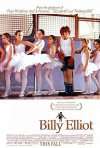
Starting my comment with "this is a sentimental drama" will probably sound a bit ominous, but sentimental drama is a genre just like any other genre.
And I always say that the genre itself has no bearing on the quality of the film.
The first interesting thing to notice is that Billy is not introduced as the archetypal prodigy, all we know is that he likes to dance.
The fact that his masculine miner's family doesn't take kindly to his dancing lessons was to be expected of course, and to see them overcome their initial aversion is probably the most sentimental aspect of this story.

What makes this such a great film is that every moment that could veer into mawkish melodrama territory is mercifully and meticulously undercut by something surprising.
Not cynical or overtly comical, but more a matter-of-factly kind of humour or relativity (or brutality, depending on the scene).
The scene in which Billy and his dance teacher read Billy's mother letter shows that you can achieve the same or even more without the heavy waterworks.
The information speaks for itself and the audience doesn't need a cue.

Another thing I like is that the concept of dance is not limited to the protagonist; even the more violent scenes like the protests and the attacks on the strikebreakers have a sense of choreography.
Billy's father joining the strikebreakers is something that could have been dealt with more ferociously because it seemed like such a big thing, but this wasn't the kind of film for that.
After Billy's audition we even get that Willy Wonka's golden ticket moment, and it was funny to watch the family waiting and waiting and waiting until Pa Elliott can't take it anymore.
Billy Elliott is sort of the upbeat counterpart to Kes (1969) which I also love.
Thank you, Man On A Ledge and Billy Liar for making me discover this gem.
 

Mel O'Drama

Admin
LV
16
 
Awards
44
The fact that his masculine miner's family doesn't take kindly to his dancing lessons was to be expected of course, and to see them overcome their initial aversion is probably the most sentimental aspect of this story.

After I watched I commented that Billy's dad and brother overcame their aversion just a tad more easily than I'd have liked. But what we got was enough to convince me, and the only way to have extended the conflict would be to increase the running length.


What makes this such a great film is that every moment that could veer into mawkish melodrama territory is mercifully and meticulously undercut by something surprising.
Not cynical or overtly comical, but more a matter-of-factly kind of humour or relativity (or brutality, depending on the scene).

Yes, absolutely. Matter-of-fact sums it up perfectly. It's quite unapologetically unsentimental, and yet there's something about that which got me feeling things anyway. It felt truthful and non-manipulative.


Billy's father joining the strikebreakers is something that could have been dealt with more ferociously because it seemed like such a big thing, but this wasn't the kind of film for that.

That was a really nicely done moment. I can remember the strikes, of course, which got much news coverage in the Eighties, and around the time I watched the film I'd had my memory of it refreshed (and some gaps filled in) by watching both mid-Eighties Brookside - which sometimes mentioned the strikes and frequently criticised Thatcher's stranglehold on British industry - and Pride, which was set at exactly the same time as Billy Elliot (1984) and also had the miners' strike as an important part of its story, .


sort of the upbeat counterpart to Kes (1969) which I also love.

This is getting beyond a joke, I know, but even though I've heard very good things about it.... I haven't seen Kes either.

I have just spotted it's on Prime, so it's added to my watchlist. Soon.


Thank you, Man On A Ledge and Billy Liar for making me discover this gem.

:loony:
 

Willie Oleson

Telly Talk Schemer
LV
9
 
Awards
27
After I watched I commented that Billy's dad and brother overcame their aversion just a tad more easily than I'd have liked. But what we got was enough to convince me, and the only way to have extended the conflict would be to increase the running length.
I think it's partially due to the fact that this is a show-don't-tell film.
In a confrontation between father and son, Billy doesn't reply to the scolding with words but with dance moves. Maybe there's some reading between the lines here, for example the legacy of the absent mother that is only touched upon but still had an impact on the outcome of the story (I think).
I see the film as sort of a whirlwind which seems rather on topic for a story about dancing.
and around the time I watched the film I'd had my memory of it refreshed (and some gaps filled in) by watching both mid-Eighties Brookside - which sometimes mentioned the strikes and frequently criticised Thatcher's stranglehold on British industry
Funny you should mention Brookside because my last soapy experience with 1980s strikes happened in Sons & Daughters, a situation that affected the Palmers and Gordon Hamilton.
 

Mel O'Drama

Admin
LV
16
 
Awards
44
The Salt Path (2024)

iu


There were a few things I'd read about the film ahead of time, all really based on the news around the controversy generated when facts in the book (and in turn the film) were disputed. Oh, and I'd also read that Cornish locals were unhappy that so much of their coast was getting attention because it might encourage tourists (even though tourism is their #1 trade sector. And most people there are probably London city people anyway, with true locals having been priced out of their own homes).

I've visited many of the places in the film, and walked a number of sections of the South West Coast Path, so my main reason for watching was really to see some familiar places. The story was secondary to me, since I had no idea what the story even was.

The story is enough to keep the viewer interested, with a focus on a very specific kind of homelessness (a middle-class couple lose their home and livelihood and choose to simply take a small tent and walk the coast path, surviving on a tiny income and their wits) and a nasty neurodegenerative disease I wasn't aware of. But the real star of the film - particularly given there's some question around the facts presented - is the cinematography. The wild, beautiful and temperamental coast is captured perfectly here, always extremely photogenic and filmed so subjectively it's the next best thing to being there.

The performances, too, are nice. It took me a while to recognise Gillian Anderson, and Jason Isaacs gives a nice performance which is quite vulnerable at times.


I think it's partially due to the fact that this is a show-don't-tell film.
I see the film as sort of a whirlwind which seems rather on topic for a story about dancing.

This makes perfect sense.


Funny you should mention Brookside because my last soapy experience with 1980s strikes happened in Sons & Daughters, a situation that affected the Palmers and Gordon Hamilton.

Oh yes. Strikes were so prevalent at the time they did seem to work their way into Soapland (to use James's term).
 

Willie Oleson

Telly Talk Schemer
LV
9
 
Awards
27
Abigail (2024)

1768736505511.png

It seems to me that minimal effort was made to keep the Big Twist under wraps. If the trailer didn't spoil it for you then the film poster with its not-too-subtle slogan would inform you why you'd want to see this film.
Last night I was feeling tired but not tired enough to sleep, therefore I wanted to watch something "loud" and unchallenging, and ABIGAIL proved to be a good choice.
Despite or perhaps because of my low expectations I actually enjoyed it quite a bit.
Knowing what's going to happen can also create the tension of when it's going to happen, like boarding a dark ride roller coaster.

ABIGAIL is not a horror film, it's Carnage Action/Comedy with seemingly indestructable characters in moments of physical combat.
That what killed Lee Remick's character in THE OMEN is an "ooh...ssshh*t" moment in this film.
The film has lots of gothic and creative visuals, it's sort of THE EVIL DEAD in a haunted mansion, and the lighting is very well done.
The characters are all unlikeable, but in an Agatha Christie sort of way, and I was surprised that some of the humour actually made me laugh.
And when it wasn't funny then at least I wasn't annoyed by it (I consider that a big plus in modern-day films, however sad that may sound).

The best and most entertaining part is Abigail-performer Alisha Weir, 14 years old at the time of production. A part of the Abigail creature reminded me of M3GAN, but a human performance is always going to look much better.
As I said before, this film just wants to entertain the audience in as many ways as possible and there's nothing wrong with that. Not every film is made with the intention to create a timeless masterpiece.
However, I feel there is a genuine horror film buried underneath all the spectacle, and I find it impossible not to think of "missed opportunity".
The first act has some effective psychological horror as the characters are trying to figure out what they're dealing with. Gaslighting, paranoia and angry accusations - I wish the film had spent more time on this situation instead of revealing the twist so early on in the story.
Perhaps they calculated that the audience wouldn't have the patience for that kind of scenario.
Alternatively, a 30 minutes version of this film would have made for a great INSIDE NO. 9 episode. Actually, there was a BLACK MIRROR episode with a very similar theme.

By the way, you'll spot the Escape Girl in the very first scene.
 

Seaviewer

Telly Talk Warrior
LV
9
 
Awards
20
Mafia Mamma (2023)
American woman Toni Collette (who's actually Australian) inherits her Italian grandfather's mafia empire.
Nothing special but fun.
 

Mel O'Drama

Admin
LV
16
 
Awards
44
Kes (1969) which I also love.

even though I've heard very good things about it.... I haven't seen Kes either.

I have just spotted it's on Prime, so it's added to my watchlist. Soon.


Striking while the iron is hot...


Kes (1969)

s-l1600.jpg

I've had an awareness of this film for as long as I can remember. It used to be on telly fairly regularly, I think, and I'm fairly sure I caught a scene or two, but there was something about it that made me think it wasn't for me.

Without remembering specifics, I think I had a notion that it was a bit slow, a bit dated (even then) and a bit twee. The first two aren't untrue, and each of these is a very good thing in this context.

It is a slow film. Very slow at times: at football match goes on forever. But this is why it works. There's a documentary-like realism to the film that's quite unlike anything else of its kind, so that football match captures that feeling of being at a school games lesson with unexpected clarity. I know it's a story with actors , but it comes across strongly that much of it is spontaneous and unplanned. People seem to start a sentence without knowing how it's going to end. They trip over lines occasionally or stop to think about what they'll say next whilst saying "Uh". They talk over one another. And so the dialogue lacks any kind of artifice. Reading up afterwards, I see that many extras were cast in Barnsley, where the film was shot. It shows in the best possible way, and feels very much like a camera was just pointed at random characters as they were asked to say something (and I suspect there's a degree of that going on here).

It's also dated, but this is the film's key strength. It captures a specific era and place. In particular it's a statement on the failings of the secondary modern schooling system. They way it shows rather than telling - allowing the viewer to spend time there and experience its unfairness and brutality, ultimately leaving with a lack of hope - is very similar to the way Alan Clarke would depict the borstal system in Scum, a decade after this (and, even though Wikipedia tells me I'm wrong, I was convinced that Brian Glover played a sadistic warden in that film, just as he plays a sadistic P.E. teacher here). With teachers bellowing, shaming, hitting or caning, there's a lot here that would no doubt seem unreal to a younger audience. This is the system in which my parents were schooled, but the wheels turn so slowly that much of this is identifiable to me from my own secondary schooldays a generation on from this.

Some of the criticism is glaring. The headteacher being liberal with canings, for instance. There's that scene in which some regulars are queueing for their daily flogging and a timid, much smaller boy comes along with a message for the headmaster for the teacher. He obediently joins the queue, and is forced by the others to hold on to their cigarettes because they will be searched and he won't. After a group berating, the head makes all of them empty their pockets and bellows at this boy for being a hardened smoker, and he has no choice to agree. It's a little comical because of the irony. But then comes the caning, with each boy getting one strike on each palm, and the headmaster refuses to listen to the innocent boy's protests, so he is forced to take the caning but it's afterwards, as the head gives yet more verbal grief, that we see the boy's eyes moisten and tears stream down his face even as he nods compliantly. I don't believe we saw him before this scene, and I don't think we saw him afterwards, but there's something powerful about someone experiencing a horror like this without having done anything to deserve it. Incidentally, the caning appeared to be done for real, and I'm certain this method acting added to the very real reactions we got. I even read something that suggests Loach withheld this piece of information from David Bradley, in which case I'd say none of the boys were expecting what they got.

But there's further nuance with Billy and the other boys, all of whom are pegged as troublemakers, but many of them are probably misunderstood as Billy is. Yes, we see Billy stealing and whatever, but it all makes sense when we see his home life when we see how Billy is ignored by his mother and taunted by his older brother. One of the few things I knew about Kes was that Corrie's Lynne Perrie played the mother and I was eager to see this. Relatively speaking it's a small part, but she's terrific. The scene where she and her boyfriend are at the social club enjoying a night out is one of the scenes that feels genuinely fly-on-the-wall over and above the others. It's like an incredible time capsule.

Something of note is the Yorkshire dialect. It's incredibly difficult to follow at times and I did ultimately resort to subtitles. I have no regrets there, because there was some funny dialogue I would definitely have missed (shortly after I activated them, came the line from Perrie about her son throwing money round "like a Scotsman wi' no arms", and his retort that she was "as tight as a camel's arsehole in a sandstorm"). It was a little frustrating that the subtitles "translated" some of the phrases (so "tha" became "you", etc.) because my problem wasn't necessarily understanding it so much as picking it up at the same time as understanding it. As with many regional dialects, I found it quite poetic, and it got me reflecting that regional dialects are dying out. The way everyone speaks in this film is today mostly restricted to over Seventies and even then probably in more rural areas. In 2026 regional diversity is much weaker, and it's a shame, because it's the one aspect of this time and place that didn't need to evolve.

Back in school-life, among canings and forced cold showers and grief from the other kids, Billy interacts with kind Mr Farthing... the only teacher who takes the time to get to know Billy, and it's a lovely thing to watch. But it only reinforces how neglected Billy is being in other areas. And don't we wish Mr Farthing was the career guidance teacher. Because the one Billy sees doesn't see him. He perfunctorily asks Billy about his interests and with no immediate response, sends him on his way with a pamphlet. Of course, today, Billy would probably be very well supported (a good thing, of course) and,for better or worse, given a diagnosis. But we're talking then not now, and so nothing changes.

Billy's relationship with Kes is incredible to watch - particularly the scenes where Kes flies with him in the field. But I think it's more poignant today than it was last night. It needs to resonate and it hits harder when one knows the ending. Ultimately, Kes is the only living creature with whom Billy fully bonds, but it goes deeper. Billy understands what a privilege this is, and even articulates it to Mr Farthing.

Billy's original sin was stealing Kes from his nest, and that ultimately caught up with him. But this is what makes it a true tragedy. My only concern with the ending is a practical one: the clearly very real dead kestrel used after Kes was killed. I know it's a sign of the times but animals being killed for entertainment - even entertainment with a message as strong as this - never sits comfortably.

I'm very glad recent conversations in this thread have prompted me to finally give Kes an outing. It was well worth the wait.
 

James from London

International Treasure
LV
6
 
Awards
18
Kes (1969)

s-l1600.jpg

Great stuff, Mel (as was Kes, as I remember - I haven't seen it for years). Your description reminded me of Our Day Out, Willy Russell's school-themed BBC film/play from eight years later, which I only recently discovered on YouTube and is really good.

 
Last edited:
Top